





 Portuguese
  English
  Spanish
  4 min of reading
  0 comments


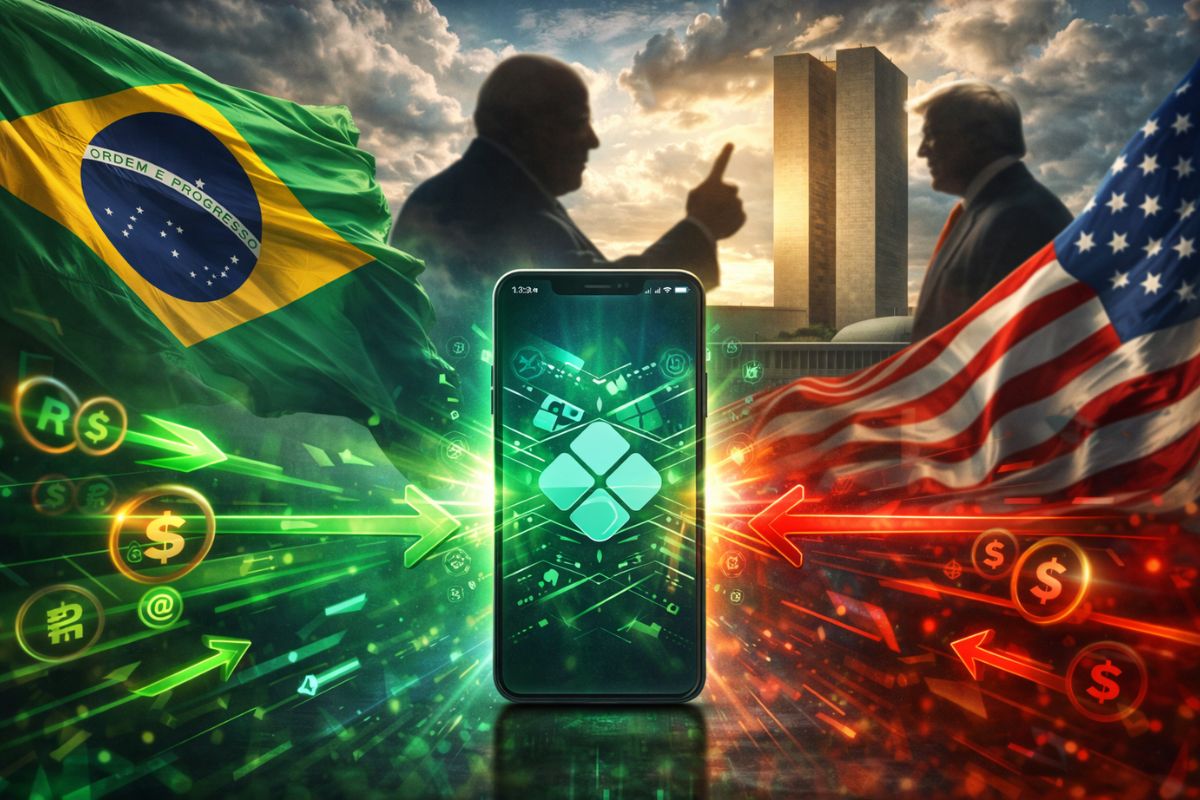
The president responded firmly to criticism from Washington and assured that Pix can even be improved, but will never be changed at the requirement of another country while the US evaluates using the case as a basis for new tariffs
President Luiz Inácio Lula da Silva raised his tone this Thursday (02) and directly responded to the criticism from the United States regarding Pix, the instant payment system created by the Brazilian Central Bank. During an official agenda in Salvador (BA), Lula was categorical in stating that Pix belongs to Brazil and that no external pressure will be able to modify it.
According to the portal ndmais, the president’s reaction came after the repercussions of a report from the USTR (Office of the United States Trade Representative), which included Pix on a list of potential barriers to American commercial interests. The document reignited the debate on Brazilian technological sovereignty and placed the payment system at the center of a dispute that mixes international trade, diplomacy, and digital innovation.
What Lula said about Pix and why the tone was so emphatic
Without directly mentioning Donald Trump’s name, but making it clear to whom he was addressing, the Brazilian president left no room for ambiguity. “Pix belongs to Brazil and no one will make us change it”, declared Lula during the event in the capital of Bahia.
-
Amazon has just announced a new fee on all deliveries, and your online purchases will become more expensive starting April 17, including for those buying from the United States here in Brazil.

-
He sold his share for R$ 4 thousand, saw the company become a giant worth R$ 19 trillion, and missed the opportunity of a lifetime.

-
Elon Musk’s Starship megafrocket puts $8 billion at risk, raises alarms in the market, and could affect technology, mining, and space internet startups in the coming years.

-
Airfare prices may rise with increasing fuel costs, and the government is considering urgent measures to avoid a direct impact on the wallets of Brazilians.

The president acknowledged that the system may undergo improvements, something natural for any evolving technological platform, but drew a firm line: any improvements will be a sovereign decision of Brazil, and not the result of external demands.
This statement signals that the government does not intend to back down in the face of pressure from Washington, even in a time of increasing commercial tension between the two largest economies in the Americas.
What the American report says that put Pix in the crosshairs
The document prepared by the USTR argues that Pix, being created and operated by the Central Bank, may end up favoring the public platform to the detriment of foreign companies in the payment sector.
From the American perspective, this would constitute an unfair competitive advantage that harms companies from the United States.
But the report does not stop at Pix. The text also mentions Brazilian proposals for regulating digital platforms, the expansion of powers of the CADE (Administrative Council for Economic Defense), and the so-called “t-shirt tax,” the taxation on low-value international purchases.
For Washington, this set of measures creates an unfavorable scenario for American commercial interests in Brazil.
The investigation behind the report could generate tariffs
What makes the situation more delicate is the legal-commercial context in which the report is situated. The inclusion of Pix in the document is linked to the so-called Section 301, a legal mechanism in the US that allows for investigating trade practices of other countries and, based on the findings, imposing tariffs or sanctions.
This means that the mention of the Brazilian payment system is not merely rhetorical. Depending on the outcome of the investigation, the American government could use the report as a basis for concrete measures against Brazilian products, which would further escalate tensions between Brasília and Washington at a time already marked by global tariff disputes.
Alckmin reinforces defense and reminds that the US has a surplus with Brazil
Vice President Geraldo Alckmin also spoke out in defense of Pix and classified the system as “a success.” Alckmin argued that the instant payment system does not represent any obstacle to trade relations between the two countries and rejected the narrative that Brazil would be harming American companies.
To reinforce the argument, the vice president recalled a fact that is often ignored in this type of discussion: the United States maintains a trade surplus with Brazil.
In other words, in the bilateral relationship, it is the Americans who sell more than they buy, which weakens the thesis that Brazil would be an economic obstacle for the US.
Pix as a symbol of technological sovereignty
In operation since November 2020, Pix quickly became the main means of payment in the country and an international reference in financial innovation.
The system processes billions of transactions and has transformed the relationship of Brazilians with money, reducing dependence on cash and traditional banking fees.
It is precisely this success that places Pix on the radar of other countries and, apparently, in the sights of foreign competitors who see the public system as a threat to their business models.
Lula’s response transforms the technical issue into a matter of national sovereignty, signaling that the government will treat any attempt at external interference as an affront to Brazilian autonomy over its own public policies.
And you, what do you think about this American pressure on Pix? Is Brazil right to maintain a firm position or should it negotiate? Leave your opinion in the comments.






Seja o primeiro a reagir!