





 Portuguese
  English
  Spanish
  2 min of reading
  0 comments


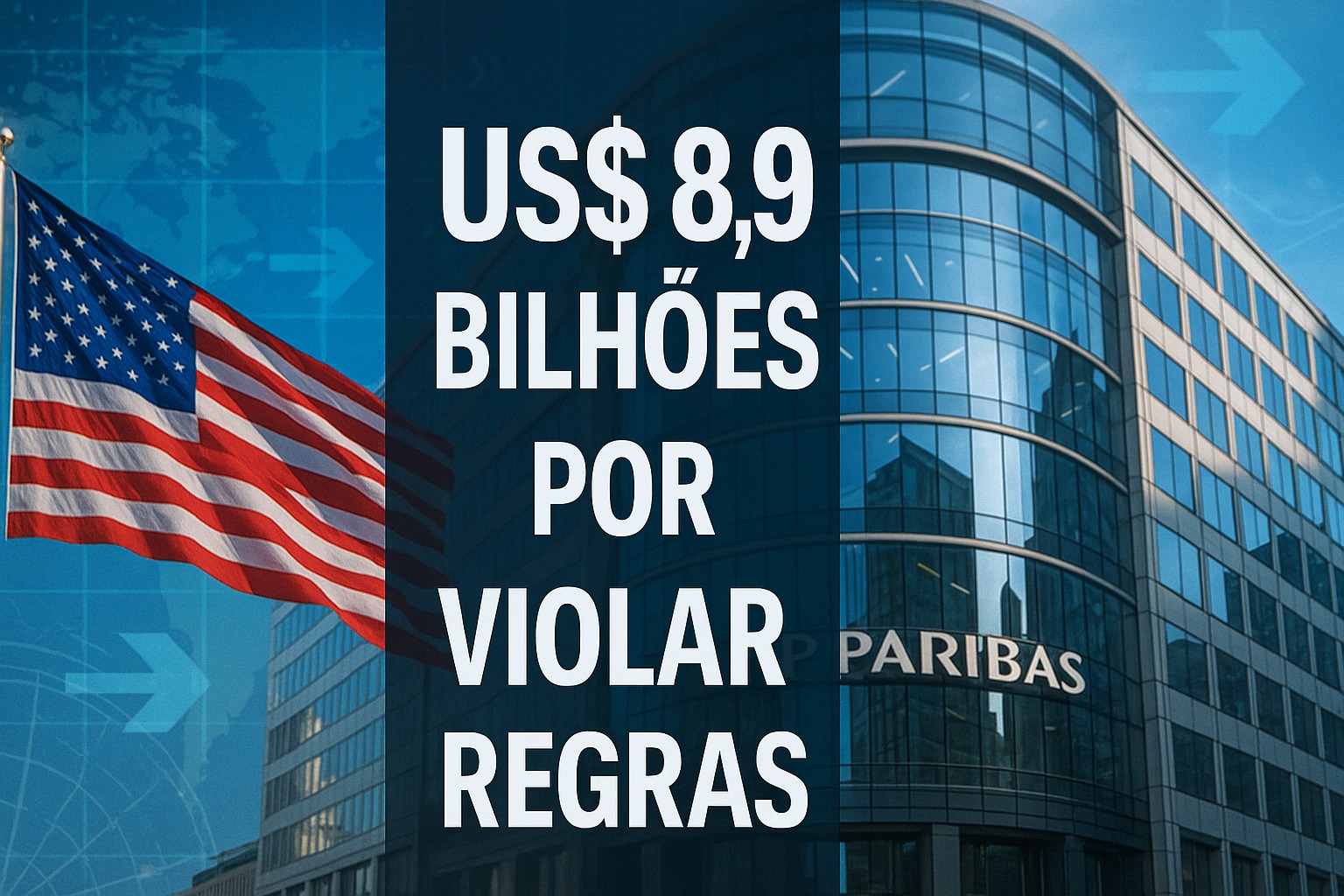
BNP Paribas Accepted To Pay Record Fine In The United States After Violating International Sanctions, And Now The Discussion About Financial Limits Reaches The Supreme Court, Involving Alexandre de Moraes And Action Filed By Deputy Lindbergh Farias
The largest bank in France, BNP Paribas, faced one of the harshest penalties imposed by the United States in 2014. The institution was forced to pay a fine of US$ 8.9 billion for violating restrictions imposed by the so-called Magnitsky Act, now applied against Minister Alexandre de Moraes of the Federal Supreme Court (STF).
The punishment was based on transactions carried out between 2004 and 2012. American authorities considered illegal transactions totaling US$ 30 billion with Cuba, Iran, and Sudan.
These countries were on lists of international sanctions and could not receive financial transactions in dollars.
-
Inflation in March reaches 0.88% according to IBGE and pressures the Brazilian economy, impacting family budgets and requiring more strategic decisions to maintain financial control.
-
In Paraná, distributor Pacto connects 100% of the load in Coronel Vivida to batteries: a BES of 10 MW and 20 MWh costs just over R$ 30 million and lowers the local tariff now.

-
With a dependence of up to 80% on gas imported from the United States, Mexico is responding with a robust energy strategy, betting on shale gas, creating a scientific committee, and preparing to expand natural gas production to reduce vulnerability and strengthen its energy security in the coming years.

-
The United States proposes to Brazil a critical minerals agreement with a minimum price to combat Chinese dumping and priority for investment, but the Planalto is blocking the signing out of fear of upsetting China and due to electoral calculations in a year of competition.

BNP Paribas chose to accept the penalty to close the case. Therefore, in addition to the billion-dollar fine, the bank was prohibited from conducting certain transactions in U.S. currency.
It also had to dismiss 13 employees directly linked to the irregular negotiations.
Magnitsky Act: Debate In Brazil
In Brazil, the situation of Alexandre de Moraes raises similar doubts. Banks and authorities are still analyzing how they should act in light of the U.S. decision.
The main question is to define which financial transactions can or cannot be maintained by the minister.
Moreover, the discussion has reached the Supreme Court. Deputy Lindbergh Farias, leader of the PT, filed a motion requesting that Brazilian banks do not impose restrictions on the magistrate.
The case was assigned for review by Minister Cristiano Zanin, who will now have to evaluate the request.
With information from Metrópoles.









-

2 pessoas reagiram a isso.