Portuguese
  Spanish


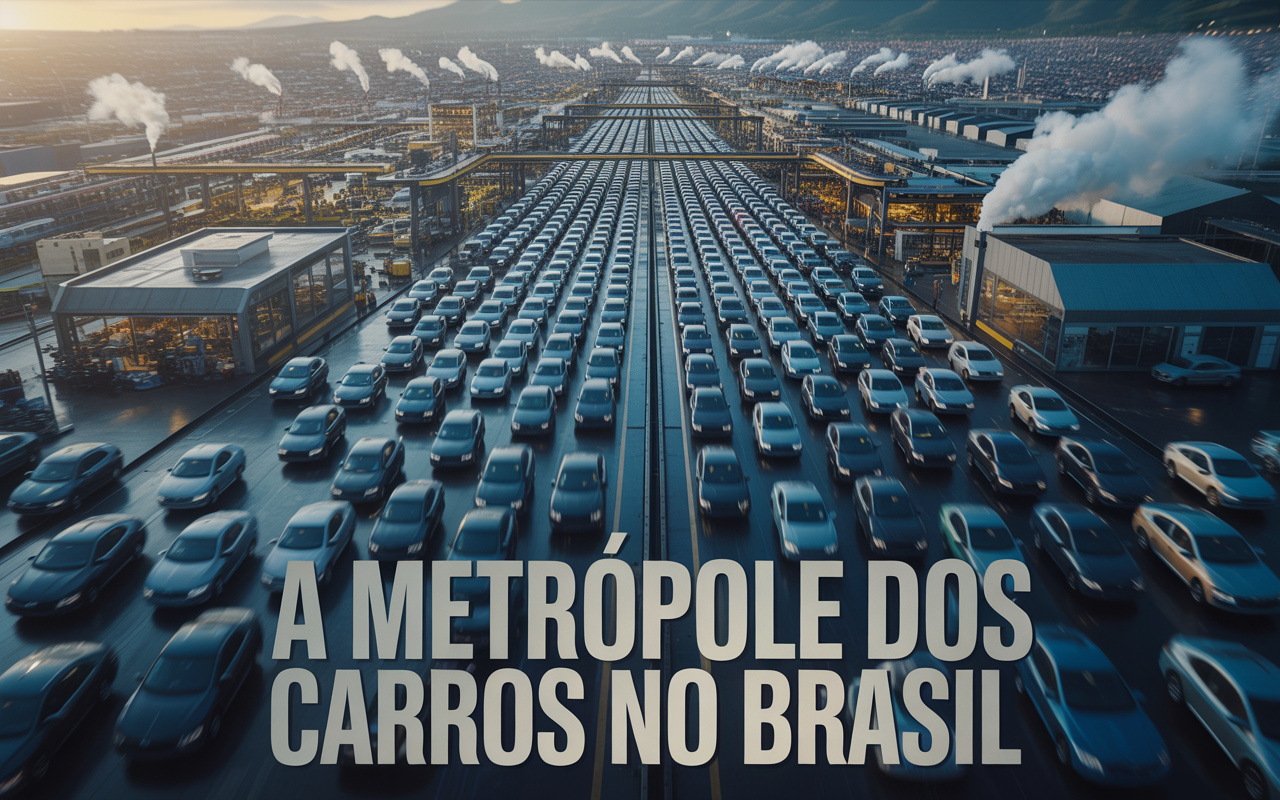


Largest Car Factory In Brazil Impresses With 14.7 Million Vehicles Produced, 65 Years Of Operation, And An Industrial Rhythm That Never Stops.
Located in São Bernardo do Campo (SP), in the heart of the ABC Paulista, Volkswagen Anchieta is one of the largest and most iconic industrial complexes in the country’s history. Inaugurated on November 18, 1959, it marked the beginning of the Brazilian automotive era and, over six and a half decades, has become a true industrial city, where more than 14.7 million vehicles have been manufactured.
With 1 million square meters of built area, 30 thousand direct and indirect employees, and 24-hour continuous production, the complex is one of the longest-standing and most productive in the Southern Hemisphere.
A Milestone in Brazilian Industrialization
The emergence of Volkswagen Anchieta was a turning point in Brazil’s economic history.
Amid the industrialization project of Juscelino Kubitschek, the factory was built in record time and became the epicenter of the formation of the automotive hub of ABC Paulista, a region that drove the urban and social development of São Bernardo, Santo André, and Diadema.
-
Brazilian Factory Restores Truck Engines and Parts, Reducing Raw Material Use by Up to 85% After 80 Years in Business

-
British Marines Set Record by Changing Ford Escort Engine in 42 Seconds, Unbroken for 40 Years

-
BYD Owners in Brazil Raise Concerns Over Warranty After 87,000 km, Two Repairs in Three Days, and Over $500 in Costs

-
Classic Volkswagen Beetles of Brazilian Presidents to Swap Museums in Historic Partnership


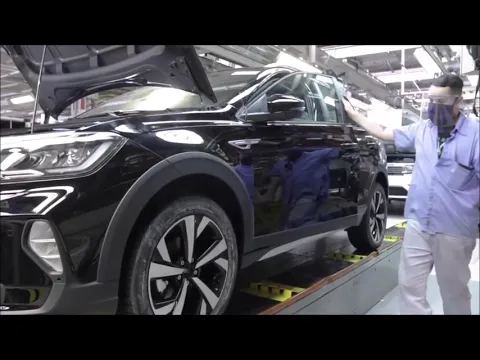

It was there that classics like the Beetle, the Kombi, the Gol, and the Brasília were born — models that not only dominated the streets but became cultural symbols of different generations.
A City Within Another: Structure And Uninterrupted Operation
With over 1 million square meters of total area, Anchieta is comparable in size to cities like Guararema (SP).
Within the complex are paved internal streets, its own public transport, cafeterias, medical centers, electrical substations, and a wastewater treatment plant.
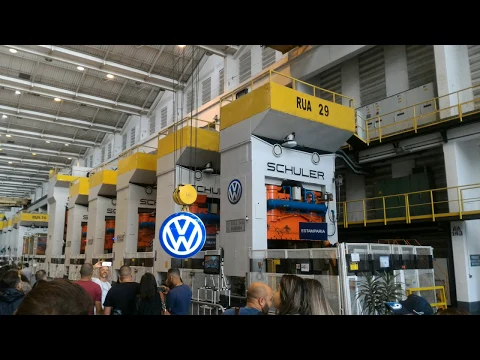
The pace is constant. Production runs in three daily shifts, ensuring that the assembly line never stops. The logistical system is so precise that each part — from screws to the car body — is digitally tracked by sensors that coordinate its path within the factory.
According to Volkswagen, every 90 seconds a new vehicle comes off the assembly line, keeping the plant among the most efficient in the world.
Robots, Sensors, And Total Automation
Anchieta is also one of the most automated complexes in Latin America. In the welding and painting sectors, over 1,000 industrial robots perform coordinated movements with millimeter precision, while computer vision systems inspect the quality of welds, painting, and assembly in real time.
The plant was also a pioneer in using artificial intelligence applied to predictive maintenance: sensors monitor temperature, torque, and vibration of machines to predict failures before they occur.
In 2023, the factory received a new investment of R$ 9 billion for modernization and development of hybrid and electric models, consolidating its role in the energy transition of the Brazilian automotive industry.
Sustainability And Clean Energy
One of the most recent highlights of Anchieta is the industrial water reuse program, which reduces annual water consumption by up to 45%, equivalent to the supply of a city of 30 thousand inhabitants.
The factory also uses energy from renewable sources, such as wind farms in Ceará and Rio Grande do Norte, and maintains an internal recycling system that reuses 97% of the metallic waste produced during the process.
These measures earned Volkswagen Anchieta the Environmental Sustainability Seal from Fiesp, recognizing the factory as one of the most efficient in Brazil in resource management.
Living History of The National Industry
During the peak of industrialization in the 1970s, Anchieta employed 25 thousand direct workers and was the stage for historic events — such as the ABC strikes, which marked the beginning of the modern labor movement and the political rise of figures like Luiz Inácio Lula da Silva.
Today, the factory continues to operate with cutting-edge technology, exporting models like the Polo Track and the Virtus to countries in Latin America, Africa, and the Middle East.
Even with increasing automation, around 8 thousand people still circulate daily through the plant, keeping alive the tradition of 65 years of uninterrupted production.
The Economic Wheel That Never Stops
The economic impact of Anchieta is enormous. According to Anfavea (National Association of Motor Vehicle Manufacturers), each direct job within the factory generates 4 indirect jobs in the automotive supply chain, involving over 400 auto parts and logistics suppliers throughout the metropolitan region of São Paulo.
Just in taxes and contributions, the complex generates billion reais per year, being one of the pillars of state revenue in São Paulo.
Additionally, Volkswagen Anchieta has become a center for professional training — since 1973, the Volkswagen Training Center has trained over 20 thousand technicians and engineers.
The Factory That Shaped Modern Brazil
More than a production plant, Volkswagen Anchieta is part of Brazil’s industrial identity.
It witnessed the birth of the popular car, the rise of the middle class, political transformations, and the technological leap of a country that learned to produce with world-class quality.
Today, with 14.7 million vehicles manufactured and 65 years of history, the largest car factory in Brazil continues to be a symbol of productivity, resilience, and innovation — an industrial metropolis that never sleeps and continues to drive Brazil forward.