





 Portuguese
  English
  Spanish
  4 min of reading
  0 comments


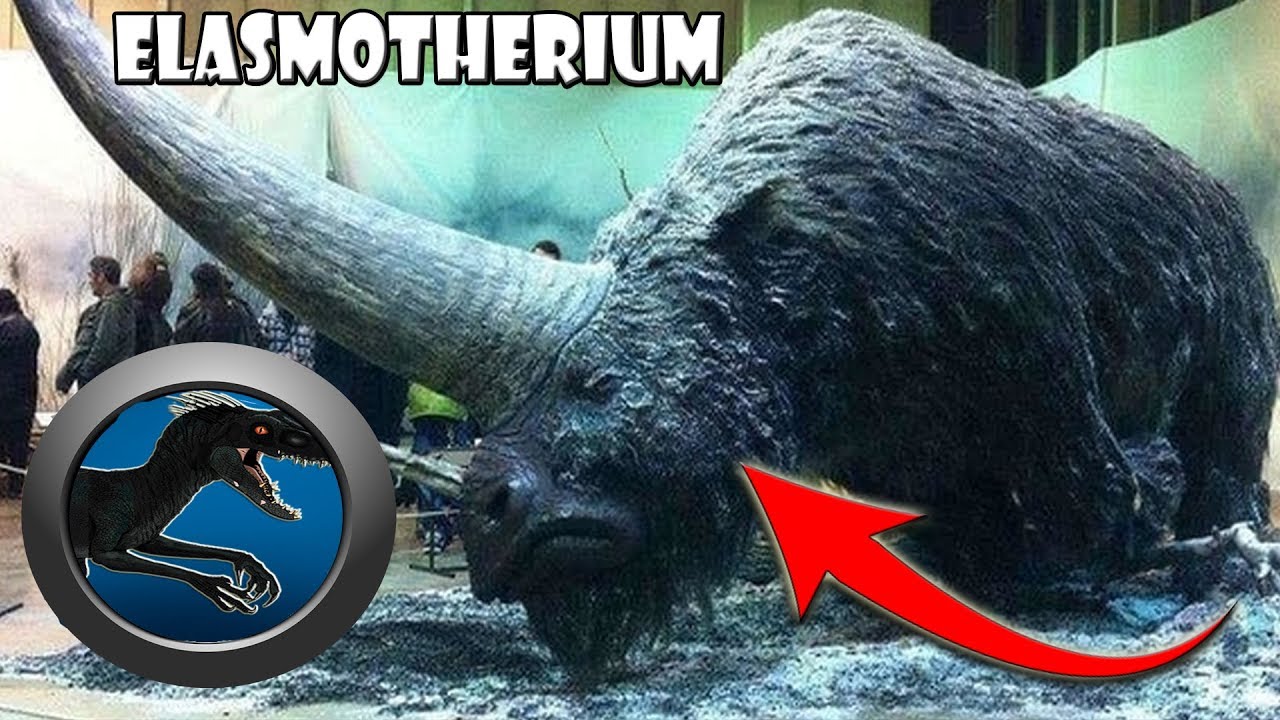
With More Than 4 Tons and a Gigantic Horn, the Elasmotherium Was One of the Largest Mammals of the Ice Age and Challenges Science to This Day.
The Elasmotherium is not a mythical creature nor the result of folk exaggerations. It is a real genus of prehistoric rhinoceroses that lived in Eurasia during the Pleistocene and, according to extensively studied fossil records, reached sizes far greater than any modern rhinoceros. Its extreme size, coupled with the presence of a large bony base on its forehead indicative of a colossal horn — led to it being nicknamed the “Siberian unicorn,” although it was far from the delicate image associated with that name.
Unlike modern rhinoceroses, adapted to savannas or tropical forests, the Elasmotherium evolved to survive in cold, open, arid environments dominated by the steppes and tundras of the Ice Age. Its massive body, robust legs, and specialized skull indicate an animal designed to withstand extreme temperatures and to compete for resources in highly competitive ecosystems.
The Real Size of Elasmotherium According to Science
The most accepted estimates in paleontology indicate that the Elasmotherium could surpass 5 meters in length, reach about 2 meters in height at the shoulder, and weigh between 4 and 5 tons. This places it in a category close to that of a young African elephant and well above any currently living rhinoceros.
-
Archaeologists find 16th-century silver coin.

-
An 86-year-old farmer rejected a proposal of R$ 76 million to sell his land and surprised everyone by turning down an AI data center on his 105-hectare farm, negotiating for only R$ 10 million for environmental preservation.

-
You have probably crossed paths with it and didn’t even notice: the Brazilian tapiti rabbit lives hidden in the forests and may be disappearing without anyone noticing.
-
Explorers investigate one of the most secret locations in the United States.
For comparison, the modern white rhinoceros, the largest existing rhinoceros, rarely exceeds 2.5 tons. This means the Elasmotherium could have had practically double the body mass, making it a true terrestrial colossus.
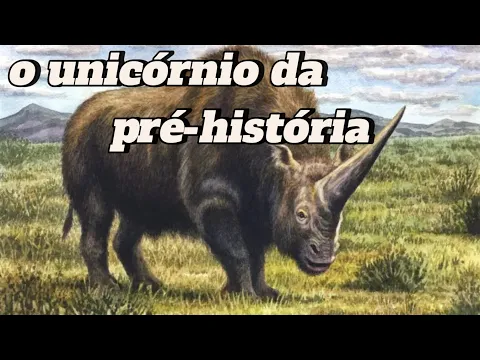

This size was not just an impressive detail: it directly influenced the behavior of the animal, its relationship with predators, and even its ecological position as one of the dominant megaherbivores of the Pleistocene.
The Gigantic Horn That Fed the Myth of the “Unicorn”
One of the most fascinating aspects of the Elasmotherium is the enormous bony protrusion located in the center of its forehead.
Unlike modern rhinoceroses, whose horns are made of keratin and leave no direct traces in the fossil record, the Elasmotherium had an extremely developed bony base, suggesting a horn of extraordinary proportions.
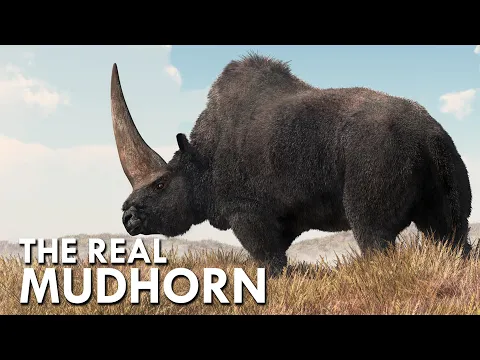
Some scientific reconstructions indicate that this horn could have exceeded 1.5 meters in length, making it the largest ever associated with a terrestrial mammal. This structure was likely used both for disputes between individuals and for digging through snow and frozen soil in search of food during harsh winters.
This combination of colossal size and unique horn explains why, centuries after its extinction, oral accounts from people in Eurasia may have contributed to the emergence of legends about giant unicorn-like creatures.
An Extreme Herbivore Adapted to the Ice Age
Despite its intimidating appearance, the Elasmotherium was a specialized herbivore. Analysis of its teeth and jaws shows that it primarily fed on hard grasses and low-lying vegetation, typical of cold steppes.
Its teeth were tall and robust, adapted for intense wear caused by ice, dust, and silica particles present in the plants of the glacial environment.
The massive body and the probable presence of a thick layer of fat helped retain heat, while the long legs allowed efficient movement across large open areas. Unlike the predators of the time, such as saber-toothed cats, the Elasmotherium did not rely on speed but on endurance and brute strength to survive.
When and Where Did the Largest “Unicorn” in History Live
The Elasmotherium inhabited vast regions of Eurasia, including areas that today correspond to Russia, Ukraine, Kazakhstan, and parts of Eastern Europe.
For a long time, it was believed that the animal had disappeared about 200,000 years ago, but more recent discoveries have changed that understanding.
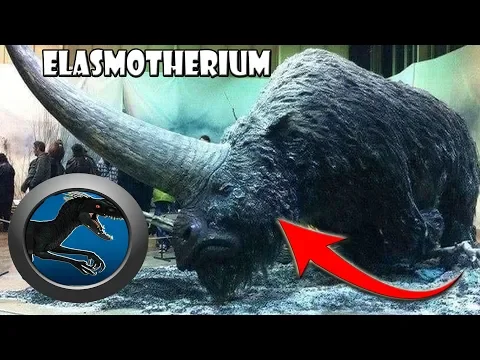
Radiocarbon dating published in scientific journals indicates that some individuals may have survived until approximately 39,000 years ago, meaning that the Elasmotherium may have coexisted with anatomically modern humans.
This temporal proximity raises intriguing hypotheses about indirect interactions between humans and one of the largest terrestrial mammals that ever existed.
Why Did a Giant Like This Disappear
The extinction of the Elasmotherium is attributed to a combination of factors. The rapid climate changes at the end of the Ice Age transformed open steppes into denser forests, drastically reducing the availability of grasses that formed the base of the animal’s diet.
At the same time, human expansion brought additional pressure, either through indirect competition for resources or occasional hunting.
Animals that are so specialized and large tend to be less flexible in the face of abrupt environmental changes. When the ecological balance that sustained the Elasmotherium collapsed, its colossal size ceased to be an advantage and became a burden.
A Real Colossus That Rivals Any Legend
The Elasmotherium does not need exaggerations to impress. It was, in fact, one of the largest and most extraordinary terrestrial mammals to ever walk the Earth.
Its size rivaled that of elephants, its horn surpassed any similar structure known, and its extreme adaptation to the Ice Age shows how far evolution can go when shaped by hostile environments.
More than a legendary “unicorn,” the Elasmotherium represents the pinnacle of Pleistocene megafauna — a powerful reminder that nature has produced creatures far beyond what we see today, which disappeared not due to weakness but due to changes too rapid even for giants.










-

Uma pessoa reagiu a isso.