





 Portuguese
  English
  Spanish
  5 min of reading
  0 comments


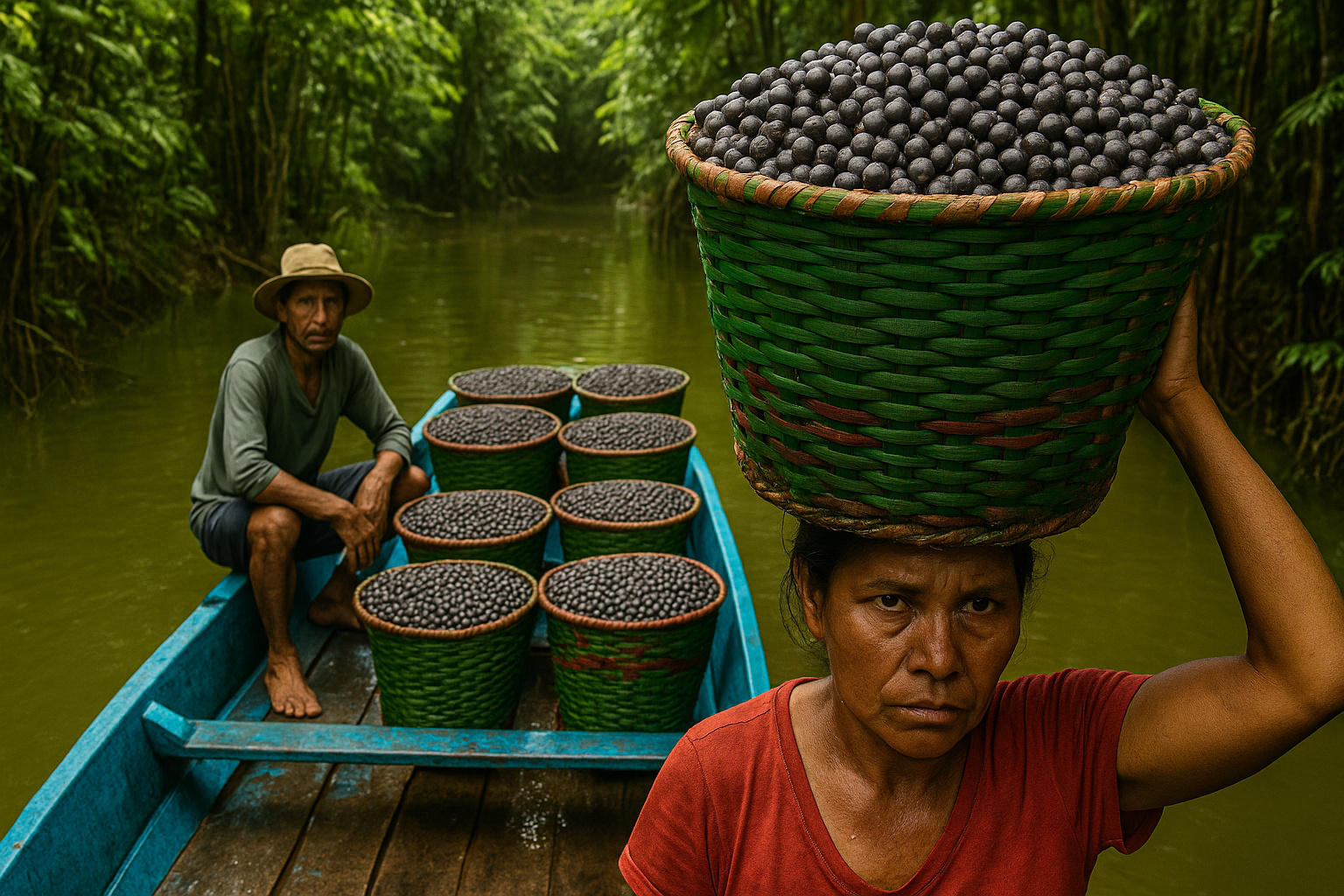
US Government Measure Causes Decrease In Sales, Halts Loads, And Pressures Cooperatives And Riverine Families In Amapá And Pará
Açaí producers in the Amazon are facing one of their most challenging moments in recent years. The 50% tariff imposed by the United States in August has practically made exports of the fruit to the US market—its main destination—impossible. The impact affects not only cooperatives but the entire production chain, from harvesting to processing.
The Amazonbai cooperative, which brings together 161 riverine workers from Amapá, had to cancel the shipment of 20 tons of pulp that was to be sent to the United States. “The client said they wouldn’t bear the additional cost. To avoid losing the load and incurring greater losses, we managed to send it to another client in Portugal,” reports Amiraldo Picanço, president of Amazonbai.
Even with the redirection, the loss is significant. “The US accounted for 60% of our production. We found alternatives in the domestic market, in Santa Catarina and Brasília, but it’s still not enough,” explains Picanço. The cooperative is now seeking new international markets and, with the support of the Amapá International Relations and Foreign Trade Secretariat, is negotiating with two companies in China. “We hope that in three or four months we will be capable of selling there. We cannot remain dependent on the US market,” he concludes.
-
Inflation in March reaches 0.88% according to IBGE and pressures the Brazilian economy, impacting family budgets and requiring more strategic decisions to maintain financial control.
-
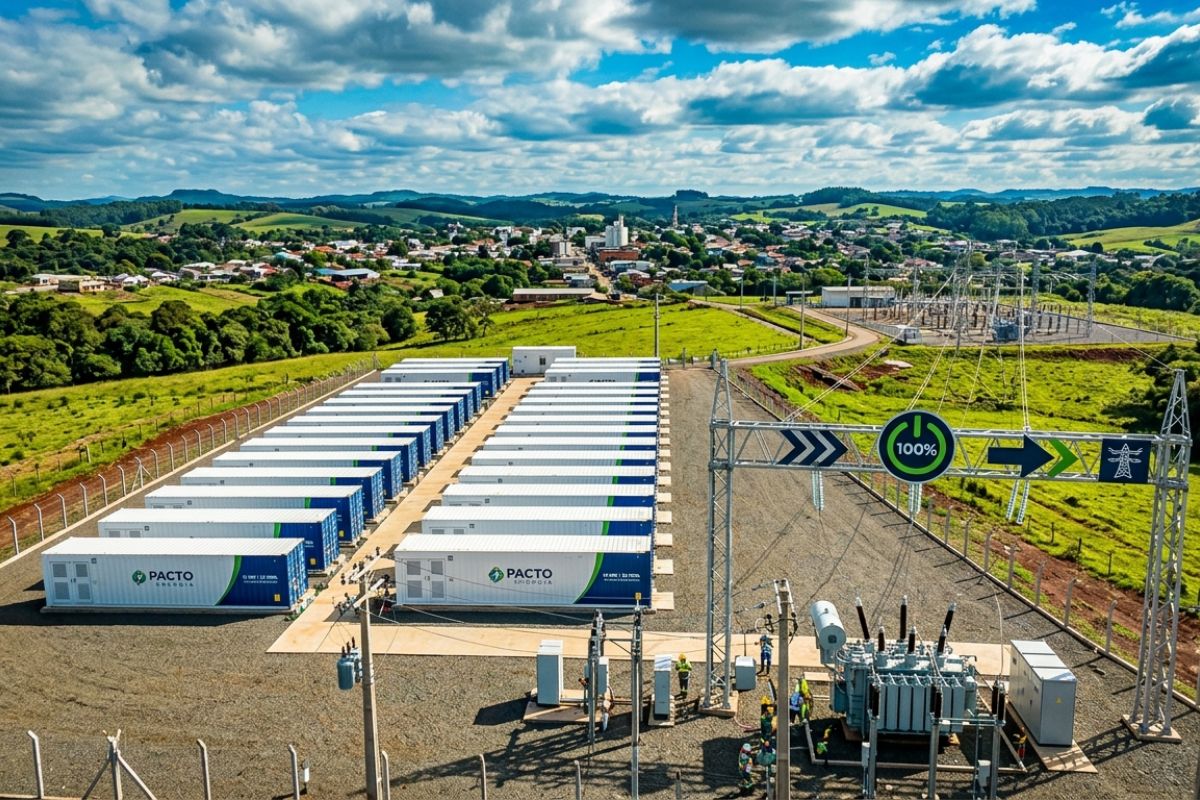
In Paraná, distributor Pacto connects 100% of the load in Coronel Vivida to batteries: a BES of 10 MW and 20 MWh costs just over R$ 30 million and lowers the local tariff now.
-
With a dependence of up to 80% on gas imported from the United States, Mexico is responding with a robust energy strategy, betting on shale gas, creating a scientific committee, and preparing to expand natural gas production to reduce vulnerability and strengthen its energy security in the coming years.

-
The United States proposes to Brazil a critical minerals agreement with a minimum price to combat Chinese dumping and priority for investment, but the Planalto is blocking the signing out of fear of upsetting China and due to electoral calculations in a year of competition.
In Pará, Economic Impact Threatens Jobs And Income
The problem also extends to Pará, a state responsible for about 95% of the national açaí production. According to Alex Carvalho, president of Fiepa (Federation of Industries of the State of Pará), the US measure could result in a contraction of up to 20.1% in total exports to that country, with 8% concentrated solely on açaí.
“This scenario jeopardizes the competitiveness of the fruit, reduces productivity, and threatens thousands of jobs. It also impacts Amazonian communities that rely on the collection, transport, and processing of açaí,” says Carvalho.
The United States is the main destination for Pará’s exports, accounting for more than 75% of the total sent. From January to June 2025, the state exported US$ 43.6 million in açaí to the US market—a 59.34% increase compared to the same period in 2024. “Now, all this progress is at risk,” he warns. Overall, exports totaled US$ 57.8 million, an expansion of 64.96%.
Threat To The Production Chain And Risk Of Unemployment
For Nazareno Alves, president of Amaçaí (Association of Açaí Producers from the Amazon), exporting to the United States has become unfeasible. “Business owners are seeking other markets because the math doesn’t add up,” he sums up.
The impact is widespread and affects the entire production structure. Carvalho highlights that, at the peak of the harvest, açaí harvesting generates between R$ 15 and R$ 20 million per day, with around 250,000 cans produced daily. This cycle benefits farmers, boatmen, and forest workers but is threatened by the contraction in exports.
The estimate is that the sector generates 5,000 direct jobs and 15,000 indirect jobs, in addition to thousands of informal positions. “The measure threatens the sustainable development model of the Amazon, which combines income generation, productive inclusion, and forest conservation,” affirms Carvalho.
Sector Seeks New Destinations And Institutional Support
Amid the crisis, some producers are betting on diversifying markets. Jhoy Gerald Silva, known as Rochinha Jr., director of communication for Acpab (Açaí Productive Chain Association of Belém), believes that the impact of the tariff may be less than anticipated.
“With the increase in internal demand and the little production in riverine areas due to climate change over the past two years, I think the impact will be minimal,” he assesses. According to him, other countries have already shown interest in the product. “We have Japan, Europe, Portugal, and the United Arab Emirates. And with over 140 countries attending COP 30, the trend is that new markets for açaí will emerge,” he adds.
The company Maná Açaí, a partner of Rochinha Jr., exported about 2% of its production to the US. Currently, 75% of the production is aimed at the Brazilian domestic market, 12% to Portugal, and the rest to Pará itself.
The federal government announced in August a direct purchase program for açaí from producers affected by the tariff. Fiepa states that it is working with the government of Pará and the Ministry of Development, Industry, and Trade to find diplomatic and economic solutions.
Carvalho explains that measures such as specific financing lines, export credit insurance, and incentives for opening new markets are being studied. “Diversification takes time, as it involves sanitary barriers, certifications, logistical costs, and contractual negotiations. Still, reducing dependence on a single destination and strengthening regional bioeconomy is a priority,” he emphasizes.
Climate Changes Aggravate Production Decline
Besides the tariffs, producers are facing the effects of the climate. Rochinha Jr., director of Acpab, states that production has dropped about 30% compared to last year due to drought and lack of irrigation in riverine areas.
In Itacoan Miri, in the municipality of Acará (PA), quilombola producer Adelino Cardoso reports even greater losses. “I had to practically do a new planting with a new irrigation system,” he says. According to him, about 600 families in the community depend on açaí as their main source of livelihood.
Climate fluctuations make cultivation difficult. “To produce açaí well, it shouldn’t be too sunny or too rainy. But when the Amazon winter arrives, there are giant downpours. And in the summer, it’s relentless sun,” explains Nazareno Alves from Amaçaí.
Uncertain Future And Need For Adaptation
Between tariffs, droughts, and uncertainties, açaí continues to be a symbol of resistance and sustenance for thousands of Amazonian families. Producers are seeking to adapt, diversify markets, and modernize irrigation systems to ensure the continuity of production.
The current crisis exposes the vulnerability of relying on a single international buyer, but also reveals the potential for expansion into new markets. The strength of the Amazon is once again being put to the test.
And you, reader: in light of this scenario, should Brazil invest more in diversifying foreign trade or strengthen domestic consumption of Amazonian açaí?
Leave your opinion in the comments.







-

Uma pessoa reagiu a isso.