





 Portuguese
  English
  Spanish
  4 min of reading
  0 comments



End of Required Collection of the Union Tax Deeply Transformed the Financial Scenario of Workers and Union Entities, Generating Significant Impacts That Still Resonate in the Household Budget and in the Finances of Representative Organizations in Brazil.
The obligation to pay the union tax radically changed the financial landscape for workers and employers in Brazil.
According to official data from the Ministry of Labor and Employment, the revenue of union entities plummeted by more than 98% since 2017, the year when the contribution was still compulsory.
As a result, workers stopped paying about R$ 2.2 billion per year, according to data obtained by Poder360.
-
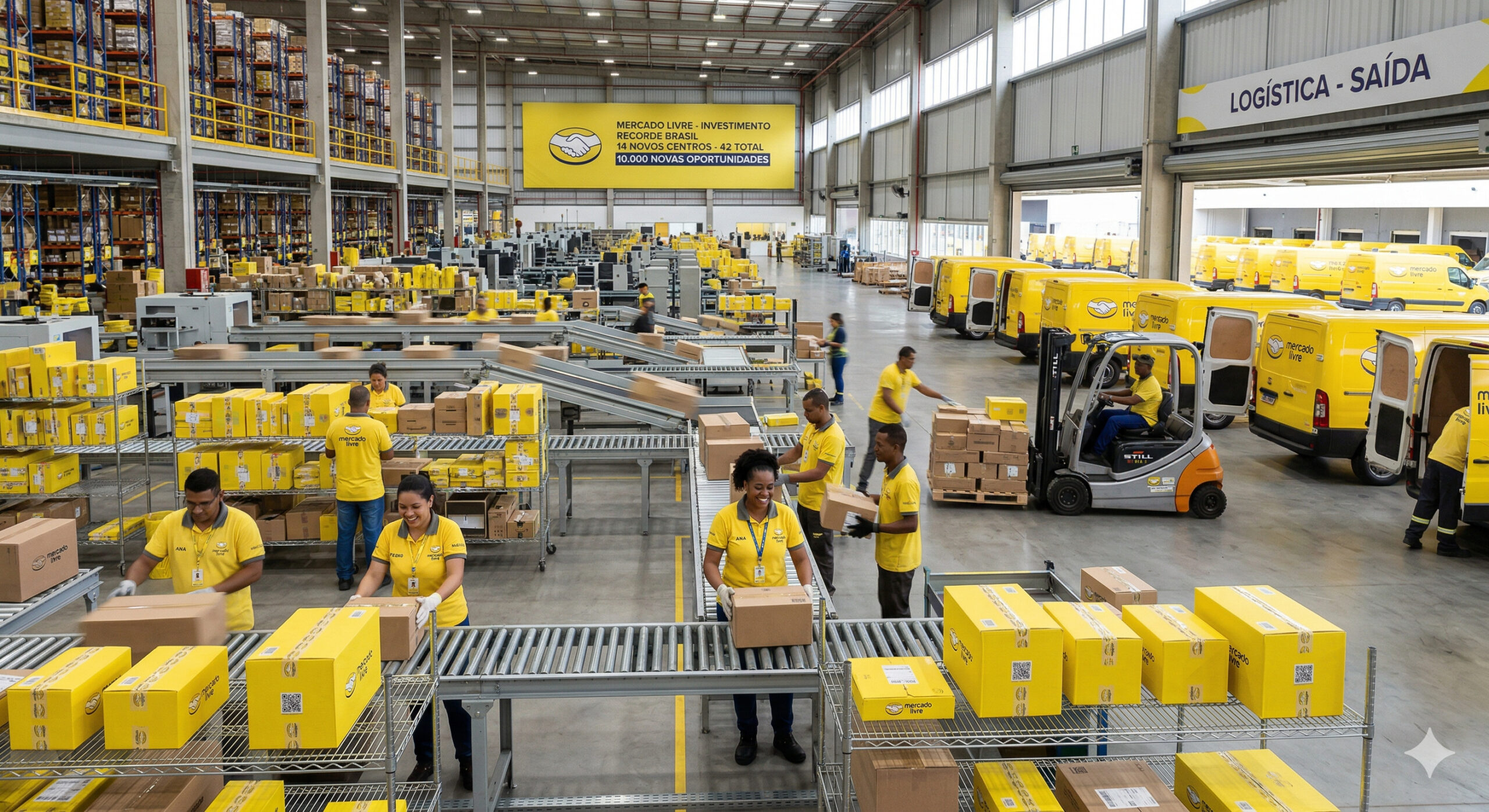
Mercado Livre “opens the vault” and announces a record investment of R$ 57 billion in Brazil in 2026, a value 50% higher than the previous year, with an expansion plan that includes 14 new logistics centers, totaling 42 units in the country and hiring an additional 10,000 employees.
-
How investment in technology can revolutionize the national economy and enhance industrial gains, according to a study that highlights the direct impact on productivity, innovation, and wealth retention within Brazil.

-
(Video): Italian pilot lands plane on moving train at 120 km/h and achieves unprecedented feat in aviation, even with a narrow runway and without direct visual contact.

-
It seems to have come out of a science fiction movie: A Brazilian city where it rains almost every day, recording over 4,000 mm per year, driven by climatic factors — a direct result of its strategic location in the Amazon.

Before the labor reform of 2017, workers and companies could not choose not to contribute to the union tax, which was collected compulsorily and allocated to unions, union centrals, federations, and confederations.
With the flexibilization, payment became optional, which caused a steep decline in the revenue of these entities.
In 2017, the amount paid by individuals and businesses reached R$ 3.045 billion.
In 2024, the amount dropped to just R$ 57.7 million — a reduction of 98.1%.
This data reveals that workers and companies stopped spending nearly R$ 3 billion in the last year on this contribution.
What Is the Union Contribution?
The union contribution is divided into two main categories:
- The employer contribution, paid by companies and employers;
- And the worker contribution, which is the responsibility of the workers.
With the end of the obligation, both groups significantly reduced their spending on this fee.
Data indicates that the worker contribution, which previously cost R$ 2.2 billion to workers in 2017, plummeted to just R$ 19.8 million in 2024.
Sharp Decline in Union Centrals
The union centrals were the most impacted by the change, with a 99.1% drop in revenue over seven years.
The Unified Workers’ Central (CUT), the main representative of workers, saw its revenue decrease from R$ 62.2 million in 2017 to only R$ 347 thousand in 2024.
Among employer confederations, the National Confederation of Commerce of Goods, Services, and Tourism (CNC) experienced a significant reduction, dropping from R$ 29.3 million to R$ 1.2 million in the same period.
The National Confederation of Industry (CNI) also suffered from the decline: from R$ 17.1 million in 2017 to less than R$ 1 million in 2024.
How Have Employer Entities Survived?
While labor union entities face difficulties, some employer organizations have benefitted from significant financial support.
The so-called System S, made up of nine autonomous institutions, provides training services, social assistance, and support to various sectors of the economy.
Among these institutions are:
- Senai (National Service for Industrial Training);
- Senac (National Service for Commercial Training);
- Sesc (Social Service of Commerce);
- Sesi (Social Service of Industry);
- Senar (National Rural Learning Service);
- Sescoop (National Cooperative Learning Service);
- Senat (Social Service of Transportation Learning);
- Sest (Social Transportation Service);
- Sebrae (Brazilian Support Service for Micro and Small Enterprises).
These entities receive contributions from companies calculated based on rates defined by the FPAS code (Social Security and Assistance Fund).
This revenue has helped maintain services even after the end of the union tax.
Real Economy for Brazilians
For workers, the end of the mandatory collection represented significant savings in the household budget.
In 2024, Brazilians spent only R$ 19.8 million on union contributions, a drastic drop compared to R$ 2.2 billion paid in 2017.
This reduction contributes to workers being able to allocate funds to other needs or personal investments.
Debate in the Supreme Federal Court
Despite the end of the obligation in 2017, the issue of the union tax remains controversial in the Supreme Federal Court (STF).
According to information from Poder360, the STF has been analyzing the Direct Action of Unconstitutionality (ADI) 4067 since 2009, proposed by the party União Brasil (then DEM).
The action questions provisions of law 11,648 of 2008 that allocate 10% of the compulsory union contribution to union centrals.
The party argues that these funds should have a specific purpose and cannot be used to cover activities that go beyond the direct interests of professional categories.
The ruling, which was scheduled for May 2025, has been suspended.
Currently, there are three votes in favor of maintaining the compulsory assistance contribution — a modality that could represent a new form of collection, no longer compulsory but assistance-based.
The ruling awaits the vote of Minister Gilmar Mendes, who requested a view to analyze more deeply.
Possible Return of the Union Contribution?
Defenders of compulsory collection argue that the fee should not be called “union tax”, because, in practice, the worker could opt not to pay.
However, to avoid the deduction, the worker must expressly state their opposition to the collection, often in person — which does not always happen.
Thus, many workers end up contributing unintentionally, and the money goes to union entities.
This practice should be discussed again in the Supreme Court, which may define the future of the collection in the country.
What Lies Ahead?
The end of the mandatory union contribution was a change that profoundly impacted the Brazilian union system and the relationship between workers, employers, and their representations.
With billions not paid annually, the financial sustainability of these entities is at stake, especially for union centrals.
On the other hand, workers and companies gained significant financial relief.
Still, the debate in the STF keeps the issue open, which may bring news in the coming months about the format of the union contribution in Brazil.
Do you think the union contribution should return to being mandatory to ensure the sustainability of unions? Or is the freedom of choice more important for the worker?







Seja o primeiro a reagir!