





 Portuguese
  English
  Spanish
  4 min of reading
  5 comments


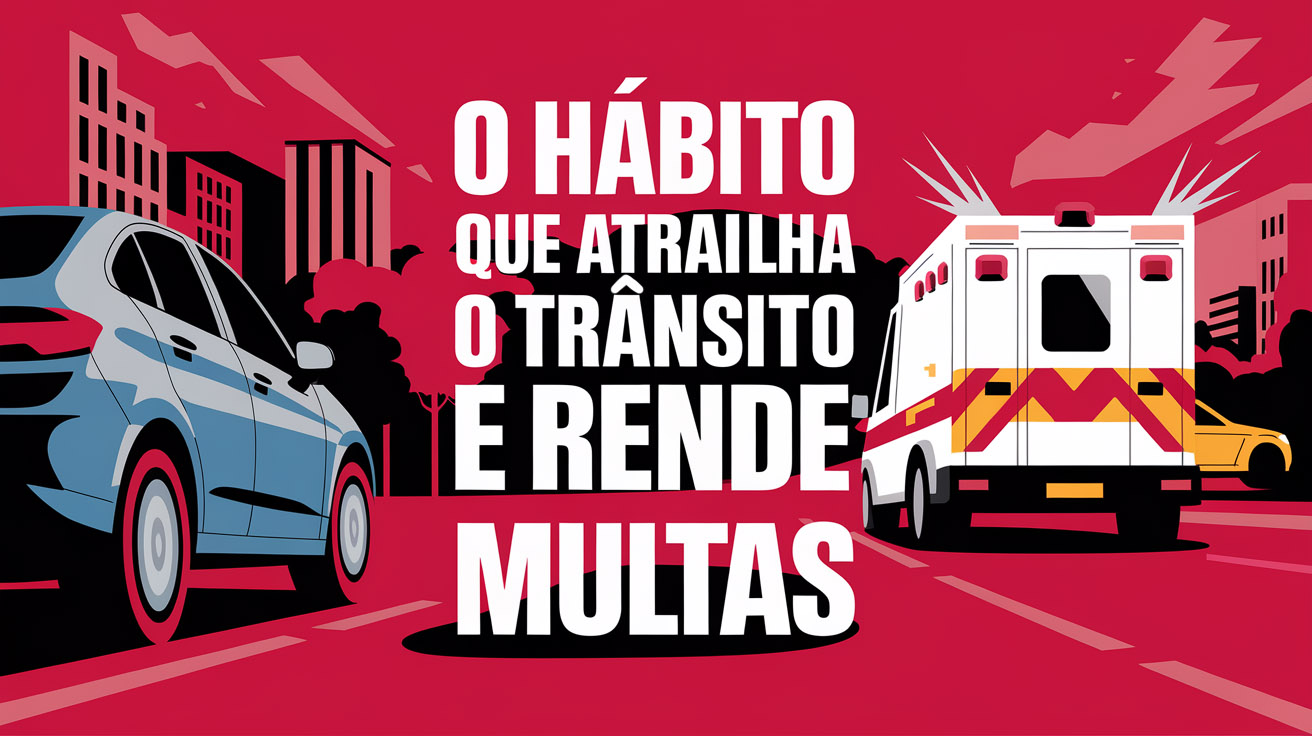


You May Be Making a Mistake in Traffic! Find Out Why This Failure Is an Offense That Harms Urban Mobility and Discover How to Avoid Penalties in Your Day-to-Day Driving.
In the chaos of traffic in large cities, small habits of drivers can be responsible for big problems.
Unbeknownst to them, many drivers end up contributing to traffic jams, accidents, and even blocking emergency vehicles.
Among the behaviors that most impact road flow, a very common mistake has drawn the attention of authorities and generated penalties.
-
Lula responds directly to Trump and says that Pix is from Brazil and will not change under pressure from anyone, after a report from the United States pointed out the Brazilian payment system as an American trade barrier.

-
Amazon has just announced a new fee on all deliveries, and your online purchases will become more expensive starting April 17, including for those buying from the United States here in Brazil.

-
He sold his share for R$ 4 thousand, saw the company become a giant worth R$ 19 trillion, and missed the opportunity of a lifetime.

-
Elon Musk’s Starship megafrocket puts $8 billion at risk, raises alarms in the market, and could affect technology, mining, and space internet startups in the coming years.


According to a report on the Terra portal, in Porto Alegre, a growing number of drivers insist on driving slowly in the left lane, disregarding traffic regulations and harming urban mobility.
Currently, the Brazilian Traffic Code (CTB) establishes that this lane should be used exclusively for overtaking, but many drivers travel at speeds well below the limit, creating barriers for other vehicles.
This habit can not only lead to fines and points on the National Driver’s License (CNH), but also increase the risk of accidents.
What Does the Legislation Say About the Left Lane?
Traffic legislation in Brazil is clear: the left lane should be used only for overtaking and for the passage of faster vehicles.
When a driver remains in this lane unnecessarily, they violate the rules established in Article 198 of the CTB, which prescribes a penalty for those who “fail to yield the left lane when requested.”
This offense is considered of medium nature, resulting in four points on the CNH and a fine of R$ 130,16.
However, the consequences of this behavior go far beyond the financial penalty, as they can compromise road safety and traffic flow.
Even if the driver is within the speed limit, they must yield to vehicles approaching faster.
Unnecessary staying in the left lane can force other drivers to make dangerous overtaking maneuvers to the right, which is also prohibited by the CTB and can result in even more severe infractions.
Impact on Mobility and Safety
In addition to the fine, drivers occupying the left lane unnecessarily hinder the movement of emergency vehicles, such as ambulances and police cars.
In critical situations, seconds can make the difference between saving or losing a life, and blocking the fast lane can impede timely assistance.
Another negative effect of this behavior is the increase in traffic jams.
When a vehicle travels slowly in the left lane, it limits traffic flow and creates unnecessary bottlenecks, especially on heavily trafficked roads.
According to the aforementioned report, in cities like Porto Alegre, where traffic is already overloaded during peak hours, this practice can result in significant delays for drivers heading to work, school, or other daily commitments.
Moreover, the insistence of some drivers to remain in the left lane can encourage dangerous overtaking maneuvers to the right.
This maneuver, in addition to being prohibited by the CTB, is classified as a serious infraction, subject to seven points on the CNH and a fine of R$ 293,47.
When a driver finds themselves forced to change lanes abruptly to overtake a slower car, the risk of side collisions and pile-ups increases considerably.
How to Avoid the Infraction and Contribute to Safer Traffic
To ensure safety and traffic flow, it is essential that drivers respect the circulation rules and use the left lane correctly. Here are some guidelines:
Use the left lane only for overtaking. As soon as you complete the maneuver, return to the right lanes.
If you notice a vehicle approaching rapidly on the left, yield the lane. Even within the speed limit, blocking the lane may result in a fine.
Avoid reducing speed unnecessarily in the left lane. If you need to drive more slowly, use the right lanes.
Be attentive to signage and traffic rules. On some highways, there are signs indicating the correct use of lanes, reinforcing the need to keep the left free for overtaking.
Need to Comply with Traffic Laws
Respecting traffic rules should not be seen merely as a legal obligation, but as a way to contribute to a safer and more efficient environment for everyone.
Staying unnecessarily in the left lane is a mistake that can lead to fines, hinder mobility, and even put lives at risk.
Therefore, the awareness and responsibility of drivers are essential to avoid accidents, ensure road flow, and facilitate the passage of emergency vehicles.
Traffic is a shared space, and small actions can make a big difference for safer and more efficient travel.
Have you ever experienced situations where a slow driver in the left lane disrupted traffic flow? Share your thoughts in the comments!





Nossa gostei demais dessa reportagem.
É o que mais existe aqui em vitória no e.s.
Uma coisa terrível,uma falta de educação que não tem fim.
Isso pra mim é o que mais me irrita no trânsito.
Bom achei legal a matéria, mas o que precisa ser feito é colocar placa de advertência no lado esquerdo da via alertando os motoristas lentos. Motoristas lentos use a faixa da direita sujeito a multa
Realmente a lei diz isso e deve ser cumprida. O ou a motorista, só aprenderá isto quando começar a doer no bolso.
Mais em avenida de duas faixas de cada lado observamos que a direita, serve para estacionar. E quando não quando alguém vem na mesma e encontra um obstáculo. O mesmo não quer saber quem vem ao lado dele. Aqui em Petrolina PE, se a Prefeitura quisesse, dispensaria todos os IPTU e iria resolver os problemas da cidade com as multas em todos os tipos de ciclomotores.