





 Portuguese
  English
  Spanish
  5 min of reading
  0 comments


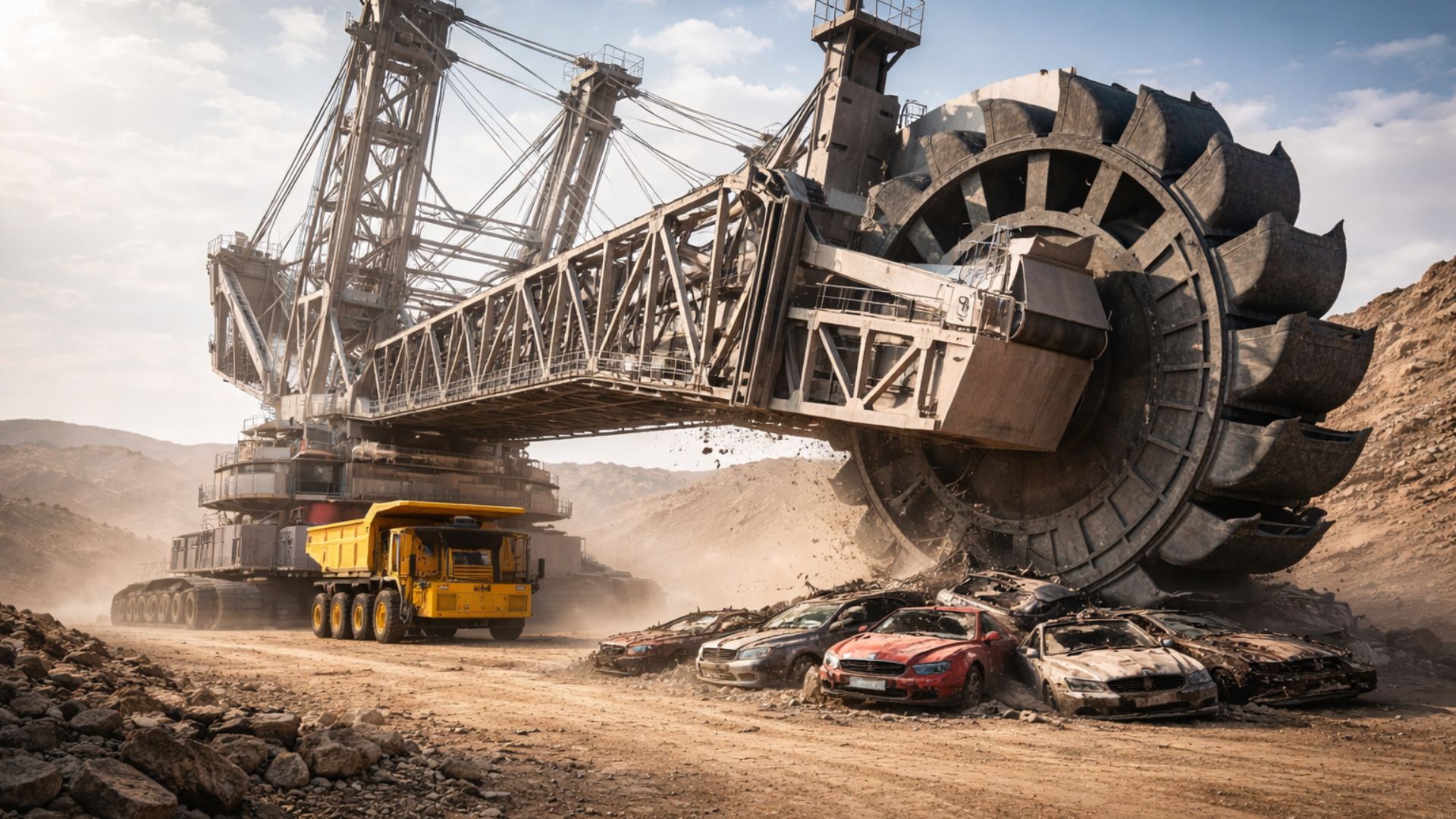
Giant Machines Used in Mining, Dredging, and Heavy Infrastructure Reveal the Scale of Modern Industrial Engineering, with Equipment Capable of Moving Colossal Volumes of Earth, Building Entire Bridges, and Excavating Mountains. Recent Narratives Highlight Impressive Numbers and Technologies That Transform Landscapes at an Accelerated Pace.
China concentrates some of the most gigantic machines in operation in mining, heavy construction, and infrastructure works, with equipment that combines industrial scale, automation, and the ability to reshape large areas in a short time.
In a segment that gained traction on social media, the channel Power of Industry describes a sequence of “mechanical titans” used to excavate, transport, lift, and relocate structures, associating productivity and force numbers that draw attention due to their size.
In practice, some of these capabilities are documented by public and technical sources, as in the case of bucket-wheel excavators used in open-pit mines, capable of operating at very high daily volumes, and Chinese dredging and beam-launching equipment that have become references due to performance and repetition in projects.
-
Goodbye iron: new technology from Xiaomi promises to revolutionize the way we iron clothes with 500 kPa steam, continuous flow of 120 g/min, heating in 65 seconds, and six smart modes for different fabrics.

-
Rio Pardo, the most mysterious city in Rio Grande do Sul: untouched Pampas castle, the missing treasure of the Devil Boy, bride’s saint, invisible tunnels, and a 200-year curse today.

-
China retires the J-7 fighter after years of military protection and can now transform military items into drones, following more than 60 years of operation of the J-7, derived from the MiG-21, with thousands of units produced and strategic use in the PLAAF and PLANAF.

-
Volunteers are sought to live in the mountains for a month: a study pays people to stay at 2,500 meters, with 24-hour monitoring of sleep, metabolism, and blood pressure.

Mining on a Landscape Scale

In open-pit mines, the logic is simple: remove large quantities of material with the least number of stops possible, keeping the mining front advancing steadily.
Buck-wheel excavators, combined with conveyor belts and spreaders, are designed specifically for this purpose and can reach capacities on the order of up to 240,000 m³ per day in large operations, according to records from the industry and manufacturers of such systems.
This scale supports the comparison with dozens of Olympic-sized swimming pools of earth moved in 24 hours, although actual performance varies according to geology, soil moisture, belt logistics, and the operational strategy of the complex.
This is why, when closed numbers attributed to a single specific piece of equipment appear, verification often requires identification of the model, the mine, and the complete transportation arrangement.
The same applies to the narrative that the machine requires its own electrical substation to operate, because the energy demand of equipment of this size is usually high and may involve dedicated infrastructure.
Extreme Force in Rock Excavation
Another point highlighted by Power of Industry is a “mega shovel” for mining, attributed to a state-owned company, with a supposed attack force exceeding 3,000 tons, capable of ripping solid rock without explosives and lifting dozens of tons in a single swoop.
In the sector, large excavators exist in hydraulic and cable versions, and the capacity per cycle varies with the type of bucket and the material.
Even so, the exact numbers mentioned in this description do not easily appear in public documentation associated with the name mentioned.
Nonetheless, the principle is real. In some mines, especially when the rock is fractured or in less competent materials, high-power equipment can reduce the use of explosives, although drilling and blasting remain common methods for breaking down more resistant rock.

Giant Trucks and Mining Logistics
The production chain in mining doesn’t end with excavation, as the bottleneck quickly shifts to transportation, where off-road trucks and giant loaders dominate the scene.
The channel mentions a piece of equipment identified as FMWL600, described as a loader or truck with 600 tons of payload and power in the thousands of horsepower.
It is also mentioned that the vehicle could cause ground tremors within a 100-meter radius when accelerating while loaded.
There are mining trucks on the global market with load capacities in the hundreds of tons.
China also manufactures and operates large-scale models used in major mines.
However, without identifiable technical documentation with the cited name, those numbers remain associated with the description provided in the channel’s content.
Dredging Ships Capable of Creating Territory

One of the cases with consistent public data is the Chinese dredger Tian Kun Hao, often described as an advanced dredging vessel capable of creating and maintaining coastal areas.
According to information released by the state agency Xinhua, the ship is about 140 meters long.
The vessel can dredge up to 35 meters deep. Its operational capacity reaches approximately 6,000 m³ of sediments per hour.
The system also allows discharging dredged material through pipes up to 15 kilometers away.
This type of equipment is used in port expansion projects, coastline restoration, and large-scale maritime works.
Tunnel Boring Machines That Excavate and Construct Simultaneously

The narrative also mentions tunnel boring machines known as TBMs, machines designed to excavate rock while installing tunnel lining just behind the cutting face.
This type of technology allows precast concrete rings to be assembled almost simultaneously with excavation, quickly forming the final tunnel structure.
Large underground projects in Chinese cities have utilized this type of equipment to create subway lines and urban rail corridors.
Machine That Launches Giant Bridges
Among the best-known equipment is the SLJ900/32 beam launcher, frequently showcased in infrastructure works in China.
The equipment weighs around 580 tons and measures over 90 meters in length.
The machine moves on wheels and supports its structure on the already constructed bridge pillars. This system allows the positioning of giant concrete beams without the need for cranes on the ground.
The technology has been widely used in high-speed rail and elevated viaduct projects.
Chinese railway expansion exceeds 40,000 kilometers of high-speed lines, a number frequently cited in international infrastructure reports.
When an Entire Building Needs to Be Moved
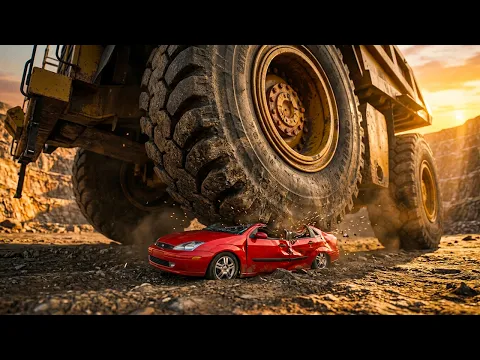

Another episode that gained significant international attention involved the moving of a school building in Shanghai, relocated by dozens of meters using hydraulic platforms controlled by computers.
The structure weighed approximately 7,600 tons. Engineers used support and movement systems that function like synchronized mechanical legs.
This technique allows the relocation of entire buildings without demolition, preserving constructions while urban works advance around them.
This type of operation requires continuous monitoring of load distribution, structural stability, and soil behavior.







-

-

3 pessoas reagiram a isso.