





 Portuguese
  English
  Spanish
  4 min of reading


As the World Strives for the Energy Transition, Nuclear Power Has Gained Increasing Importance, Being Highlighted as a Key Part of the Decarbonization Process.
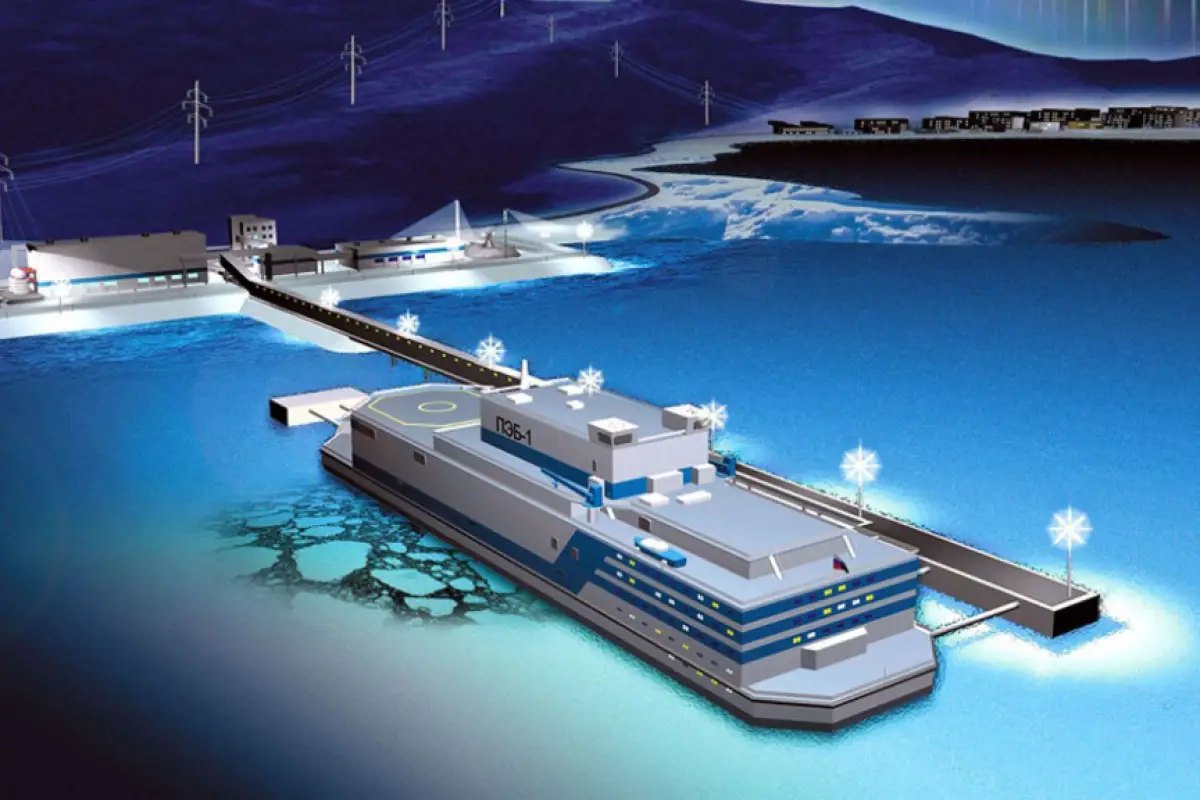
Therefore, in addition to the existing conventional nuclear power plants, there is also a growing interest in developing floating nuclear power plants. This technology promises to bring numerous benefits, from a flexible and portable location to the possibility of providing clean and sustainable energy to remote areas. However, it is important to consider the potential risks associated with floating nuclear power plants before opting for them.
The former president of Eletronuclear, Leonam Guimarães, believes that Brazil has all the necessary conditions to build and operate floating nuclear power plants. According to him, these plants would be extremely beneficial for the country, as they could power isolated systems in the Amazon and supply large industrial units that consume electric power and industrial heat, such as the aluminum industry.
Moreover, one of the positive aspects is that there is already an infrastructure in place to build submarines for the Brazilian Navy, thus enabling the manufacturing of national embedded reactors. In this way, according to Guimarães, Brazil would have a significant competitive advantage in developing such facilities.
-
Fukushima Marks A Turning Point In Japan’s Energy Policy: After The Disaster, The Country Shut Down Its 54 Nuclear Reactors And, 15 Years Later, Only A Small Portion Have Returned To Operation
-
How Japan Overcame The Nuclear Bomb And Now Houses Millions In Hiroshima, While Ukraine Lost Chernobyl?

-
Bill Gates Receives Historic Approval to Build Giant 345 MW Nuclear Plant in the U.S. and Promises to Generate Up to 500 MW of Energy with Innovative Technology

-
India Opens Nuclear Energy to Private Capital to Accelerate Projects and Attract Billions, While Brazil Remains Stalled at Angra 3 and Discusses Who Will Foot the Bill for Completion

The history of the floating nuclear power plant is old and began with the land prototype of the propulsion of the nuclear submarine Nautilus, the first nuclear vehicle for generating electric power in the world. Since then, more than 400 nuclear submarines have been built and operated very safely over the years. This technology has been used to produce electricity in a clean and safe manner, contributing to the creation of a better future.
The United States, Germany, and Japan have created nuclear submarines for military purposes, as well as nuclear merchant ships for civilian use. Russia also has a fleet of nuclear icebreaker ships. In the 1970s, the vessel Sturgis began operations in the Panama Canal, ensuring supply and operational functioning during the Vietnam War. Nowadays, these ships play an important role in protecting marine life and natural resources, as well as providing clean and safe energy to coastal populations.
Submarines, ships, and nuclear icebreakers from the United States, Germany, Japan, and Russia are military tools of great importance. The Sturgis vessel, for example, aided in supply during the Vietnam War. Nowadays, these ships not only protect marine life and natural resources but also provide a clean and safe energy source for coastal cities.
What Are the Most Recent Uses of This Type of Plant?
Countries are always looking for new solutions to power energy to their remote regions. Russia, for example, recently adopted the Akademik Lomonosov ship, equipped with two PWR reactors of 35 MW each, to supply electricity to the Pevek region, on the coast of Siberia. Additionally, China has ordered five floating units that will be used to bring power to small islands located in the South China Sea.
For its part, the United States has also decided to invest resources in floating plants. France is still studying submerged plants near the European coast. Thus, technological innovations continue to be essential to ensure access to energy in remote and isolated locations.
Brazil has great possibilities to explore floating nuclear power plants. These plants can provide clean and renewable energy to coastal communities, helping to reduce environmental impact while providing local jobs. They could also be used to monitor oceans and create energy more sustainably.
Furthermore, floating nuclear power plants could be used for military purposes, such as establishing a strategic naval presence in the region. This technology opens up a range of possibilities that can bring many benefits to Brazil!
The use of floating plants for supplying electricity in the Amazon is a visionary idea that is becoming more realistic today. These plants offer excellent logistical advantages, such as reducing dependence on isolated systems of fossil fuels, such as diesel. Utilizing this technology would also help improve the autonomy and energy security of these remote systems while contributing to the environment.
Floating plants offer a practical solution for supplying electricity in the Amazon, as they allow a nuclear reactor to operate for long periods without the need for refueling. Additionally, when a refill is necessary, it is possible to relocate a replacement floating nuclear plant to the region while the current unit is refueled in a specialized shipyard.
These plants can also be used to power large industries, such as aluminum, as they facilitate the transportation of the reactor to the site without the need for extensive construction. The technology of floating plants provides many advantages and solutions to the lack of electricity in the Amazon region.








Seja o primeiro a reagir!