






 Portuguese
  Spanish
  3 min of reading


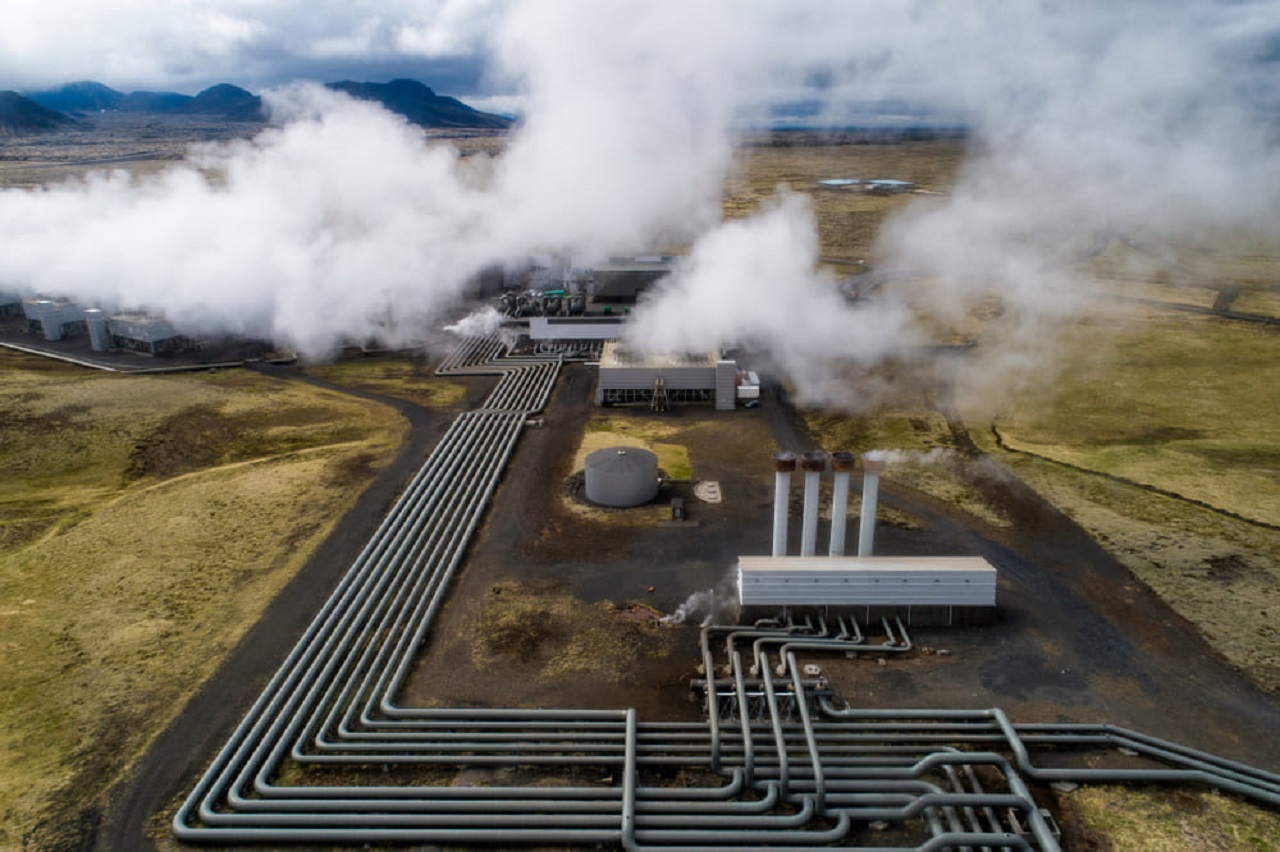
Scientists Are Studying a Way to Use Geothermal Energy to Meet the Existing Demands for Clean and Renewable Energy on the Planet. A Small Part of This Energy Will Be Enough to Meet the World’s Entire Energy Demand.
Geothermal energy, that is, the heat beneath our feet in the depths of the Earth, can generate clean and renewable energy sufficient to meet global needs as the population moves away from fossil fuels. According to Matt Houde, researcher and entrepreneur, the total energy content of the heat stored underground exceeds the annual energy demand of the planet by a factor of one billion. Thus, harnessing a part of it is more than enough to meet human energy needs for the foreseeable future.
New Drilling Technique Could Highlight Geothermal Energy
In the theories stated above, there’s only one problem: There is no technology that allows drilling deep enough to capture this energy. To give you an idea, the deepest hole ever drilled, known as the Kola well, reached just over 12 km in depth, in a remote area of northwest Russia.
However, it took 20 years for it to be completed, as conventional equipment, such as mechanical drills used to drill oil wells, do not withstand the conditions at those depths. According to Houde, the truth is that it will take hundreds, if not thousands, of Kola wells if we aim to scale geothermal energy to the required capacity.
-
Brazilian scientists are simultaneously advancing two research projects on clean hydrogen and driving solutions that could transform the energy matrix, enhance industrial competitiveness, and accelerate large-scale emission reduction targets.

-
Advancement in renewable energy: A R$ 150 million project launched by Petrobras and Finep aims to create state-of-the-art electrolyzers for green hydrogen, strengthening national research and preparing Brazil to compete in a billion-dollar energy market.
-
Illiterate or semi-literate grandmothers were trained to repair solar systems, open rural workshops, and light up homes that still depended on kerosene.
-
The world has bet on green hydrogen as the fuel of the future, but now faces the side effect: producing 1 kilogram requires about 9 liters of ultrapure water, and the largest projects on the planet are precisely in the driest regions of the Earth, where water is already scarce for people.





However, there is a trick up the sleeve, a technique and drilling only seen so far in movies. Houde’s aim is to develop a microwave gun that will vaporize the rocks below, a technique called thermal drilling, a technology that has been proven in an MIT laboratory.
Machine Generates a Temperature of Up to 150 Million Degrees Celsius
In fact, the team of Professor Paul Woskov at MIT has been working with thermal drilling, called gyrotron, which has been used for over 70 years in research on nuclear fusion as an energy source. Gyrotrons are microwave oscillators that generate a temperature of up to 150 million degrees Celsius, so that the tritium fuel reaches the plasma state necessary for fusion.
The aim of Houde and Volkov is to use common drilling technologies to penetrate the surface layers until reaching the crystalline basement, the layer of metamorphic or igneous rocks that are part of the outer portion of the continental crust, at which point the gyrotrons will come into action.
It is important to highlight that humanity has had great ideas throughout history, but it is not always so easy to make them a reality. And no matter how much financial resources Houde can gather in his quest to the center of the Earth, there are several challenges to be overcome.
Challenges for Producing Clean and Renewable Energy
The problem is simply basic science, considering that everything we believe we know about rocks and their behaviors at great depths is theoretical, given that we have never reached them to study them. Understanding how rocks behave under high pressures and temperatures at great depths is essential to know what will be required to drill them.
Furthermore, gyrotrons are experimental equipment, and few of them have been produced, none designed for operation similar to a drilling field. For them to be applied in deep geothermal drilling, an entire equipment industry must be developed to make these devices robust and reliable in a field environment.
There are also engineering hurdles that must be faced. The main one is how to ensure the complete removal of the ash generated and how to transport this ash up the well for long distances.







Be the first to react!