





 Portuguese
  English
  Spanish
  5 min of reading
  0 comments


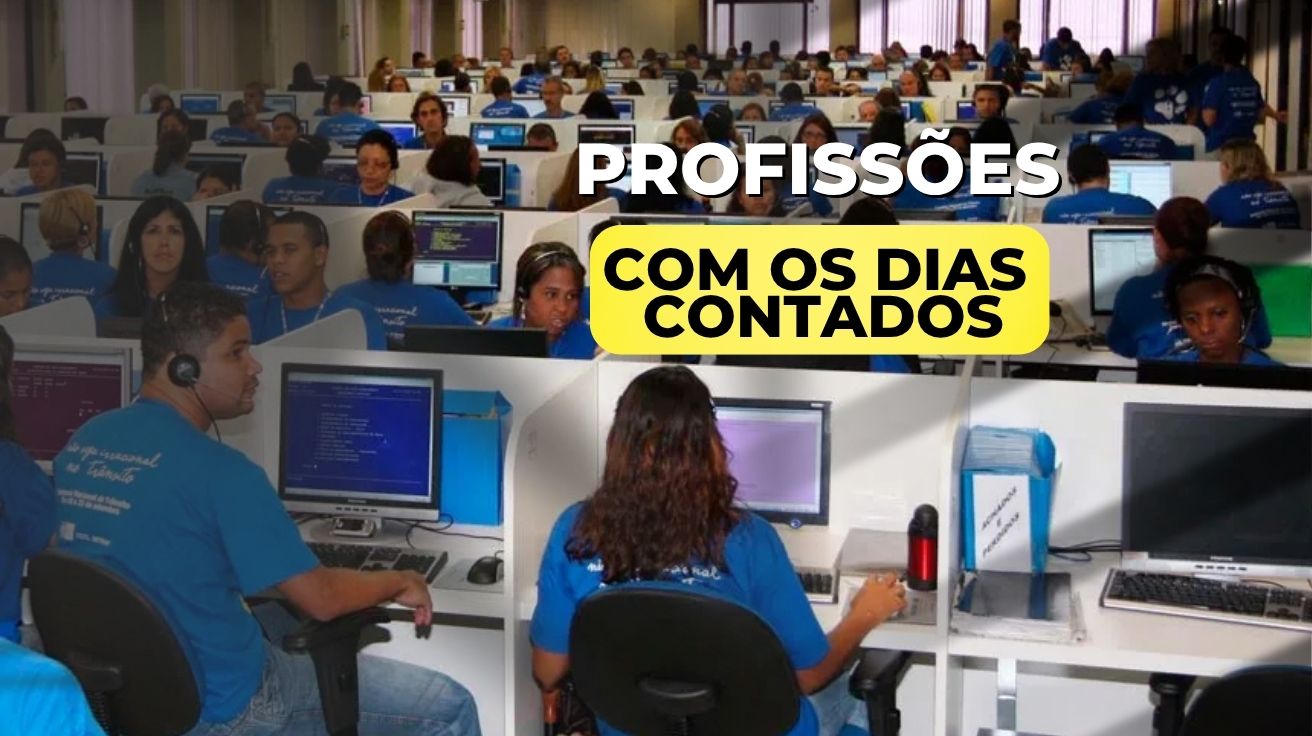
Advancement Of Artificial Intelligence Puts Traditional Jobs At Risk Of Extinction, Requiring Adaptation And New Skills. Companies And Professionals Seek Reskilling To Survive The Changes.
The accelerated evolution of artificial intelligence (AI) is already redefining the job market in various countries, raising concerns about the survival of several traditional professions.
The Canadian scientist Geoffrey Hinton, one of the most influential names in the development of neural networks and winner of the Nobel Prize in Physics in 2024, recently highlighted the imminent risk of extinction for occupations such as marketing analyst and call center operator, driven by advances in automation and new digital technologies.
During an interview on the podcast “Diary of a CEO,” Hinton warned that automation will primarily affect so-called “white-collar” workers — those who operate in office environments and perform essentially intellectual functions.
-
Tourists on Everest were poisoned by guides who mixed substances in food to provoke false symptoms of altitude sickness while helicopter operators and hospitals charged inflated rescue fees to insurance companies.

-
Few people know this, but Neil Armstrong, one of the most famous NASA astronauts in history, survived the Korean War after jumping from the plane during his seventh combat mission aboard the USS Essex aircraft carrier of the United States.

-
Diving with a camera in Lake Furnas reveals a submerged city with an entire street, almost intact houses, a preserved bridge, a wood stove, a Kombi, and even a bus at the bottom of the largest lake in the Southeast.

-
Iceland accidentally drilled into a magma pocket at 2,100 meters and revealed that the extreme heat beneath the crust could pave the way for a new source of continuous energy.


Among the examples mentioned are paralegals, administrative assistants, call center attendants, and data analysts, all considered susceptible to replacement by AI-based automated systems.
The scientist, who has also been a researcher at Google and an emeritus professor at the University of Toronto, emphasizes that, given the increasing sophistication of algorithms, only highly skilled professionals will have greater protection against automation.
“You would have to be very qualified to have a job that AI simply could not do,” Hinton emphasized.
He also predicts that, in many sectors, one person may be able to perform tasks previously undertaken by ten employees, drastically reducing the number of available positions in certain areas.
Jobs At Risk And Impact On Youth
With a focus on the future of work, Hinton expressed special concern regarding young people entering the job market today.
According to him, jobs centered on customer service, such as working in call centers, are among the most threatened, which requires caution when choosing a career.
Despite this, the expert makes an important distinction: roles that primarily depend on physical activities, such as health professionals, tend to show greater resilience in the face of automation, at least in the coming years.
Artificial Intelligence Can Create New Job Opportunities
The discussion about the impact of artificial intelligence is not limited to the risks of job extinction.
Recent studies show that, while technology eliminates jobs, it can also create new opportunities.
A report from the World Economic Forum estimates that by 2030, approximately 170 million new jobs are expected to be created, while about 92 million may be eliminated, resulting in a net gain of 78 million new positions.
According to Adriano Mussa, academic director at Saint Paul Business School, this is the first time in years that a favorable net projection for job creation has been observed.
The survey analyzed by Mussa also reveals that traditionally valued positions, such as financial manager or marketing analyst, continue to exist but require different skills than those traditionally demanded.
The adoption of new technologies requires professionals to have digital skills, data analysis capabilities, and mastery of automation tools.
This transformation in required skills reinforces the importance of reskilling — a term that defines the process of retraining workers to adapt to market demands.
The Brazilian Scenario And The Need For Reskilling
In the Brazilian context, the scenario is similar to the global landscape.
According to the global report from the World Economic Forum, approximately 39% of the skills needed to work in Brazil will need to be updated or replaced due to technological innovations.
The need for reskilling emerges as one of the main trends to ensure employability and sustainability of careers amid digital transformation.
Generation Z And The Challenges In The Job Market
The entry of the Generation Z, composed of young people born from 1997 onwards, has brought new challenges to the job market.
According to a study conducted by Hult International Business School, 37% of managers say they prefer to invest in artificial intelligence solutions rather than hiring recent graduates, prioritizing more practical and scalable alternatives.
The fear of replacement by AI is felt by 62% of young people from this generation, according to research by Deloitte.
Another important aspect involves managing these new professionals.
Data from ResumeBuilder in 2023 shows that 74% of managers consider Generation Z more difficult to manage than previous generations.
Although they are recognized for their technological fluency and adaptability, many face challenges related to experience and alignment with organizational culture.
For Bruno Medeiros Durão, a lawyer and entrepreneur, investing in the development of young talents represents a strategic advantage.
He argues that, with proper training, Generation Z can overcome experience gaps and add value to transforming organizations.
Artificial Intelligence As An Ally In The Corporate Environment
Given the challenges of automation, Brazilian companies have been adopting strategies to integrate artificial intelligence into daily corporate life, seeking to promote efficiency gains without sacrificing human potential.
Lojas Renner, for example, invests in the internal movement of talent using AI to identify profiles and enhance strategic projects, prioritizing the internal talent pool before making new hires.
Regina Durante, director of people and sustainability at Renner, emphasizes that this policy reinforces the value of employees and encourages internal mobility.
In the telecommunications sector, Vivo has been implementing digital processes since before the pandemic, being one of the pioneers in using AI for recruitment.
According to Fernando Luciano, vice president of human resources at the company, artificial intelligence enables quick identification of candidates with greater cultural alignment, speeding up hiring processes and promoting data-driven decisions.
Meanwhile, Gerdau, a company in the steel industry, created G.Data, an internal school for training in data science.
Since 2023, over 150 professionals have been trained with the aim of enhancing operational efficiency and improving industrial safety, using resources such as digital twins for process simulations.
The CEO of Gerdau, Gustavo Werneck, emphasizes that digital transformation is deemed essential for the company’s survival.
The Future Of Work In Light Of Automation
These examples demonstrate that, despite the threats to traditional employment, artificial intelligence can be a strategic ally for companies and professionals willing to invest in retraining and updating skills.
Reskilling thus emerges as a central element to ensure employability in the digital future and minimize the negative impacts caused by automation.
In light of this scenario, the question arises:
How do you believe artificial intelligence will transform your profession in the coming years, and what can be done to keep up with this evolution?








Seja o primeiro a reagir!