





 Portuguese
  English
  Spanish
  5 min of reading
  0 comments


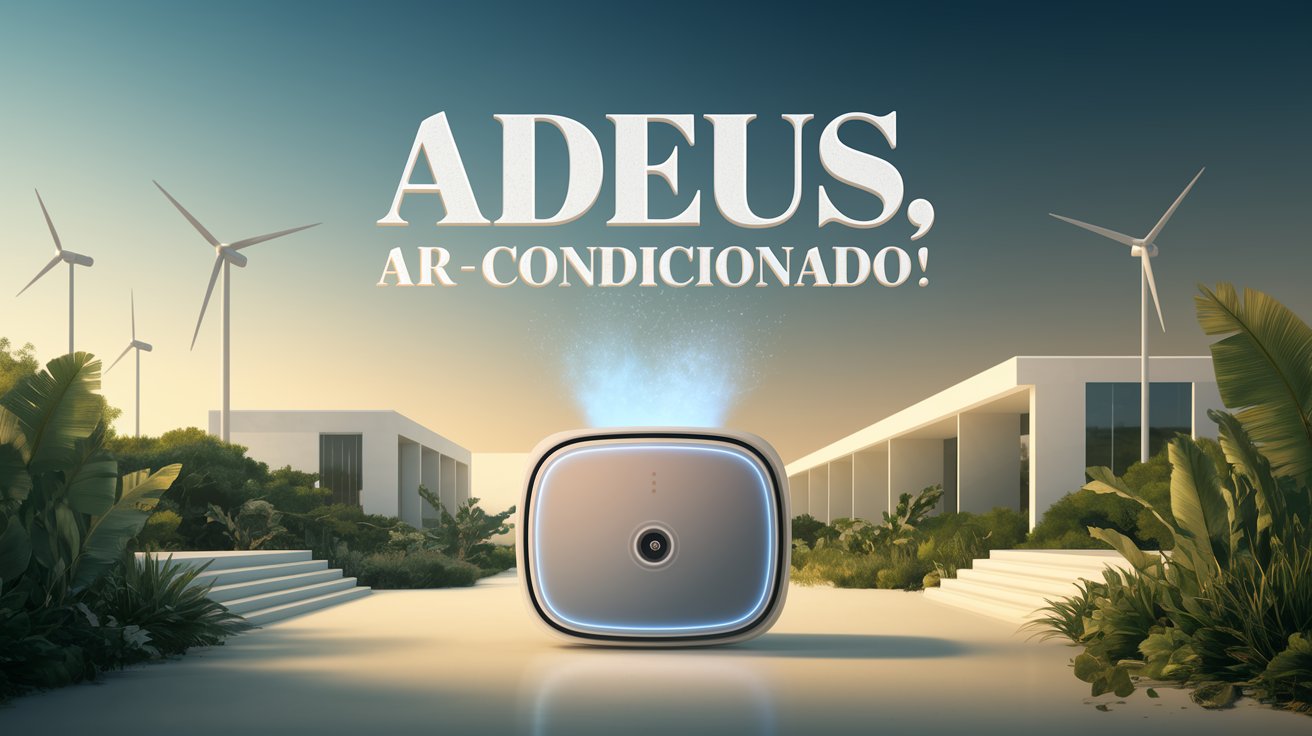
French Startup Develops Surprising Technology That Promises to Transform Thermal Comfort at Home and Work, with Economy and Innovation That Catch the Attention of Experts and International Investors.
Imagine a climate control system capable of keeping environments cool even on the hottest days — all without using refrigerant gas, without an external unit, and with five times lower consumption than that of a traditional air conditioner.
It sounds like something from the future, but this technology already exists and comes from France.
The startup Caeli Energie, in partnership with the French National Center for Scientific Research (CNRS), has developed a revolutionary alternative to conventional cooling methods.
-
Goodbye iron: new technology from Xiaomi promises to revolutionize the way we iron clothes with 500 kPa steam, continuous flow of 120 g/min, heating in 65 seconds, and six smart modes for different fabrics.

-
Rio Pardo, the most mysterious city in Rio Grande do Sul: untouched Pampas castle, the missing treasure of the Devil Boy, bride’s saint, invisible tunnels, and a 200-year curse today.

-
China retires the J-7 fighter after years of military protection and can now transform military items into drones, following more than 60 years of operation of the J-7, derived from the MiG-21, with thousands of units produced and strategic use in the PLAAF and PLANAF.

-
Volunteers are sought to live in the mountains for a month: a study pays people to stay at 2,500 meters, with 24-hour monitoring of sleep, metabolism, and blood pressure.


Founded in 2020, the French company has been gaining global prominence by proposing a new path for residential and commercial climate control, focusing on sustainability and energy efficiency.
According to a report published by José Casado in Revista Veja, the innovative system promises to transform the sector by combining economy, practicality, and lower environmental impact.
How Does the Technology That Aims to Replace Air Conditioners Work?
The system developed by Caeli Energie is based on principles of physics and thermal engineering.
The main innovation lies in how the device cools the air: without a compressor, without polluting gases, and with very low electricity consumption.
It is an indirect evaporation system coupled with a dehumidification technology, allowing the cooled air to be dry and comfortable.
In other words, the device uses water to generate cooling without excessively humidifying the environment — one of the main issues with traditional evaporative systems.
The device is ideal for spaces up to 40 square meters and its silent operation makes the appliance attractive for homes, apartments, offices, and even small businesses.
In addition, the company has opted for a minimalist and modern design, with a structure made from recyclable materials, reducing its environmental impact throughout its entire lifecycle.
Energy Consumption Up to Five Times Lower
One of the biggest advantages of the equipment is its energy consumption.
According to the manufacturer, the system consumes up to 80% less electricity compared to conventional devices.
This represents not only significant savings on the electricity bill but also a relevant contribution to reducing greenhouse gas emissions.
The absence of refrigerant gas is another highlight.
While traditional systems use hydrofluorocarbons (HFCs), which have a high global warming potential, Caeli Energie’s equipment completely dispenses with these compounds, making it much more sustainable.
Sustainability That Fits in the Budget?
In addition to technically innovating, Caeli Energie has sought to democratize access to its technology.
In 2023, the company received substantial investments from European clean energy funds, allowing it to expand production and reduce the final cost of the product.
The expectation is that by the end of 2025, the equipment will be available in more countries, including Brazil, at competitive prices compared to conventional air conditioner models.
At a time when Brazil is facing increasingly intense heat waves, the arrival of such a product could change the way people deal with thermal comfort.
According to climate and energy experts, the future of the sector hinges on solutions that combine efficiency, low cost, and respect for the environment.
In this context, Caeli Energie’s proposal emerges as a promising alternative, especially in regions where the dry climate favors the use of evaporative systems.
What Do Experts Say?
As pointed out by researchers from CNRS, the system developed is a natural evolution of older evaporative coolers, correcting the main problems of these devices — such as increased relative humidity and limitations in humid environments.
“It is a solution that respects the ecological limits of the planet, without sacrificing thermal comfort for people,” says researcher Antoine Morel, who has been part of the project since its inception.
Other experts also praise the advancement: “The absence of HFC gases, combined with energy efficiency, positions this equipment among the greatest innovations in the sector over the past decade,” emphasizes Brazilian engineer Rafael Santos, a professor at the Federal University of Itajubá (UNIFEI), who studies sustainable alternatives for climate control in the country.
A Global Trend of Change in the Sector
The climate control sector accounts for about 10% of global electricity consumption, according to the International Energy Agency (IEA).
With rising global temperatures and population growth in tropical regions, this demand is expected to increase — raising a red flag for governments, industries, and consumers.
In this scenario, solutions like those from Caeli Energie point to a greener and smarter future, where thermal comfort does not have to come at a high cost to the planet.
The popularization of this technology could pave the way for other innovations in the sector, such as hybrid systems, integrations with solar energy, and control via artificial intelligence — creating a climate control ecosystem that is much more efficient and sustainable.
When Should the New Product Arrive in Brazil?
Although there is still no official date for the commercial launch of Caeli Energie’s technology in Brazil, sources connected to the startup indicate that Latin America is among the priority markets for expansion in 2025.
The high temperatures recorded in Brazil in recent summers, with a thermal sensation exceeding 50°C in some capitals, have sparked the interest of foreign companies in this promising market.
According to José Casado, the climate control sector is experiencing a moment of reinvention.
Companies that previously dominated the market with traditional products are now cautiously observing the rise of startups that bet on innovation and sustainability as competitive differentiators.
Is Traditional Air Conditioning Under Threat?
It is still early to declare the “end” of conventional air conditioning, but the growing demand for eco-friendly alternatives and technological advancements indicate that the climate control of the future will be very different from the current one.
Products like those from Caeli Energie show that it is possible to combine comfort, savings, and respect for the environment — and this is likely to change consumer behavior.
The transition may be gradual, but it is inevitable. Just as incandescent bulbs were replaced by LED models, climate control is moving toward a cleaner and more efficient model.
And you, do you believe that traditional air conditioning will be replaced by greener technologies in the coming years? Share your opinion in the comments!






Seja o primeiro a reagir!