





 Portuguese
  English
  Spanish
  3 min of reading
  0 comments


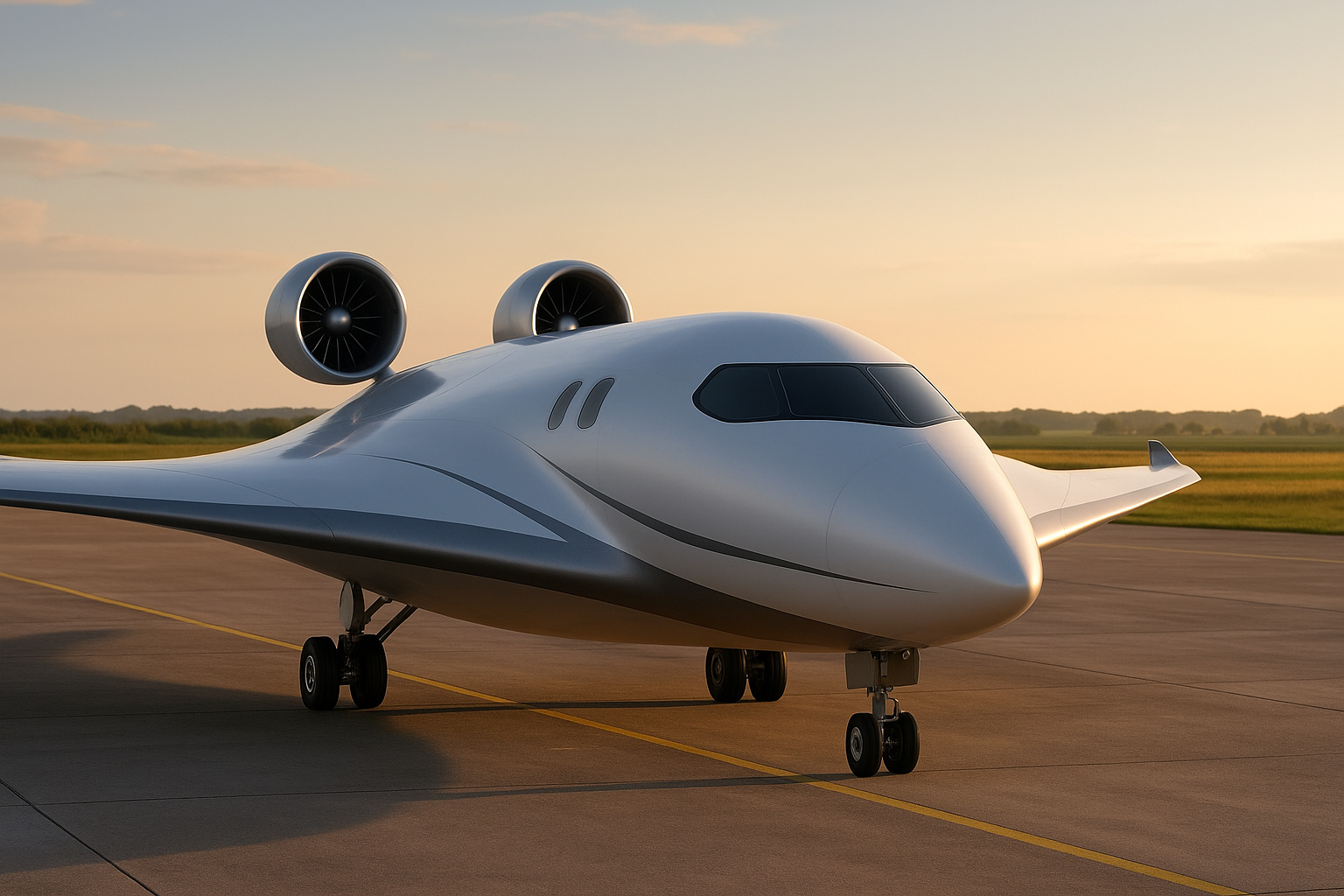
U.S. Startup Promises to Launch Horizon Plane by 2030 With Innovative Technology That Reduces Pollution and Fuel Consumption by Half.
Innovation That Challenges the Skies: The Future of Aviation Starts Now
A new project of innovation in aviation promises to forever change the way the world travels. The American startup Natilus announced plans to launch the Horizon by 2030, a blended-wing aircraft that can cut pollutant gas emissions in half and reduce fuel consumption by up to 30%.
The proposal, which combines advanced technology, boldness, and sustainability, challenges one of the most traditional and resistant sectors to change: air transport.
The model is still under development, but the company plans to certify and begin commercial operations as early as the next decade. Thus, Natilus aims to inaugurate a new era of cleaner, more efficient, and more comfortable flights, solidifying its bet on innovation and the future of aviation.
-
Chaos On Airplane Could Be Expensive: Proposal Aims To Prevent Disruptive Passengers From Flying For Up To 1 Year In Brazil And Face Fines Of Up To R$17,500

-
Man Arrested After Halting Takeoff of Fire Department Helicopter During Child Rescue in Guaratuba

-
With 37 Tons of Cargo, Over 8,000 km Range, and Ability to Land on Unpaved Runways, the Airbus A400M Demonstrates How Europe Created a Military Giant That Transports Armored Vehicles, Aerially Refuels Fighters, and Operates in Conflict Zones and Humanitarian Missions Worldwide
-
Emergency Landing in Campos Amarais After Bird Strike on Small Plane

Horizon: The Launch That Could Change the Future of Aviation
The Horizon breaks with over a century of tradition by abandoning the “tube-and-wing” design used since the dawn of aviation. Instead, it relies on an integrated wing body, where the entire structure of the aircraft contributes to lift.
According to Natilus, this new design reduces air resistance, improves efficiency, and also increases internal space, offering more comfort to passengers. The company claims that the wider body of the Horizon will allow for a cabin that is up to 30% more spacious, something unthinkable in current commercial aircraft.
Technology Inspired by Cargo Aircraft
The development of the Horizon stems from Natilus’s experience with the Kona, an unmanned cargo aircraft created by the startup itself. The model, which already has 400 orders, will serve as a technological basis for the new manned project.
Part of the engineering, especially the aerodynamics, will be utilized to ensure stability and performance. The company’s CEO, Aleksey Matyushev, emphasized in an interview with CNN that “controlling the aircraft’s balance is the most challenging part.” Therefore, the startup bets on precise aerodynamic adjustments to solve the challenge without resorting to complex systems.
Innovation with Safety: Conventional Engines and Controlled Risks
Even with its futuristic appearance, the Horizon focuses on safety. Instead of electric or hydrogen engines, it uses proven technology to minimize risks and speed up certification. According to Aleksey Matyushev, “one should never put a completely new engine in a completely new aircraft — it’s too risky.” Thus, Natilus combines innovation and reliability in its strategy.
As a result, the model will use tested and approved conventional engines, which should facilitate international certification and allow the aircraft to operate at common airports, without requiring special infrastructure.
A Leap Into the Future of Sustainable Aviation
The Horizon represents more than just a simple technological launch: it signals a possible future for sustainable aviation. If the promises hold true, the model could significantly reduce the environmental impact of air travel and pave the way for a new generation of cleaner and more accessible aircraft.
On the other hand, experts consider the timeline ambitious. No completely new aircraft has achieved full approval and certification in such a short time. Still, Natilus believes that the combination of innovation, proven technology, and environmental focus will make the project viable before 2030.
Aviation in Transformation: The Beginning of a New Era
Natilus’s proposal shows that the future of aviation is closer than one might think. With radical design, cutting-edge technology, and ambitious sustainability goals, the Horizon could usher in an era where flying is safer, more economical, and environmentally responsible.
As the world watches, the startup is betting big on a concept that blends futuristic vision and practical engineering, redefining what it means to innovate in the air. If it succeeds, Natilus’s blended-wing aircraft could mark the beginning of a new technological revolution in the sky.









-

-

2 pessoas reagiram a isso.