





 Portuguese
  English
  Spanish
  3 min of reading


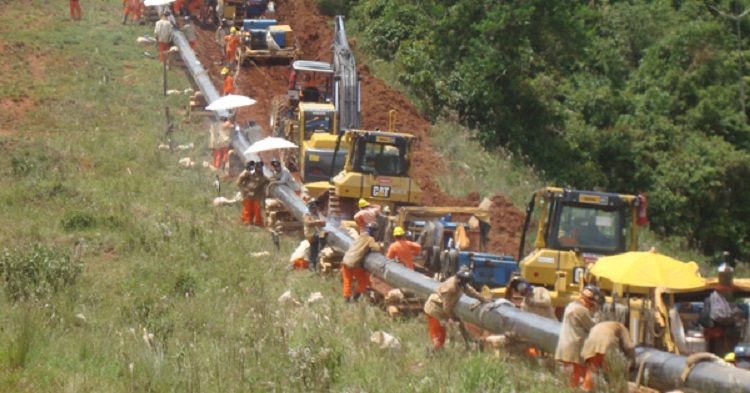
Construction of Gas Pipelines in Brazil Will Need to Be Accelerated to Keep Up with the Increase in Natural Gas Supply by 2030
The Recent Discoveries of Natural Gas in the Brazilian Offshore has led to another highly discussed topic in the market: the expansion of the Brazilian pipeline network.
The Rio Pipeline 2019 fair currently taking place in Rio de Janeiro is hosting very interesting debates on the sector, and one of them is about the studies conducted by EPE (Energy Research Company), linked to the MME.
According to EPE, Brazil will see, by 2030, its natural gas supply increase from the current 59 million cubic meters per day to 147 million cubic meters per day.
The nearly tripling of the supply will demand a gigantic expansion of the Brazilian pipeline network. Brazil currently has about 9,000 km of gas pipelines concentrated along the coast, hindering access to the interior of the country.
-
While Brazil wants to end the 6×1 work shift, the president of Argentina wants 12 hours for his workers, increasing political tension in the country.

-
The village where two rivers run side by side without mixing in Santarém and Alter do Chão reveals some of the most beautiful freshwater beaches on the planet.
-
Mars is accelerating, and scientists have discovered that the planet’s day is getting shorter, revealing surprising signs of internal activity.

-
Artemis 2 is set to launch on April 1 at 7:24 PM to orbit the Moon with four astronauts, but a class X solar flare and coronal mass ejection could interfere with communications and threaten the launch.


For comparison, Argentina’s pipeline network is about 16,000 km, Europe’s is 200,000 km, and the U.S. is 497,000 km.
In a country of continental dimensions like ours, this makes a significant difference and currently hampers distribution, leading us to realize how much investment will need to be made in the sector’s infrastructure for the new gas market opening program launched by the federal government to succeed.
Studies by EPE
There are three studies conducted by EPE that are being presented at the Rio Pipeline 2019, the Indicative Plan for Processing and Routing of Natural Gas, the Indicative Oil Pipeline Plan, and the Indicative Gas Transport Pipeline Plan.
The studies take into account already authorized pipelines, in addition to new routes for the pre-salt output, which currently has routes 1 and 2 in operation and route 3 nearing completion.
Among these projects, we can mention the Brazil-Central Pipeline, which will connect São Carlos (SP) to Brasília, where 905 km of line should be built, with investments of R$ 7.2 billion.
EPE could not overlook the production of natural gas in the Sergipe-Alagoas Basin, whose recent discoveries are expected to increase, especially from 2025, to 30 million cubic meters per day by 2030.
Brazilian Routes
Regarding routes 1, 2, and 3, the capacity for routing is 44 million cubic meters per day, but pre-salt production alone will be 71 million cubic meters per day.
Therefore, the importance of the traditional Route 4, which connects the pre-salt of the Santos Basin to the coast of São Paulo, can be seen. EPE is also analyzing an alternative Route 4, which goes from the Santos Basin to the Port of Itaguaí (RJ).
Another route under analysis is Route 5, which comes from the pre-salt of the Campos Basin, with three alternative destinations: Port of Itaguaí, Port of Açu, and Tepor (Macaé Port Terminal).
Route 6 would connect the Campos Basin to the Port of Açu or the Central Port in Presidente Kennedy (ES).
Read Also! Petrobras Forecasts 1st Oil from the Berbigão/Sururu Fields in the 4th Quarter!








Seja o primeiro a reagir!