





 Portuguese
  English
  Spanish
  4 min of reading


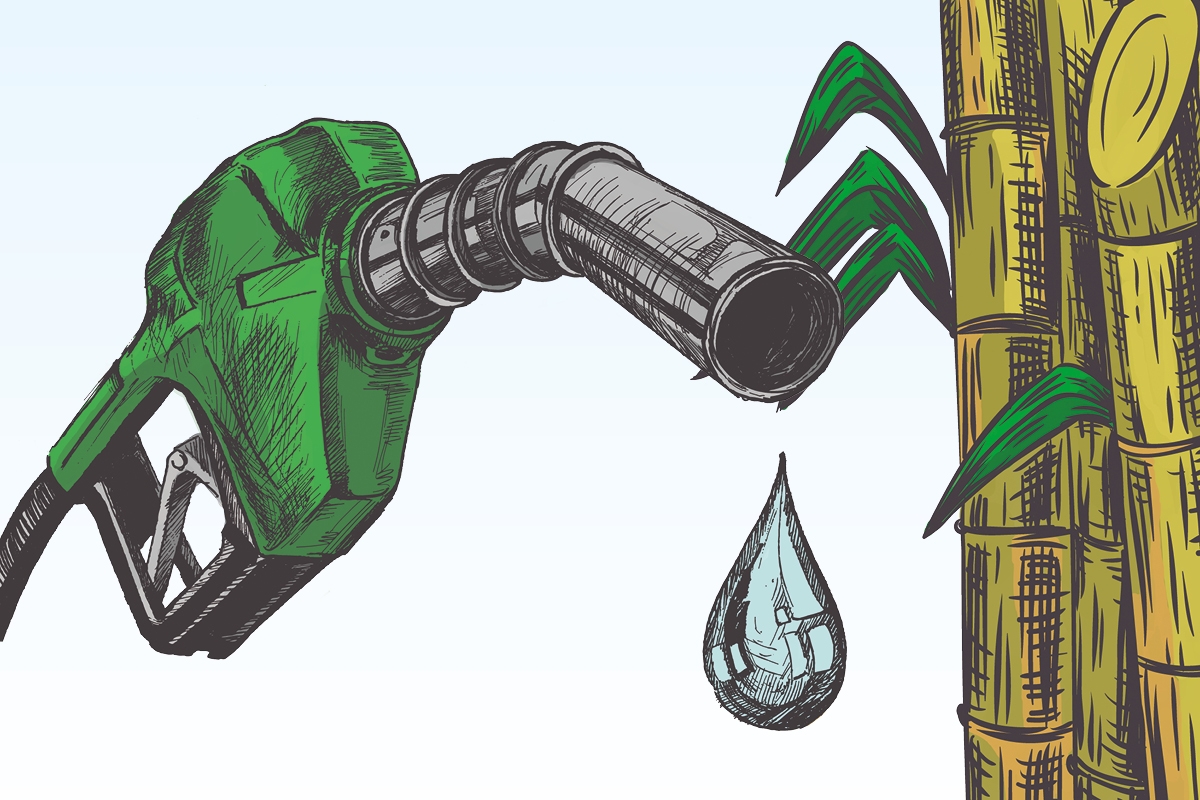
With Prices Close to Gasoline, Ethanol Ceases to Be Consumers’ First Choice and Sees Value Decrease at Fuel Stations
After reaching a price of R$ 5.499 per liter last month, the price of ethanol began to drop at fuel stations in the city of Rio Preto. The high price charged by vendors led to a decrease in competitiveness between ethanol and gasoline — which has become the first choice for a good portion of drivers at the pump. Consequently, the lower demand for the fuel caused prices to fall.
See Also:
- Contrary to the promise to end dependence on oil, experts claim that synthetic gasoline pollutes as much as conventional gasoline
- Petrobras invested about R$ 2 billion this year in preventive maintenance, inspecting over 4000 refinery equipment and maintaining a high level of fuel production
- Japanese startup builds the first wind turbine capable of withstanding tropical storms and capturing energy from typhoons
A survey by the National Agency of Petroleum, Natural Gas and Biofuels (ANP) showed that the highest price for ethanol in Rio Preto is R$ 4.999. However, this value is still outdated compared to the current prices in the market, since the last available quote refers to the week from November 27 to December 4.
Since the beginning of the week, drivers found the liter of ethanol being sold at R$ 4.749 — a decrease of R$ 0.75, or 13%, compared to the maximum price registered last month.
-
New escalation of tensions and oil crisis in the Middle East forces world powers to accelerate energy transition plans.
-
Giant reservoirs with a capacity of 18 million cubic meters have turned Fujairah into one of the largest energy vaults on the planet. This facility, located outside the Strait of Hormuz, stores oil on a colossal scale and has become a silent piece that supports the global flow of fuels.

-
The next exploration auction in the pre-salt will offer 23 blocks in the Campos and Santos basins and may change the interest of oil companies in Brazil.

-
The next exploration auction in the pre-salt will offer 23 blocks in the Campos and Santos basins and could change the interest of oil companies in Brazil.

“This result is the outcome of a shift in supply and demand,” said Antônio de Padua Rodrigues, technical director of the Sugarcane Industry Union (Unica). He states that the industries had a restricted supply of ethanol, not compatible with demand.
“With the drop in demand in October and November, the equation reversed, leading to stocks becoming larger than current demand. Therefore, we could see a decrease of 11% in both hydrated ethanol and anhydrous ethanol in the last 30 days.”
In recent days, the average price of hydrated ethanol in the state of São Paulo was quoted at the mills for R$ 3.459 (not considering freight and taxes), according to Cepea. At the end of October, the price per liter was R$ 3.828. Meanwhile, anhydrous ethanol was priced at R$ 4.000 per liter at the end of last week, compared to an increase of R$ 4.5353 per liter at the beginning of last month.
This scenario could also lead to a decrease in gasoline prices, as it contains 27% anhydrous ethanol in its composition. “The 11% drop in the price of anhydrous ethanol has not yet reflected in gasoline prices, nor has it reached hydrated ethanol, but it will probably arrive at some point. The decrease has already occurred for producers; now the market is free for both distribution and resale,” recalls Antônio.
The Price Trend for Ethanol Is Downward
The economist from the School of Business and Economics (FEA) of USP, Luciano Nakabashi, reiterates that gasoline is the first choice for drivers when the price of the biofuel exceeds a margin of 70% compared to fossil fuel. “Today, in most places, the price of ethanol is more expensive than 70% of the price of gasoline.”
According to the specialist, after reaching a peak, the trend is for fuel prices to continue to fall next year. “Prices may remain at high levels, but I find it quite difficult for them to rise more than they are,” he states. Also, according to Nakabashi, the new variant of the covid-19 may influence the global economy. “If there is such an effect, it will be a reduction in oil prices.”
According to the economist, since oil is related to the foreign market, it influences the price fluctuations of other fuels, similar to the case of biofuel. “Gasoline affects the price of ethanol much more than the reverse.”
Commission Approves Project to Stabilize Prices
The Commission of Economic Affairs (CAE) of the Senate approved on Tuesday, December 7, a bill that establishes a plan to stabilize the price of oil and its derivatives in Brazil and imposes a change in Petrobras’ pricing policy. The project was revealed in the context of dissatisfaction over rising fuel prices. The text will go to a plenary vote. If approved, it will need to be reviewed by the Chamber of Deputies.
The bill aims to change Petrobras’ pricing policy for adjustments, which is based on the variations of global oil barrel prices and exchange rates. Under the plan, national prices defined by producers and importers of oil derivatives will need to reference average quotes from the foreign market, internal production costs, and import costs, “where applicable.”









Seja o primeiro a reagir!