Portuguese
 Spanish


TrueRE Oriana Power’s projects were approved under the GOBARdhan program and will be spread across four states, with construction expected to begin over the next two years.
Indian company TrueRE Oriana Power announced an investment of 750 crore rupees, equivalent to 7.5 billion rupees, to build five compressed biogas (CBG) plants with a combined production capacity of 110 tonnes per day. The projects were announced on November 20, 2026, and are expected to be built over the next two years, expanding the use of organic waste as a feedstock for renewable fuels.
According to information published by BioEnergy Times on November 20, the projects were approved under the government’s GOBARdhan program. Although the initial announcement mentions three states, an official company filing with the National Stock Exchange of India identifies facilities in four states, with an investment of 150 crore rupees planned for each.
Five new plants will be able to produce 110 tonnes of renewable fuel per day
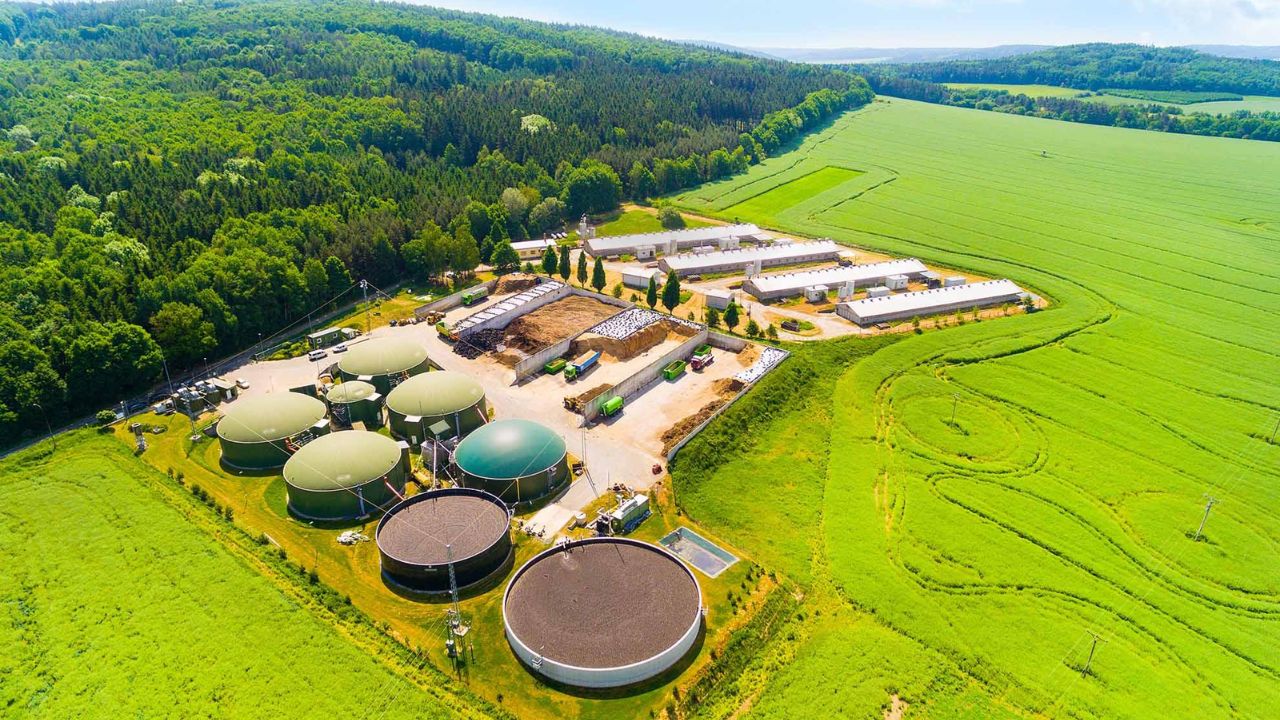
TrueRE Oriana Power’s planned expansion includes five industrial plants, each with a capacity of 22 tonnes of compressed biogas per day. Together, they will be able to produce 110 tonnes per day once fully built and operational.
-
German waste-to-hydrogen and bio-oil technology operates in Três Lagoas and wins award in Germany

-
Gasoline vs. Ethanol: Ethanol Prices Rise Again but Still Offer Better Value in 16 Brazilian States and the Federal District
-
Suape completes first renewable marine fuel ship bunkering, becoming the only port in Brazil’s North and Northeast to offer biobunker
-
Corn ethanol expands in Brazil and is set to consume 27 million metric tons of grain in 2026, intensifying competition for production and reshaping market prices


If all five plants run continuously at that capacity for 365 days, their theoretical annual output would reach 40,150 tonnes of fuel. That figure is the plants’ nameplate capacity multiplied by the number of days in a year, not a forecast of actual production or a result already achieved.
The planned average investment is 150 crore rupees per plant, for a total of 750 crore rupees. That amounts to 7.5 billion Indian rupees, since one crore is equal to 10 million rupees.
The projects are part of the company’s strategy to expand its presence in the alternative fuels sector, according to the Press Trust of India (PTI), in a report republished by The Week.
The plants are still in development. The company has not announced when construction will begin at each facility, which contractors will be hired, or the individual start-up dates.
Official document shows projects in four states, differing from initial announcement
A press release issued on November 20 said the five plants would be spread across Uttar Pradesh, Madhya Pradesh and Gujarat. However, a filing Oriana Power submitted to the National Stock Exchange of India the previous day shows a different distribution.
According to the official filing dated November 19, 2026, two facilities are planned for Uttar Pradesh, while Gujarat, Maharashtra and Madhya Pradesh will each receive one.
The identified locations are Jhansi and Kheri in Uttar Pradesh; Banas Kantha in Gujarat; Buldhana in Maharashtra; and Ujjain in Madhya Pradesh.
The filing also confirms that the projects will be carried out by five different subsidiaries of the company. All have received approval under the GOBARdhan program, which is overseen by India’s Ministry of Petroleum and Natural Gas.
The discrepancy between the commercial announcement and the regulatory filing has not been publicly explained in the sources reviewed. Because it lists the location of each project individually, the filing submitted to the exchange provides the most specific details available.
Agricultural waste and animal manure could become fuel for transportation and industry
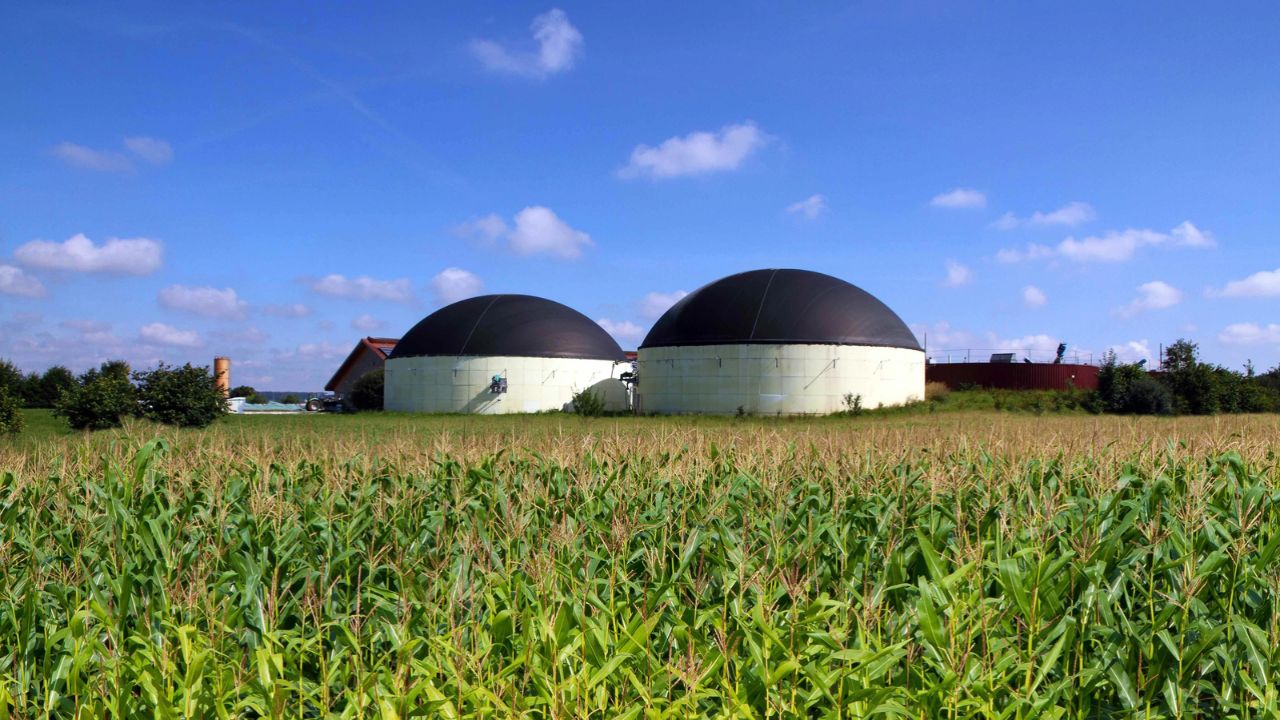
Compressed biogas, known internationally by the acronym CBG, is produced by decomposing organic matter in oxygen-free environments. Feedstocks for the process can include agricultural waste, biodegradable scraps and animal manure.
The conversion takes place in equipment called digesters. Inside them, microorganisms break down the material and produce a gas composed mainly of methane and carbon dioxide.
After digestion, the biogas goes through treatment steps that remove impurities, moisture and some of the carbon dioxide. The result is a gas with a high methane concentration, which is then compressed for storage and distribution.
The purified fuel can replace compressed natural gas in compatible applications, including certain vehicles and industrial equipment. Its use depends on product specifications and the technical requirements of the consuming system.
Oriana Power’s announcement does not specify which waste materials will be used at each of the five plants. It also provides no feedstock volumes, supply agreements or project-specific estimates of avoided emissions.
The use of organic waste is already featured in other international projects. CPG recently reported on a British renewable gas project that plans to use seaweed as feedstock to produce biomethane.
Indian government expands program to turn waste into renewable energy
The five facilities were included in GOBARdhan, an Indian government initiative designed to promote the conversion of biodegradable waste into energy products and fertilizers.
The program aims to increase the use of rural and urban waste while encouraging the development of industrial biogas facilities. Materials considered include cattle manure and agricultural waste that can be treated through anaerobic digestion.
In August 2026, the Indian government approved a national support program for the sector, with a budget of 237.31 billion rupees for the period from fiscal 2026-27 through fiscal 2035-36.
Specialist publication Mercom India reported that operating guidelines released in September included measures to speed up project development and support the growth of the compressed biogas market.
The measures cover financing tools, infrastructure and commercial terms for selling the fuel produced. They do not, however, mean that the government will fully fund the investment announced by Oriana Power.
The company’s statement confirms approval of the projects but does not specify how much it might receive in public incentives or what share of the funding will come from private institutions.
Oriana Power has participated in two biogas plants and is expanding its green hydrogen business


TrueRE Oriana Power operates in India’s renewable energy market and has been expanding its projects beyond solar power generation. The company is involved in battery storage systems, green hydrogen, green ammonia and alternative fuels.
Mercom India reported that the company has completed two earlier compressed biogas (CBG) projects, each with a capacity of 21 metric tons per day, in Uttar Pradesh and Maharashtra.
These facilities give the company prior experience in developing CBG plants, but the announcement does not say whether they remain under its direct operation or belong to other owners.
Separately, Oriana Power secured an award related to the production of 10,000 metric tons of green hydrogen per year under India’s Strategic Interventions for Green Hydrogen Transition (SIGHT) program.
The company also announced an initiative to supply 60,000 metric tons of green ammonia per year. In a statement released in November, it said the project had advanced through preliminary site identification and engineering stages.
In energy storage, the company recently won a contract involving 900 MW of power and 1,800 MWh of battery capacity in a tender conducted by Maharashtra’s distribution utility.
The expansion comes as different renewable energy segments grow across Asia, although each technology has distinct development costs, revenue streams and infrastructure requirements.
Brazil is also expanding its biomethane market, but still uses only a small share of its potential
The Indian announcement comes in a sector that is also attracting investment in Brazil. Both countries have agricultural supply chains that can generate organic waste suitable for energy use, although they rely on different regulatory frameworks and feedstocks.
A survey released by the Brazilian Biogas and Biomethane Association (Abiogás) found that Brazil had production of about 1.36 million cubic meters of biomethane per day, compared with estimated potential of 120 million cubic meters per day.
CPG detailed these figures in a report on Brazil’s biomethane potential, published in September 2026.
The capacities announced in India are measured in tons of fuel per day, while Brazilian indicators use cubic meters per day. A direct quantitative comparison requires standardizing the units and accounting for the conditions under which the gas is measured.
In Brazil, expansion depends on the availability of waste, investment in purification, and infrastructure to transport the fuel to consumers. These factors will also be relevant to the development of the five facilities announced by Oriana Power.
The company plans to bring the projects online within two years, with an approximate target of November 2028. The next step will be to turn regulatory approvals into construction projects, waste-supply contracts, and facilities capable of producing the announced 110 tons per day.