Portuguese
 Spanish


After three weeks of losses, oil contracts head for weekly gains as Jazan disruptions and ship attacks raise supply risks.
Oil was on track to end the week of November 27, 2026, with its first weekly gain of the month after an attack disrupted part of the Jazan refinery’s operations in Saudi Arabia. The Saudi Aramco facility has a designed capacity of up to 400,000 barrels per day. The incident killed one worker, injured others and heightened concerns about supplies of crude oil and petroleum products in the Middle East, just days before an OPEC+ meeting.
Brent futures were trading at around $96.56 a barrel, while U.S. benchmark West Texas Intermediate (WTI) was near $85.15 at the time of an update published Friday, November 27, by Quartz. Prices reflect investors’ response to attacks on energy facilities and ships, while remaining influenced by expectations for global supply.
Jazan refinery attack kills worker and disrupts some operations

The Jazan refinery, in southwestern Saudi Arabia near the border with Yemen, was hit by an aerial projectile on Thursday, November 26. The impact sparked a fire that was later brought under control and led to the temporary suspension of some operations.
-
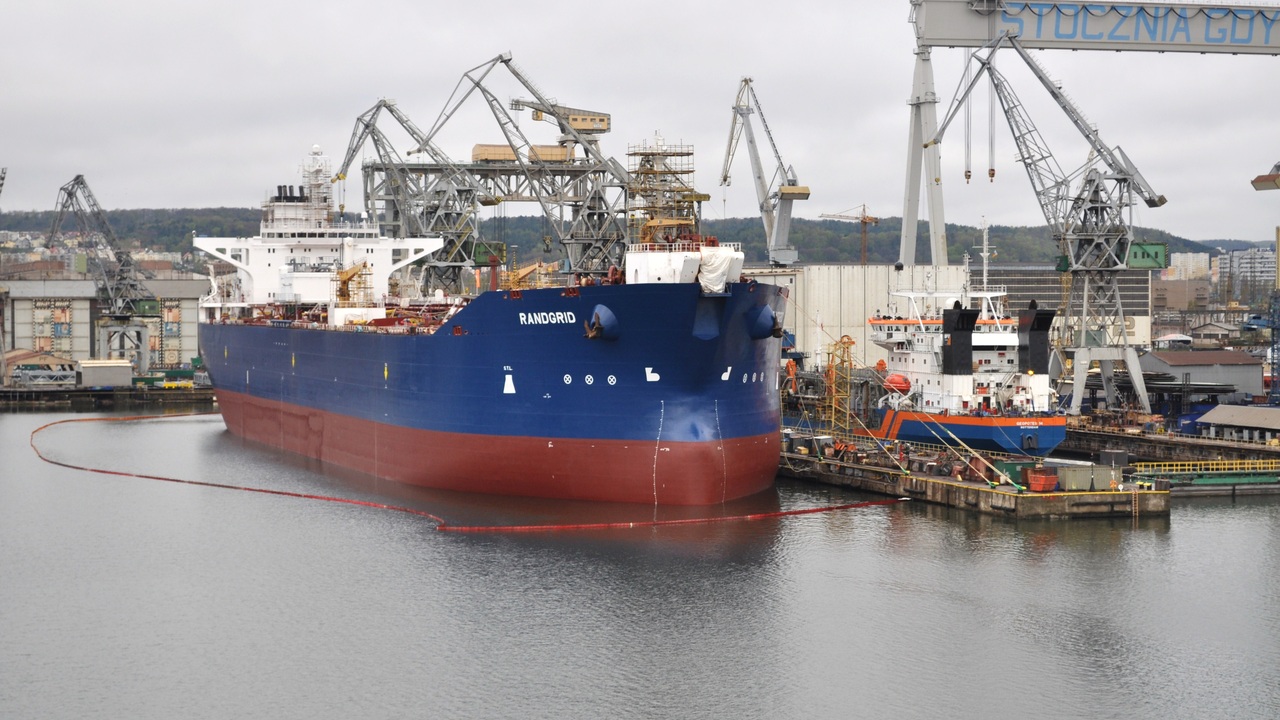
Two Petrobras rigs idled in Guanabara Bay push Ventura Offshore from a $20.4 million profit to a $12.6 million loss

-
Russia strikes a deal to supply Turkey with gas in 2027 after EU decision
-
Oil royalties inject R$5.54 billion into public coffers as Brazil’s ANP distributes revenue from September production to 989 municipalities and 11 states

-
Iraq raises oil exports from 200,000 to 3.6 million barrels a day and seeks OPEC approval to increase production


One Nepalese worker was killed and others were injured, according to the Saudi Ministry of Energy, in a statement carried by Reuters. The extent of the property damage and the volume of processing taken offline were not disclosed.
The Saudi-led military coalition blamed Yemen’s Houthis, a group aligned with Iran, for the attack. The Energy Ministry’s official statement confirmed the strike and its effects on the facility but did not directly identify who launched it.
The Jazan facility has a rated capacity of 400,000 barrels of oil per day, according to Saudi Aramco. The complex was designed to turn crude oil into fuels and other higher-value products.
The facility’s capacity of 400,000 barrels a day does not represent the actual production loss caused by the attack. Because operations were only partially halted, it is not yet possible to calculate how many barrels were left unprocessed.
Brent nears $100 after three straight weeks of losses
The market responded to increased supply risks, ending a three-week stretch of declining prices.
On Thursday (26), Brent rose about 2.1% to US$96.57 a barrel, according to a survey reported by The National. The increase followed reports of disruptions at Saudi oil facilities.
Brent prices fluctuated Friday morning. Reuters initially reported Brent at US$96.19 a barrel, while other trading during the day pushed the price back toward US$97.
The differences reflect the timing of each price report. They do not represent fixed prices at the session’s close, which was still underway when the story was published.
WTI was also recovering from its previous available close. In the United States, the contract did not settle in regular trading Thursday because of the Thanksgiving holiday.
Traders’ concerns extend beyond the refinery. Attacks on vessels in the Strait of Hormuz and other oil facilities in the region have increased the risk of supply disruptions.
Oil shipments through the Strait of Hormuz remain below prewar levels
The Strait of Hormuz is a sea passage between the Persian Gulf and the Gulf of Oman. The route carries oil and natural gas produced by countries including Saudi Arabia, Iraq, Kuwait, Qatar and the United Arab Emirates.
As the conflict involving Iran and the United States has unfolded, maritime traffic has faced restrictions, attacks and additional security costs.
Preliminary data from analytics firm Kpler, cited by the Wall Street Journal and reported by Quartz, indicated that oil volumes shipped through the passage stood at about 31% of the prewar level.
That percentage should be understood as an estimate for the period analyzed, not as a uniform, permanent decline across all trade routes.
CPG had previously examined the region’s strategic importance in a report on the Strait of Hormuz and global oil, outlining the geographic and logistical constraints of the passage.
In Saudi Arabia, the East-West pipeline offers an alternative for transporting some oil to the Red Sea. The system, known as Petroline, was detailed by CPG in its coverage of the Saudi route that bypasses Hormuz.
That infrastructure, however, does not eliminate the risks facing Saudi refineries and terminals. The attack on Jazan occurred at a facility on the Red Sea coast.
OPEC+ to discuss 2027 production targets at Sunday meeting

The Organization of the Petroleum Exporting Countries and its allies, known as OPEC+, is scheduled to meet on Sunday, November 29, 2026.
Among the topics on the agenda is setting production targets for early 2027, after the current supply agreements expire.
People familiar with the negotiations indicated that the group may keep current production limits in place during the first quarter of next year, Reuters reported.
The targets had not yet been formally approved by the time the information was reported on Friday. The decision will depend on discussions among participating countries.
Saudi Arabia and Russia are among the major producers involved in the negotiations. The group’s decisions shape market expectations about oil availability in the months ahead.
Iraq is also discussing its production limits. Iraqi Oil Minister Basim Mohammed Khudair said Friday that the country is negotiating with the organization over the possibility of raising its cap, taking into account plans to develop its domestic industry.
The discussions are taking place as producers assess both the recovery in supply and the risk of further disruptions to facilities and shipping routes.
International Energy Agency projects oil surplus in late 2026
Despite the rise in futures prices, global indicators point to a recovery in supply.
In its November Oil Market Report, the International Energy Agency (IEA) estimated that global production exceeded demand again in October for the first time since the start of the war involving Iran.
Global supply reached approximately 105.4 million barrels per day in October, after increasing by 2.3 million barrels per day from the previous month.
The IEA also identified a 52-million-barrel increase in observed global inventories that month, equivalent to an average of about 1.7 million barrels per day.
For the fourth quarter of 2026, the agency projected a supply surplus of around 1.7 million barrels per day, reflecting the recovery in oil shipments from the Gulf.
The forecast helps explain why prices had fallen during part of November, despite the ongoing conflict.
However, the agency also warned of persistent challenges in the supply of petroleum products, particularly diesel. The availability of crude oil does not mean all refineries are operating normally or that fuels are being delivered without restrictions.
CPG has already addressed this distinction in an analysis of how the oil crisis is putting pressure on industrial costs, even during periods of partial supply recovery.
OPEC+ meeting outcome and Jazan’s status will be watched by the market
The next significant developments are an operational update on the Jazan refinery and OPEC+’s decision on production targets for 2027.
In the information reviewed, Saudi Aramco had not yet released a definitive assessment of the damage, the amount of oil affected or the timeline for fully restoring operations.
At the same time, traders will be watching the safety of ships transiting the Strait of Hormuz and the continuity of Middle Eastern export flows.
The November 29 meeting could clarify the major producers’ supply strategy for the first months of 2027. Until then, the weekly price recovery remains tied to perceptions of risk, with no confirmation of a loss equivalent to the 400,000 barrels per day of capacity at the affected refinery.