





 Portuguese
  English
  Spanish
 4 min of reading
  4 comments


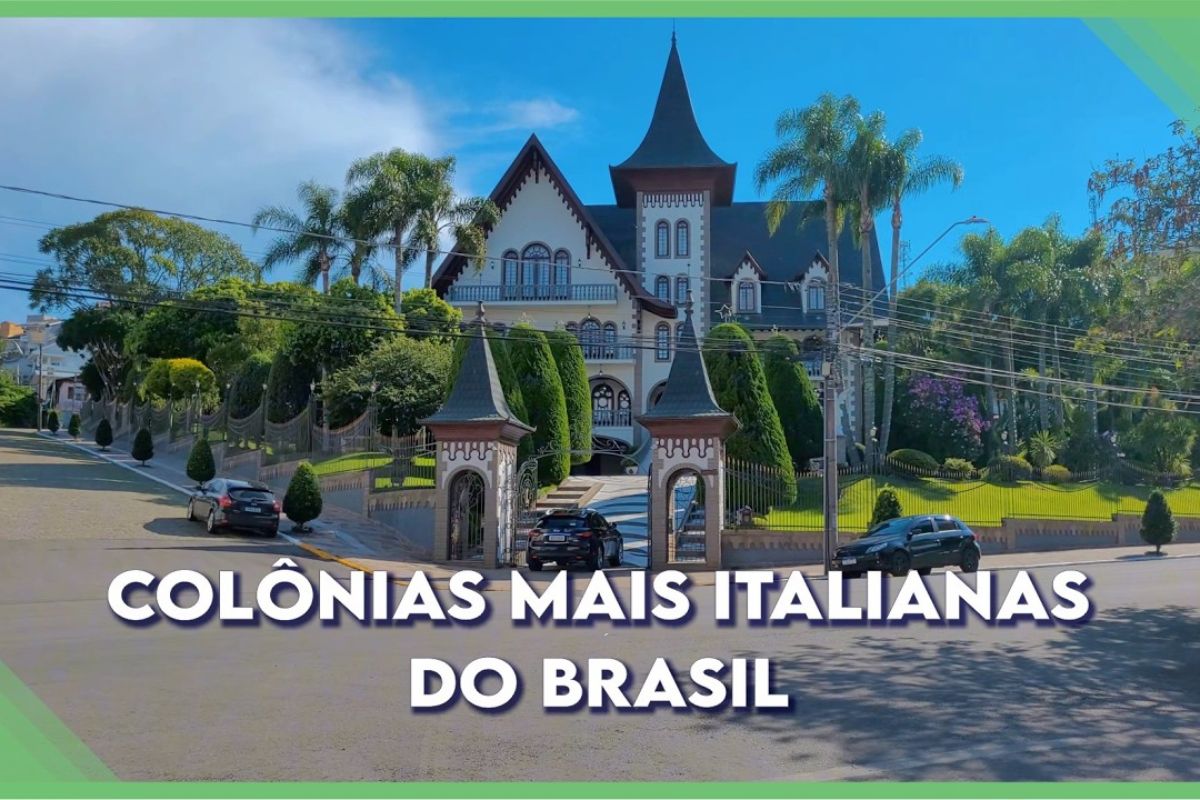


In Small Cities in Southern Brazil, Where 90% of the Population Speaks Italian Dialect, Life Goes On Among Family Wineries, Historic Villages, and Preserved Customs Like in 19th Century Italy
There are regions in Brazil where time seems to have stopped in the mountains of northern Italy. Cities where 90% of the people speak Italian dialect preserve rituals, flavors, and landscapes that confuse even European tourists. They are places where wine is made at home, churches shine at Christmas, and the routine is calm, among flowering gardens and stone houses.
These municipalities, spread mainly through Santa Catarina and Rio Grande do Sul, were born from Italian immigration in the 19th century and still today conserve the same architecture, the same accent, and the same hospitality of their ancestors. They are places where culture, faith, and gastronomy blend uniquely, revealing a vital, welcoming, and prosperous Brazilian Italy.
Nova Trento: The City of Wineries and Faith
In Santa Catarina, Nova Trento is one of the best examples of cities where 90% of the people speak Italian dialect.
-
These are the drivers who may stop paying tolls on highways in a project that promises to reduce costs for those who live from transportation in Brazil.

-
(Video): Italian pilot lands plane on moving train at 120 km/h and achieves unprecedented feat in aviation, even with a narrow runway and without direct visual contact.

-
It seems to have come out of a science fiction movie: A Brazilian city where it rains almost every day, recording over 4,000 mm per year, driven by climatic factors — a direct result of its strategic location in the Amazon.
-
The water crisis that could change everything this year has already begun; it’s not just about the climate, it affects technology, raises product prices, and can halt entire companies without warning.


With about 13,000 inhabitants, the municipality maintains a peaceful atmosphere, full of family wineries and flowering gardens.
The houses, always well-kept, reveal the pride of the descendants of Trento, in northern Italy.
Religious devotion also marks the local rhythm.
It is in Nova Trento that the sanctuary of Mother Paulina, the first Brazilian saint, attracts thousands of pilgrims every year.
During Christmas, the main church is covered with colored lights, transforming the scenery into a spectacle of faith and beauty.
Religious and gastronomic tourism drives the economy, without erasing the village atmosphere, where one can still walk calmly and converse in the language of their ancestors.
Nova Veneza: A Village with Gondolas and Living Dialect
A few kilometers from Criciúma, Nova Veneza is another gem of Italian colonization. With 95% of the population descended from Veneto, the city preserves traditions that go far beyond gastronomy.
The dialect is still spoken in the streets, the stone facades withstand the test of time, and an original gondola from Venice decorates the main square.
The charm of the place lies in its simplicity: in an afternoon, it is possible to walk through the main streets, visit the wineries, have lunch at a typical restaurant, and enjoy the view of the hills.
It is a piece of Italy transplanted to southern Brazil, where the way of life remains calm, familial, and deeply rooted in the land.
Flores da Cunha: Brazilian Capital of Wine
In Rio Grande do Sul, Flores da Cunha is the municipality that produces the most wine in Brazil, with over 200 wineries.
The city has 30,000 inhabitants and keeps alive the culture of immigrants from Veneto.
The hills covered with vineyards, community festivals, and charming architecture make the place a must-visit destination for those seeking authenticity.
Despite being small, Flores da Cunha is prosperous.
Local industries ensure jobs and stability, while the winemaking tradition supports the economy and tourism.
The impeccable houses, many with Alpine inspiration, reinforce the aesthetic care that marks all Italian towns in the Serra Gaúcha.
Antônio Prado: Historical Heritage and Movie Set
Known as the most Italian city in Brazil, Antônio Prado preserves 48 buildings listed by the National Institute of Historical and Artistic Heritage.
About 90% of its 13,000 residents are descendants of immigrants from Rovigo and Vicenza.
Walking through its streets is like stepping back a century in time, among colorful wooden houses and gardens that seem to have come straight out of a movie.
And indeed, it was a movie set: the film O Quatrilho, nominated for an Oscar in 1996, was filmed there.
The city, besides its beauty, carries prosperity. It has wheat and glass industries, good infrastructure, and a welcoming population.
The result is a rare combination of tradition and development, where the Veneto dialect is spoken, artisanal wine is made, and pride in origins is lived.
The Italian Heritage That Became Brazilian Identity


These cities where 90% of the people speak Italian dialect are not just tourist hotspots: they are living testaments of an immigration that shaped southern Brazil.
The grape festivals, the meals with homemade pasta, and the sound of accordions remind us daily that part of the country speaks, sings, and dreams in Italian.
When visiting these villages, the traveler finds not only beautiful landscapes but a way of life based on community, work, and tradition.
A cultural heritage that is renewed with each generation, proving that Italy, in a certain way, never left Brazil.
And you, have you visited any of these Italian cities in Brazil? Which one surprised you the most?






Conheci Nova Veneza. Amei!!! Meu avôera italiano de Valdobbiadene, a terra do Prosecco. Maravilha!
Muito bom! Poderia incluir Garibaldi numa próxima… Cidade com a rua principal mais lindinha que já vi!
Santa Tereza no Espírito Santo é a primeira cidade fundada por imigrantes italianos no Brasil e também conserva o estilo de vida.