





 Portuguese
  English
  Spanish
  6 min of reading
  1 comment


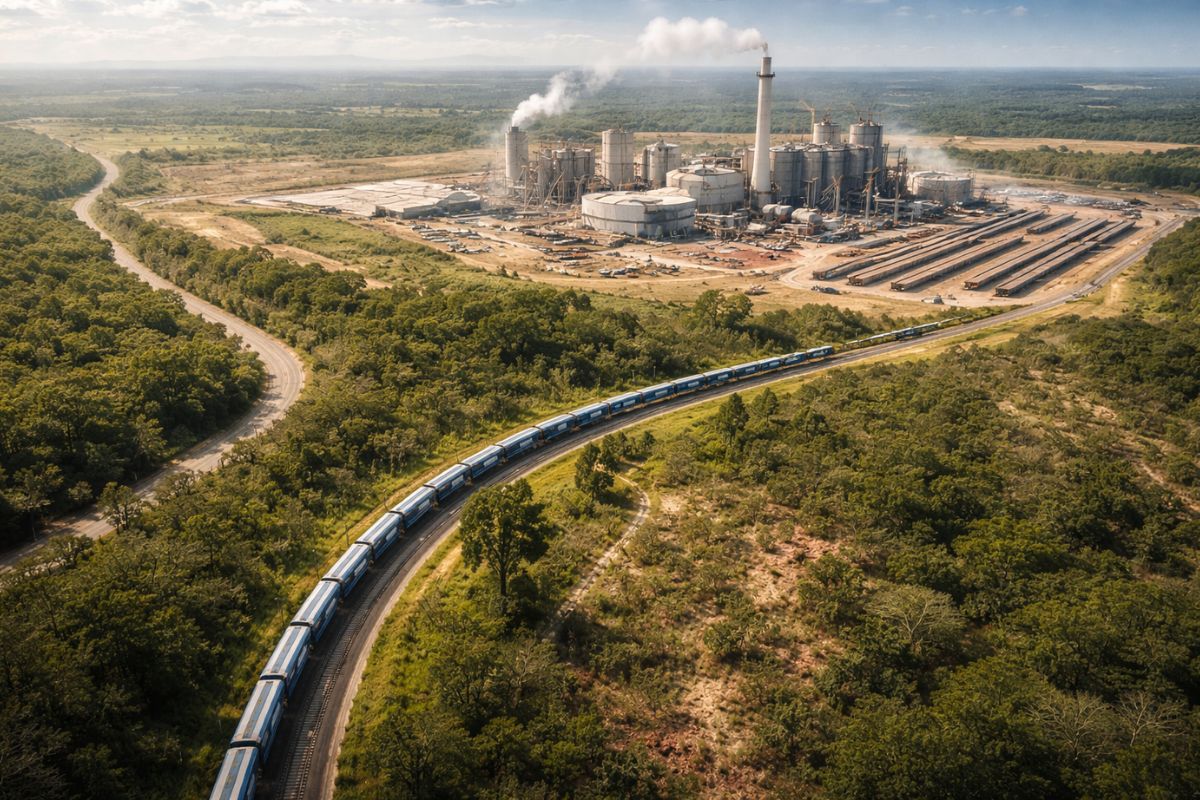


Arauco Starts Construction of a 47 km Private Railway This Month Connecting Inocência to Rumo’s Northern Network. The Goal Is to Transport Pulp from a BRL 25 Billion Factory to the Port of Santos, with Fewer Trucks, Jobs, and the Promise of International Export.
Arauco will put into practice, this month, a step that aims to reshape logistics in eastern Mato Grosso do Sul: the construction of a private railway of 47 km exclusively intended to serve the industrial complex being built in Inocência.
The move accompanies a larger project, estimated at US$ 4.6 billion, about BRL 25 billion, called the Sucuriú Project, with works starting in 2024 and expected to be operational by the end of 2027. The central bet is simple: put heavy volume on the track to reduce costs, risks, and bottlenecks on the road.
Inocência Enters the Industrial Map with Railway and Megafactory

The under-construction factory occupies 3,500 hectares and is presented by the company as the largest pulp unit in the world. In a city with 8,700 inhabitants, the size of the venture has an immediate effect on local perception: it is not just an industrial plant, but a new hub, with its own demands for labor, transportation, and services.
-
This star-shaped fortified construction, hidden near the border of Spain, may be the largest fortress on the planet.

-
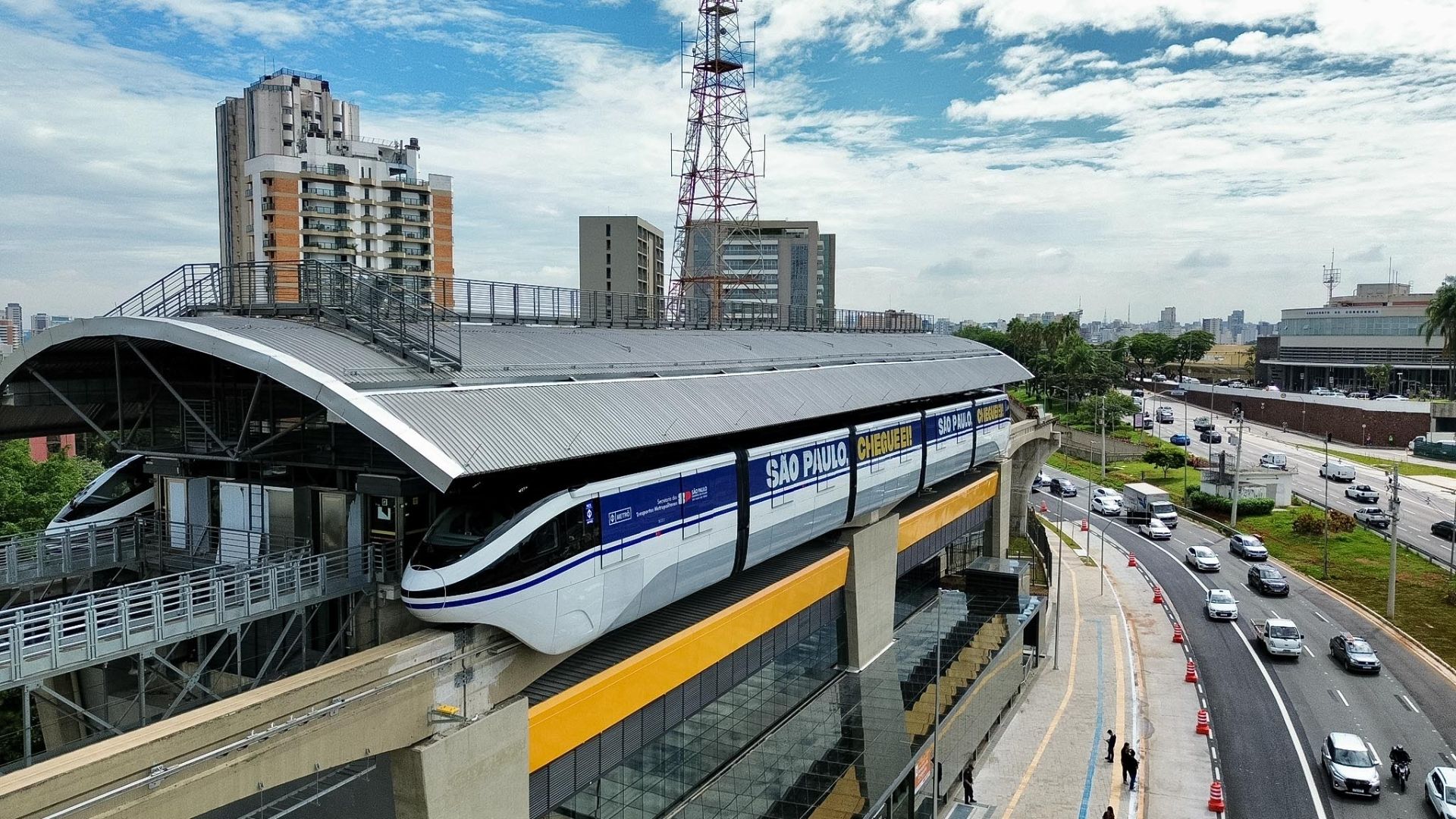
Congonhas receives the monorail promised for the 2014 World Cup after more than a decade of delays and becomes the first airport in Brazil with integrated subway.
-
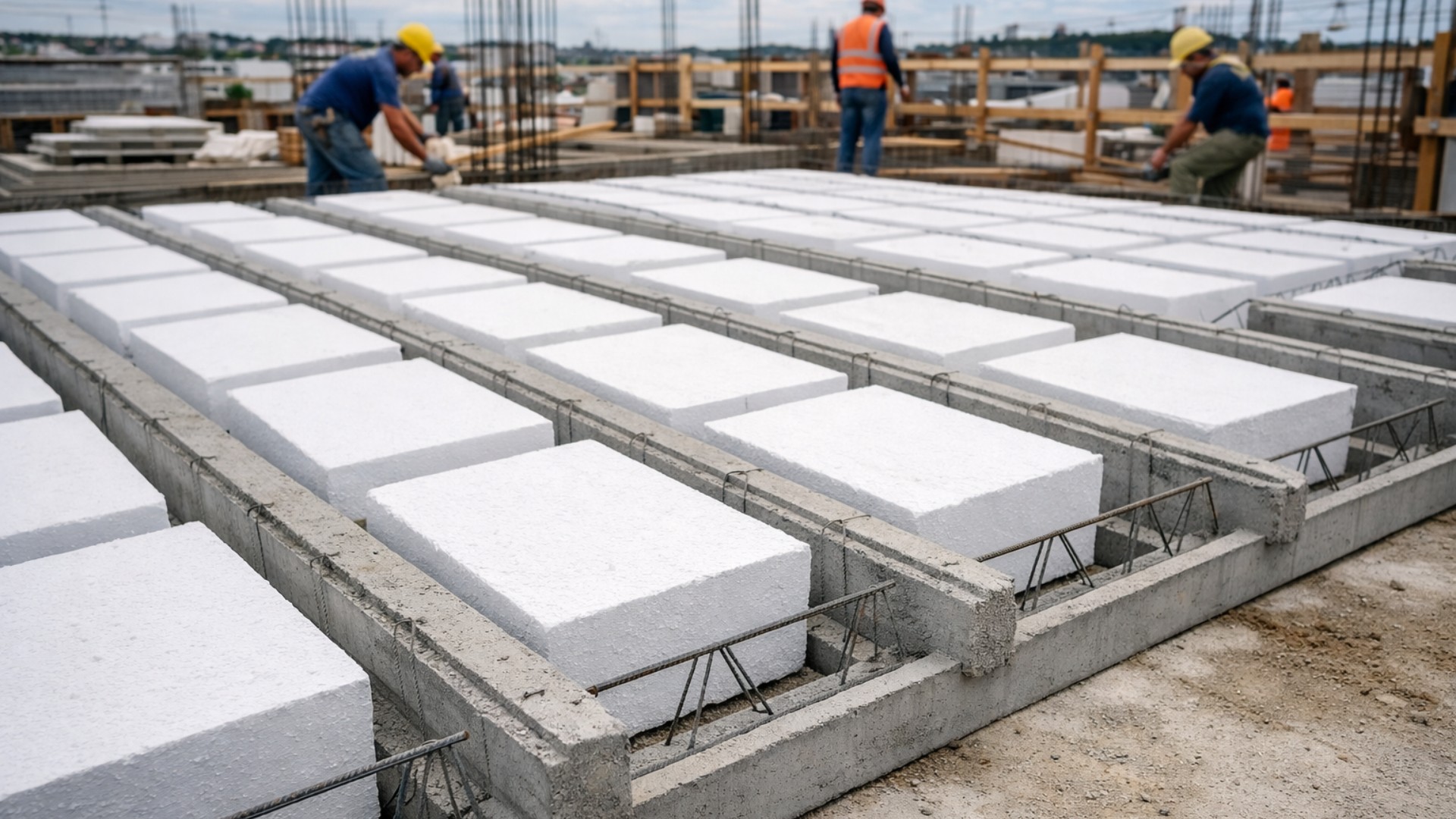
Goodbye, concrete: a new trend in civil construction reduces the weight of the structure by up to 30%, accelerates projects by up to 40%, cuts costs on steel and labor, and improves thermal insulation with EPS.
-
Russian engineers create an innovative propeller blade for aircraft that could completely change the way airplanes and helicopters operate.


In this scenario, the railway becomes a part of the complex planning, not an accessory. By choosing a dedicated branch, the company aims to prevent all production expansion from translating into truck lines, congestion on state highways, and continuous pressure on the road network already serving agriculture and everyday movements.
How the 47 km Branch Connects to Rumo’s Northern Network

The private branch will be 47 km long and will connect to the Northern Network operated by Rumo Logística. In practice, this creates a clear transition: production leaves the industrial yard and enters an already structured railway network for long distances, which is crucial when the final destination includes a port and export.
This design reduces dependence on road transshipments along the way, as it concentrates the transfer of cargo at one point: the connection of the branch to the main network. For pulp, which usually travels in large volumes and with handling and protection requirements, the predictability of the route and terminals is part of the logistical gain sought.
From the Interior to the Port of Santos: The Logistics Corridor of 1,050 km
According to the company, the goal is to create a logistics corridor to transport production by train to the Port of Santos in São Paulo, and from there send the cargo to international markets. The estimate is that 9,600 tons of pulp need to be transported daily along this axis, on a route of approximately 1,050 kilometers.
To manage this flow, the designed model involves trains with up to 100 wagons dedicated to the product. When the scale is daily and continuous, the logic changes: it is not enough to “have transport”, it is necessary to have cadence, with loading windows, train formation, circulation, and arrival at the port terminal without recurrent bottlenecks.
What Changes on the Road: Fewer Trucks, Emissions, and Safety
By advocating for the railway solution, the company claims that the railway branch can mean 7,000 fewer truck trips per month. The justification is straightforward: the volume that would go to the highway will now be consolidated into railway compositions, reducing heavy traffic in the vicinity and on routes feeding the corridor to the coast.
Another argument presented is environmental: Arauco cites 94% fewer emissions compared to road transport. Even without transforming the railway into a “magic solution”, the modal shift tends to displace impacts, moving from asphalt to linear infrastructure with specific critical points, such as crossings, bridges, and areas of interference, which require well-structured design and mitigation.
Jobs, Services, and Urban Pressure in a City of 8,700 Inhabitants
The company projects 14,000 jobs at peak construction and an additional 6,000 in operation, summing up industrial, forestry, and logistical fronts. That number alone explains why Inocência becomes a showcase: the projected volume of workers is greater than the local population, which usually brings cascading effects, such as competition for housing, rising costs, and the need for public and private services at an unusual speed.
At the same time, it is at this point that the economic narrative needs a closer look. Construction jobs have a duration and profile different from operational jobs. And when the railway branch comes into play, specific functions arise, from operational safety and track maintenance to yard activities, terminals, and integration with the main network.
Engineering and Licensing: 270-Meter Bridge, Crossings, and Rural Areas
The construction of the branch already has ANTT authorization and an environmental license. The route has been planned to run parallel to highways MS 377 and MS 240 and to exclusively cross rural areas, which reduces direct interference in urban areas but does not eliminate engineering challenges and coexistence with properties, drainage, and crossings.
The project includes underpasses and overpasses for safety and a 270-meter bridge at the point where the railway intersects the São Mateus stream. Works of this kind are where detail matters more than slogan: sizing, stability, drainage, signaling, and access control are essential to prevent the branch from creating new risk points.
Compensation and Conservation: Environmental Commitment of BRL 4.3 Million Over 24 Months
To compensate for anticipated impacts, the company entered into a commitment term with Imasul, providing for an investment of BRL 4.3 million over 24 months in recovery and environmental conservation initiatives in the region.
This type of measure is usually closely monitored because it is where environmental promise takes practical shape: schedule, goals, and local execution.
Arauco itself maintains that the logistical arrangement and the reduction of road transport reinforce a lower-impact operation.
The president of Arauco Brazil, Carlos Altimiras, attributes public and strategic importance to the project by linking it to regional logistical modernization and road safety. In practice, what will matter is the capacity to meet conditions and demonstrate results in the territory.
Forest Base and Energy: Eucalyptus, Biomass, and 200 MW in the National System
The supply of raw material is supported by around 400,000 hectares of eucalyptus plantations. This data is central because it helps understand why logistics needs to be robust: the chain is not just industry; it also involves a forestry machinery that continuously feeds the unit and later needs to transport the final product in volume compatible with installed capacity.
In energy, the company projects generation of over 400 MW from biomass, with 200 MW surplus for injection into the national electricity system.
This combination of industrial production and energy generation typically becomes a magnet for infrastructure, as it drives demand for connection, operational reliability, and regional planning while altering the economic profile of the surroundings.
Timeline Until 2027 and What Will Be Measured from Then On
Construction of the factory began in 2024, and the expectation is that the complex will be operational by the end of 2027.
In the meantime, the private railway becomes a synchronization element: it needs to be ready and integrated into the network so that the start of production does not depend on a more expensive and heavier temporary solution for the highways.
The announced capacity is 3.5 million tons of market pulp per year, with 95% to 98% aimed at export, mainly to China, Europe, and North America.
The unloading at the port is expected to occur on break bulk ships, with a capacity between 50,000 and 80,000 tons per trip. When this system starts running, the debate will shift from promise to objective comparison: cost, regularity, local impact, and social results.
The 47 km railway could become the turning point of a project that is already large by numbers and even bigger by indirect effects: mobility, work, revenue, services, the environment, and how a small town absorbs an accelerated transformation.
If you lived in a town the size of Inocência, what would be your first concern with the arrival of thousands of workers? And looking at the corridor to Santos, do you think the private railway is a model that should be repeated in other industries in Brazil, or does it create risks of dependency and logistical concentration?







Se por todo Brasil houvesse estradas de ferro para o transporte de cargas, graos desafogaria muito nossas estradas…
Mas deveria ser bem munitorado para se chegar com segurança .