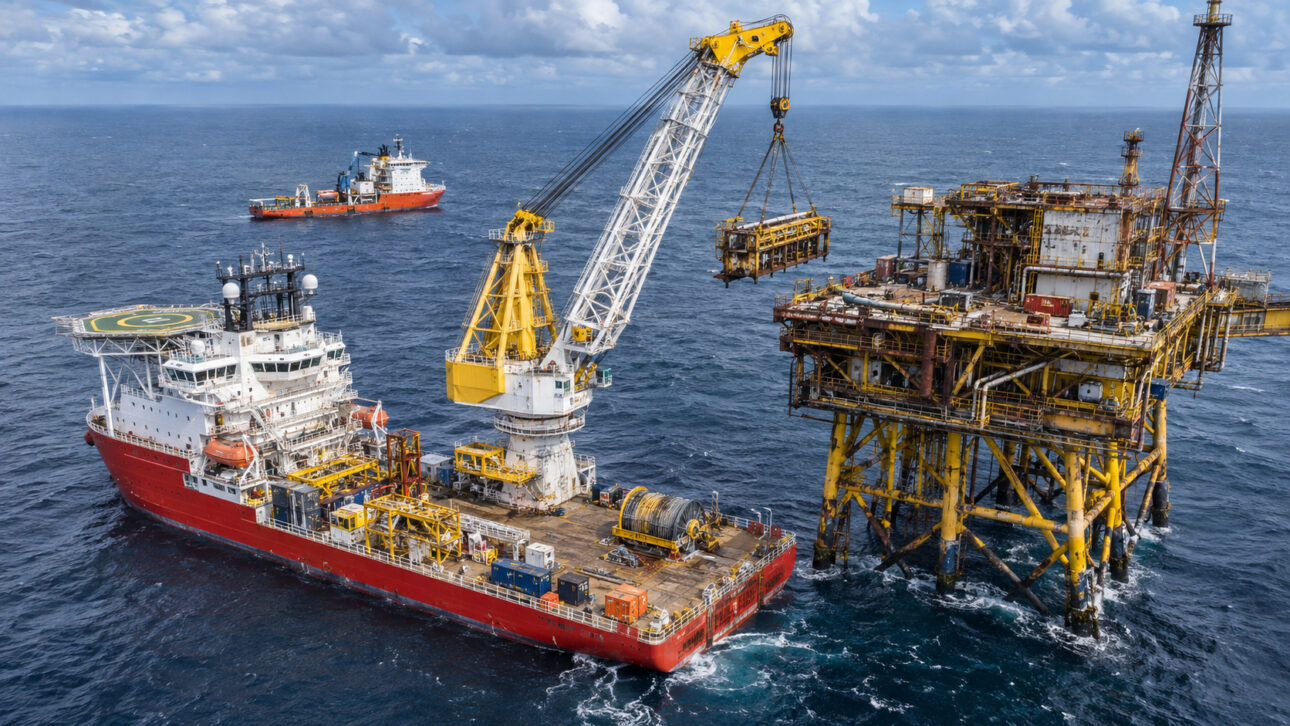

Executive director Angélica Laureano told analysts on Tuesday, November 24, 2026, that Petrobras’ pricing policy remains appropriate, any change would be targeted and temporary, and no decision has been made, with oil below $90 a barrel
Petrobras is maintaining its fuel pricing policy but is considering a targeted change in response to falling oil prices. The position was laid out Tuesday, November 24, 2026, during a video conference with analysts.
The speaker was Angélica Laureano, executive director of Logistics, Marketing and Markets.
Reuters published the remarks, which were reported by InfoMoney on Wednesday, the 25th, at 7 a.m., and also by BiodieselBR in a story by Marta Nogueira.
-
At the launch of its $122 billion plan through 2031, Petrobras says it has no new public hiring process planned after bringing on 6,000 employees since 2023

-
Petrobras ships pre-salt crude to Japan for the first time, sending about 950,000 barrels from the Libra field to Idemitsu as the Hormuz crisis cuts Middle Eastern oil supplies
-
Equinor shuts down Bacalhau pre-salt megaplatform after falling object damages equipment, halting production for five to eight weeks and cutting 2026 growth forecast
-
Brazil’s Federal Revenue Service approves Equinor’s direct oil export from the Raia FPSO in offshore megaproject preparations in the Campos Basin

For drivers and truckers, the comments do not mean a change in pump prices for now. Laureano said there has been no decision on possible changes to the pricing policy.
Petrobras sells gasoline and diesel to distributors. That price is only one component of the final price at the pump, which also includes freight, blending with ethanol, taxes and the retail margin.
What Angélica Laureano told analysts
Laureano said the policy “remains appropriate.” In her view, its parameters and principles remain “the bedrock of our commercial strategy” and of “the bankability of our plan.”
Petrobras monitors the market “permanently” to assess how each movement fits within its commercial policy. The company tracks it daily because of this year’s volatility, driven by oil prices and geopolitical factors.
If there is a change, it will be “a targeted and temporary adjustment for the moment we are living through,” Laureano said.
The remark echoed the position Laureano had taken earlier in the month: an adjustment in response to current conditions, without changing the structure of the commercial policy.
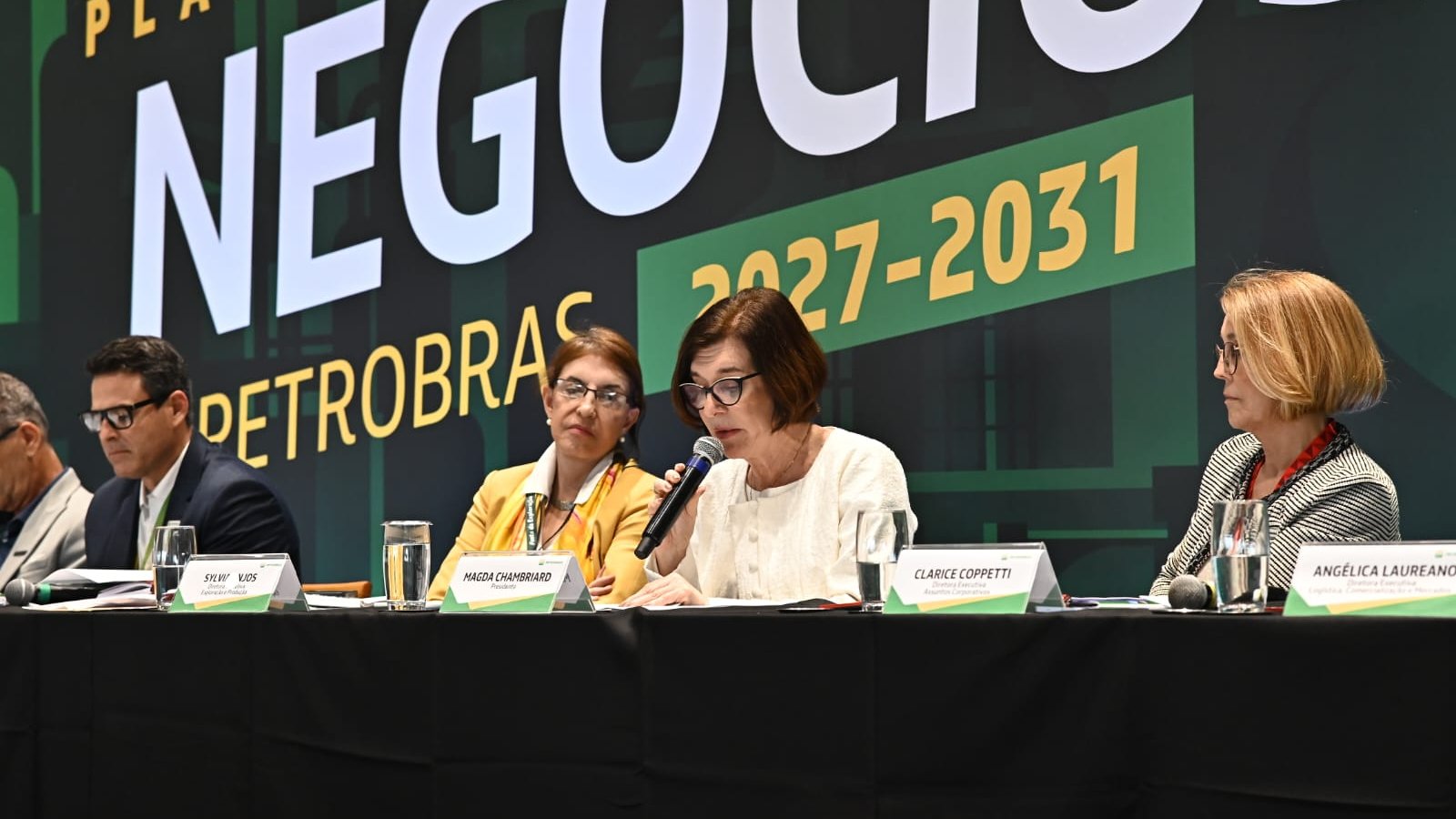
The video conference took place on the same day Petrobras’ executive board presented its 2027-2031 Business Plan to the press in Rio de Janeiro.
Why oil below $90 a barrel is part of the discussion
Oil prices recently fell back below $90 a barrel, according to Reuters.
Commenting on the decline, Laureano said: “It may be that this is permanent.”
In her view, lower oil prices lasting longer make it easier to meet Petrobras’ pricing policy. The executive director did not announce a cut or an increase in refinery prices.
Argentina’s Infobae documented the decline on X on November 10, 2026. The post, in Spanish, said oil had fallen below $90 a barrel, its lowest price since August.
What Petrobras had already said on November 11
The discussion began earlier. On November 11, 2026, during the third-quarter earnings call, Laureano described a change as “not structural, but driven by current conditions.”
The report is by Nicola Pamplona of Folhapress, published by Diário do Comércio.
“We cannot say today that we are outside our pricing policy. After all, the year is not over yet,” the executive said that day. On gasoline, she added: “There is still a question mark over gasoline.”
In her view, the uncertainty stems from the lack of confirmation that the policy must end in December 2026. The state-owned company is considering extending the assessment period beyond December.
For diesel, which receives a government subsidy, the company considers itself in line with its pricing policy. Gasoline does not receive a subsidy, and the government has exempted the fuel from federal taxes.
That day, Folhapress had already reported on the recent decline in Brent prices.
“Given that this war apparently will not end in the short term, we are assessing how to deal with this situation,” Laureano said on November 11.
Jovem Pan News aired a report by Rodrigo Viga on November 12 about the earnings call, including the possibility that Petrobras would not follow its gasoline pricing policy in 2026.

What changes for drivers, truckers and consumers
The government subsidy for diesel, the fuel used by trucks and buses, is R$3.52 per liter, Folhapress reported.
On Nov. 16, Petrobras said it had received R$1.9 billion from the diesel subsidy program for sales from June 1 to 15.
In the same statement, the state-controlled company said it had received about R$18 billion under subsidy programs for diesel, gasoline and liquefied petroleum gas (LPG).
The most recent move on gasoline came in September.
Petrobras announced a R$0.19-per-liter increase at 8:44 p.m. on Sept. 9, then canceled it at 12:53 a.m. on Sept. 10, Agora RN reported.
During the same period, a subsidy of R$0.44 per liter, in place since May, ended. The government waived PIS/Pasep and Cofins taxes worth R$0.63 per liter.
The net effect was a R$0.19-per-liter decrease in the price charged to distributors.
On May 14, 2026, Brazil’s Chamber of Deputies posted on X that the gasoline and diesel subsidy was in effect.
The measure was created in response to price increases caused by the conflict in the Middle East, under Provisional Measure 1358/2026.
In January, Agência Brasil reported a 5.2% cut in gasoline A, to an average of R$2.57 per liter. The report noted that prices at gas stations do not depend solely on the state-controlled company.
Oil price assumptions in Petrobras’ plan through 2031
The 2027-2031 Business Plan was approved Monday, Nov. 23, with US$122 billion in investments, the Petrobras statement said.
At a news conference on Nov. 24, executives said the plan assumes an average Brent price of US$74 in 2027 and US$70 in each of the following four years.
The projects’ resilience price was kept at US$50 per barrel, the same level as in the previous plan. No project moves forward below that price, executives said.

CEO Magda Chambriard noted that Brent was at $59 a barrel in February 2026.
Chambriard said the crisis in the Strait of Hormuz had caused an unprecedented shock to the world’s energy systems.
Chambriard also said a commodities company cannot control the price of its product or the country’s exchange rate. For that reason, she urged caution in approving projects.
A reporter asked what a $70 barrel would mean in 2028. Chambriard replied that higher prices bring greater profits, while lower prices require more capital discipline in approved projects.
The CEO said she joined Petrobras in 1980 and that the company weathered sharp oil price declines in the past because it was prepared for them.
The full news conference is available on Petrobras’ YouTube channel.

S-10 diesel and refining in the plan
The plan calls for increasing S-10 diesel production capacity by 405,000 barrels per day by 2031. Of that total, 293,000 barrels per day will come online between 2027 and 2031.
The refining, transportation, marketing, petrochemicals and fertilizers segment has $23 billion in projects under development and $1 billion under evaluation.
Refining capacity will increase from 1.813 million to 2.173 million barrels per day by 2031, with no new refineries to be built. The initiatives are part of an effort to achieve self-sufficiency in diesel production capacity.
The Boaventura Complex Refinery and Train 2 at the Abreu e Lima Refinery (RNEST) are scheduled to start up in 2029. Both projects will increase diesel production.
In the Center-West, the New Claros Pipeline will connect São Paulo’s refining system to the market in Mato Grosso do Sul.
The project calls for two new sales hubs, in Araçatuba (SP) and Campo Grande (MS).
At the Presidente Bernardes Refinery (RPBC), a HEFA and renewable diesel unit designed to process plant- or animal-based feedstocks is scheduled to start up in 2030.
What has not yet been decided
Petrobras is keeping its current commercial policy in place. The change under consideration is limited and driven by current conditions, and any decision will depend on the market, which the company monitors daily.
Laureano’s remarks in November concerned the pricing rule, not a new pricing schedule. Refinery prices for gasoline and diesel will remain at current levels until a possible decision by the board.
A possible extension of the period for assessing the policy on gasoline pricing beyond December 2026 is still under study.