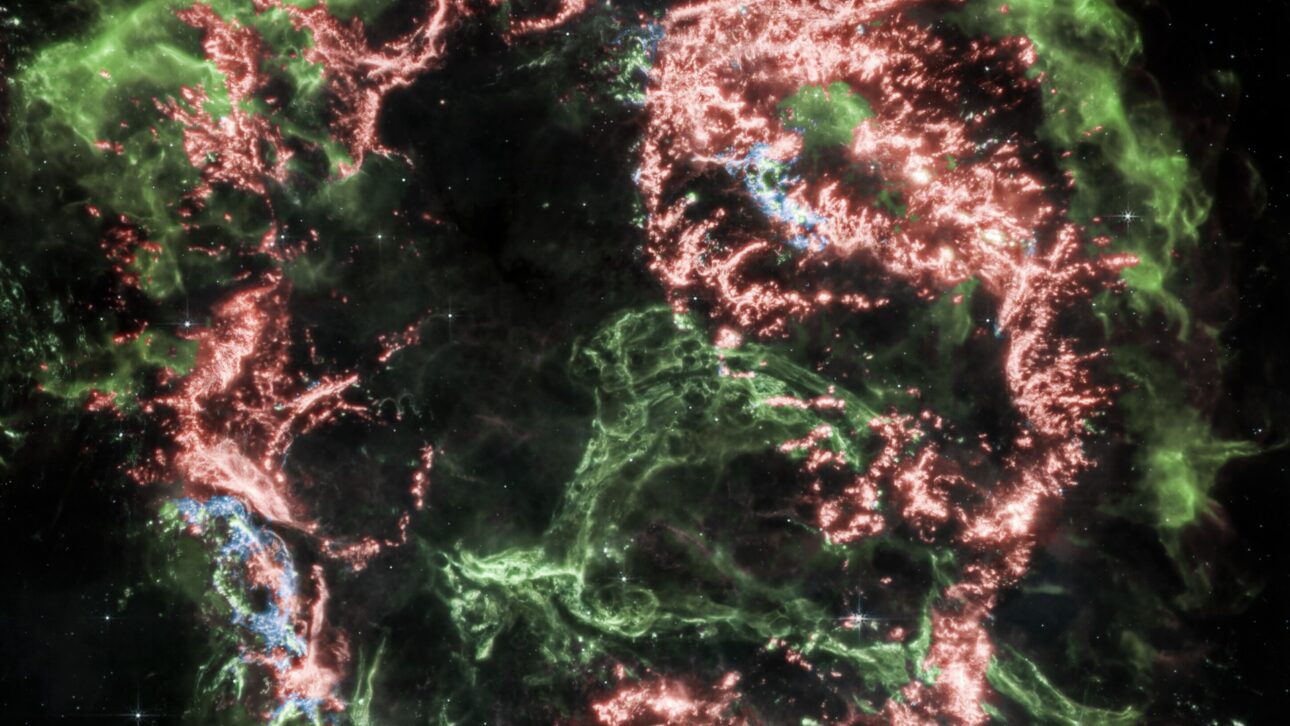

Astronomer Tea Temim and her team used the James Webb Space Telescope to map dust in Cassiopeia A, a supernova remnant about 11,000 light-years away, and found signs that the star’s inner layers merged possibly just hours before it exploded.
The result was published on November 23, 2026, in The Astrophysical Journal Letters, and was released the same day by NASA and by ESA, a partner in the Webb mission with the Canadian Space Agency.
Temim is a research scientist at Columbia University in New York and the lead author of the study. Her co-authors include Dan Milisavljevic of Purdue University in Indiana and Ilse De Looze of Ghent University in Belgium.
A remnant astronomers keep coming back to
Cassiopeia A, known as Cas A, is one of the most studied supernova remnants in the sky. NASA describes it as the youngest known remnant from an exploding massive star in our galaxy.
-
Toyota unveils lowered, widened Hilux Hyper Z prototype with Öhlins suspension in Thailand, where the production Hilux Travo Z, a rear-wheel-drive diesel pickup with up to 201 hp, starts at about $17,600

-
Apple launches HomeView, its first display built to control the smart home, for $299 in the U.S., with wall mounts sold separately starting at $59.95
-
Xiaomi cars go on presale in UAE with 1,548-hp SU7 Ultra’s first sale outside China
-
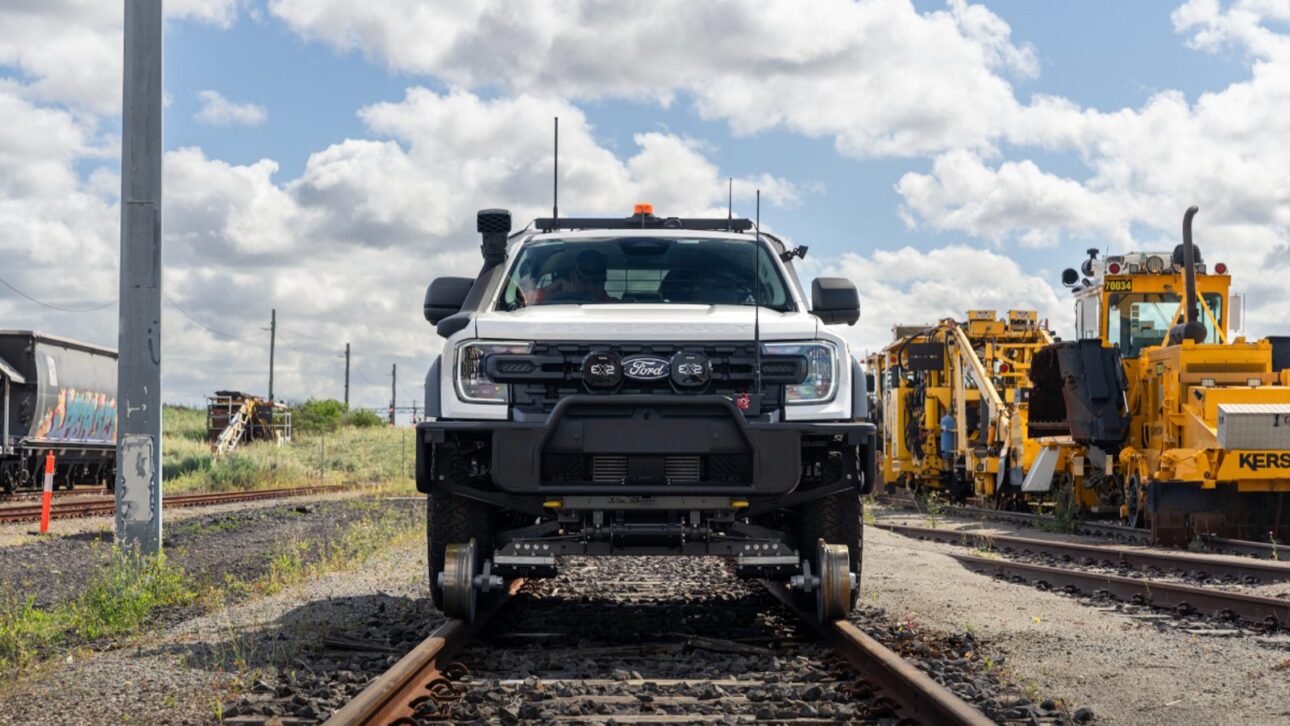
Ford Ranger becomes rail vehicle with factory approval, running on tracks and roads with hydraulically lowered steel wheels, a 600-Nm diesel V6 and 4,500-kg towing capacity



From Earth’s perspective, the explosion that created it happened about 340 years ago. The cloud of debris now spans roughly 10 light-years and sits in the constellation Cassiopeia, according to NASA’s earlier Webb release on the object.
Remnants like this one are clouds of gas and dust left behind after a massive star blows apart. Over time, that material is expected to seed new generations of stars and planets, which is why astronomers treat Cas A as a kind of laboratory.

How a star builds its layers
Stars are born when clouds of mostly hydrogen gas and dust collapse under gravity. Inside the young star, hydrogen fuses into helium, the same process that powers the Sun today.
When hydrogen in the core runs low, the core contracts and heats until helium begins fusing into heavier elements. In massive stars like the one behind Cas A, that cycle repeats with heavier and heavier elements, stopping at iron.
Lighter elements keep burning in the surrounding layers. The result is a star built like an onion, with separate shells of different elements that work as a written record of the star’s history.
What a shell merger is
The Webb team was looking for evidence of a shell merger, a process in which those layers inside a star mix together before the explosion. Theory places this event mere hours before a supernova.
“Material within these shells churns and circulates, which can cause the shells to merge shortly before the supernova explosion,” Temim said in the NASA release.
She gave a concrete example. The oxygen-burning and carbon-burning shells in a star could merge and change its structure significantly, which would then alter the chemical mix seen later in the debris of the supernova remnant.
Why the dust holds the clue
When a star goes supernova, the elements from its shells are scattered into space. Some of them condense into dust grains, and those grains can clump together into separate knots of material.
Webb studied individual clumps that NASA describes as Solar-System-sized. By mapping what each clump is made of, the team could work backward to the layer of the star the material came from.
If the layers had stayed neatly separated until the end, the dust chemistry would reflect that. The composition Webb found instead pointed to layers that had already started mixing.
Spitzer chose the targets, Webb took the close look
To decide where to aim, the researchers used older data from NASA’s retired Spitzer Space Telescope. Spitzer could not resolve fine details in the remnant, but it flagged three regions worth a closer look.
Two of those targets sit inside Cas A’s reverse-shocked region, where a shock wave moving inward slams into debris thrown outward by the explosion.
In one of the two, Webb found ejecta made mostly of silica dust. The other was dominated by carbon dust, a difference that matches material coming from chemically distinct layers of the original star.
The Green Monster gets a chemical profile
The third target was the “Green Monster,” a structure first discovered by Webb. When the structure first appeared in Webb images in 2023, Milisavljevic said the team had nicknamed it in honor of Fenway Park in Boston.
The new observations show the Green Monster is rich in complex magnesium silicates. Unlike the other two regions, it formed from material the star shed before it exploded, not from the supernova’s ejecta.
“Identifying the different types of dust grains formed in the chemically distinct layers of a supernova brings us one step closer to understanding how much dust supernovae contribute to the interstellar dust reservoir in our galaxy,” De Looze said in the ESA release.

X-ray telescopes filled in the rest
Webb did not work alone. The team built on X-ray observations from NASA’s Chandra X-ray Observatory and from XRISM, a mission led by Japan’s space agency JAXA.
With that combined picture, Webb mapped the dust composition across the entire remnant. NASA said the observations together indicate that the merger was underway very shortly before the explosion.
The dust map also shows that merger signatures appear throughout much of the remnant, not only in one corner. That spread suggests the mixing affected a large part of the star’s interior.
Reading a star’s last hours centuries later
“With Webb, the vast improvement in being able to resolve at the individual clump level helps us do more sophisticated dust chemistry,” Milisavljevic said. He is an associate professor at Purdue University in West Lafayette, Indiana.
“As a result, we can tie the explosion back to the makeup of the progenitor star hundreds of years afterward,” he added. “It’s telling us about what was happening, we think, in the hours leading up to core collapse.”
The researchers are careful with the timing. The hours-before scenario is an inference drawn from the dust chemistry, not a direct observation of the moment the shells merged.
Why it matters beyond Cas A
Supernovae spread elements across the galaxy that later end up in new stars, planets and living things. Knowing which elements leave a star, and in what mix, depends on what happened inside it at the very end.
“Understanding this process is essential to explaining which elements the supernova explosion will release into the galaxy and how those elements enrich future generations of stars and planets,” Milisavljevic said.
NASA says the work gives astronomers a new method to infer the structure of a star that has already exploded, using only the dust preserved in its remnant.
Webb has been busy with stellar violence this month. Earlier, a Columbia team used it to follow a star that swallowed its partner in the Andromeda galaxy, while Hubble data showed how supernova-driven winds pushed oxygen out of dwarf galaxies.
The full study is available in The Astrophysical Journal Letters, and the images and release are on NASA’s Webb mission page.
If dust can reveal what a star did in its final hours, which other famous supernova remnant should Webb examine next?