





 Portuguese
  English
  Spanish
  5 min of reading
  0 comments


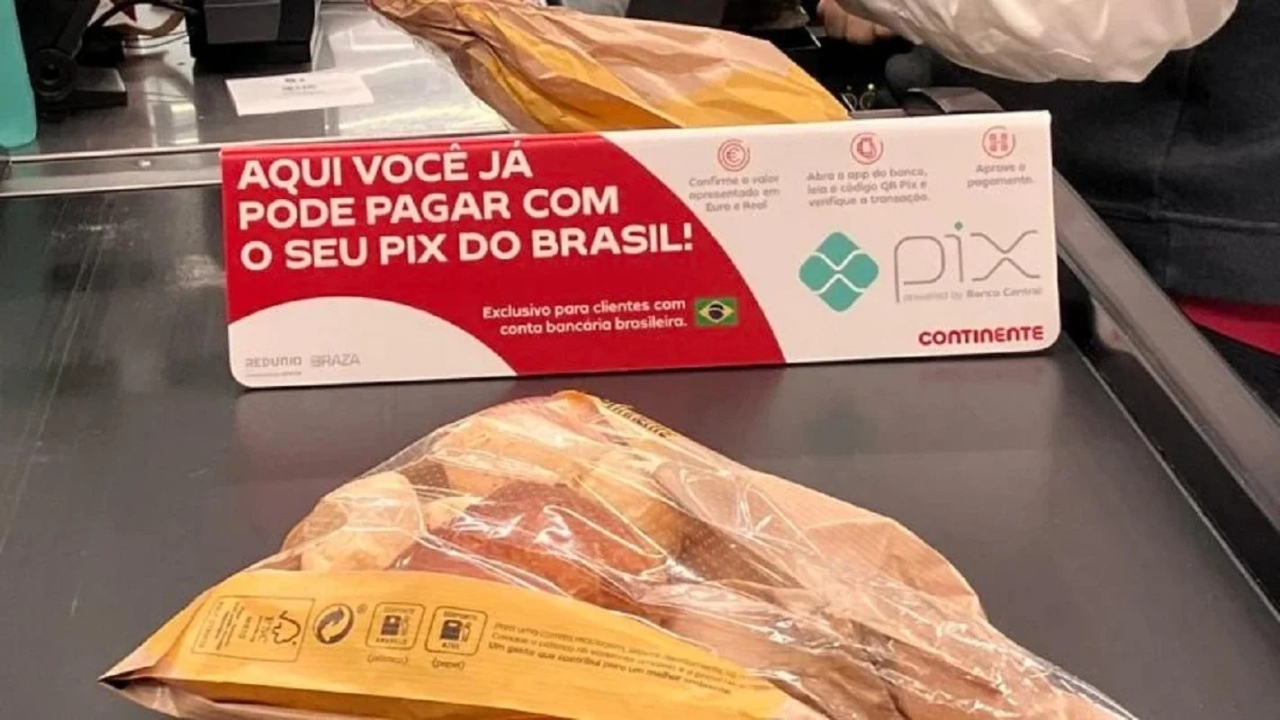
PIX Starts Operating at Commercial Points in Europe, Allowing Brazilian Tourists to Pay in Reais via QR Code. Partnerships Between Fintechs Expand the Use of the System and Make Purchases Simpler and More Transparent
Traveling through Europe has always meant dealing with international cards, surprise fees, and that uncertainty when trying to understand the real exchange rate for each purchase. But something is changing, and in a way that promises to redefine the experience of Brazilians abroad.
PIX, which has become a part of daily life in Brazil, has started crossing borders and is already appearing in physical stores in Europe thanks to partnerships between European fintechs and Brazilian payment companies.
The idea is simple and powerful: allow tourists to buy a coffee in Rome, a meal in Barcelona, or a souvenir in Lisbon by paying exactly as they do at home, via QR Code, with the amount charged directly in reais.
-
Mercado Livre “opens the vault” and announces a record investment of R$ 57 billion in Brazil in 2026, a value 50% higher than the previous year, with an expansion plan that includes 14 new logistics centers, totaling 42 units in the country and hiring an additional 10,000 employees.

-
How investment in technology can revolutionize the national economy and enhance industrial gains, according to a study that highlights the direct impact on productivity, innovation, and wealth retention within Brazil.
-
The largest food company on the planet, JBS, has just opened a 4,000 square meter laboratory in Florianópolis to develop customized proteins that modulate muscle mass gain, immune response, and metabolic performance.

-
After nearly 30 bids and competition among industry giants, a Spanish company purchases one of the largest airports in Brazil for almost R$ 3 billion and takes over the management of Galeão in a concession that will last until 2039.


Where PIX Is Already Being Accepted in Europe
Although it is not yet a universal system across the continent, some countries have begun testing PIX acceptance for Brazilians, especially Portugal and Spain.
The Spanish fintech Wipay, in partnership with the Brazilian PagBrasil, has launched a pilot project that allows payment machines and even airport vending machines to accept the so-called International PIX.
The amounts are displayed in euros, but the conversion happens automatically at the time of purchase, charging the consumer in reais with no surprises on the statement.
According to information released by Wipay and the European press specialized in payment methods, PIX has been initially integrated in strategic locations for Brazilian travelers, such as Barcelona Airport, with planned expansion into retail, food, and tourism sectors.
The solution uses a technological layer that transforms the international payment into a domestic transaction for Brazilians, keeping the experience identical to the PIX they already know.
This expansion is also highlighted by PagBrasil, which presents the International PIX as a method intended to simplify purchases for Brazilians abroad and, at the same time, attract more tourist sales to European commerce.
The technology works in both physical stores and e-commerce located outside Brazil, as long as they have active integration. Therefore, although acceptance is not yet widespread, progress is significant and is expected to grow rapidly.

How Payment with PIX Works Outside Brazil
For the user, everything seems natural. The store or machine presents a QR Code compatible with the Brazilian system, the tourist opens their bank or digital wallet app and completes the payment in seconds.
The big difference is behind the scenes: the fintech converts the euro amount to reais instantly and ensures that the establishment receives the full amount in the local currency.
This convenience eliminates the need for international cards, reduces extra fees, and prevents travelers from being surprised by high bank spreads.
The exchange rate used is usually displayed at the time of the transaction, providing transparency and avoiding doubts, something many Brazilians criticize when using cards abroad.
The system’s feasibility arises from an agreement between Brazilian and European institutions that act as intermediaries.
Instead of the Brazilian bank making a traditional international transaction, the processing is handled almost like a domestic purchase, only with a flow adapted for abroad. It is a solution that benefits all parties: tourists, merchants, and payment providers.
Countries That Could Receive the Innovation in the Coming Months
Portugal and Spain are a few steps ahead due to the large circulation of Brazilians and the interest of local retailers in offering payment methods familiar to tourists.
However, industry sources indicate that Italy and France are also studying the adoption of technologies compatible with PIX, especially in tourist destinations with a high presence of Brazilians.
There is no official confirmation that these two countries already widely have the system, but the movement is clear: PIX has become so dominant in Brazil that merchants in Europe see a sales opportunity by incorporating the method.
For certain segments, such as restaurants, souvenir shops, museums, and retail chains, offering PIX can mean a direct increase in revenue.
Regardless of the country, the recommendation for tourists is always the same: confirm if the establishment displays the option to pay via PIX or International PIX. It’s not enough to point a phone at just any European QR Code, as each payment system has its own standard.
It is essential that the store has specific integration with authorized companies to carry out the processing.
Why PIX Is Becoming an International Phenomenon
The expansion of PIX beyond Brazil is not an improvised movement. The system is being studied by central banks in various countries as a successful model of instant payment. The speed, low cost, and ease have created an ecosystem that has already exceeded all initial estimates.
In 2024, Brazil surpassed the mark of 4 billion monthly transactions via PIX, a number that places the country among the world leaders in digital payments, according to data from the Central Bank and reports from companies like ACI Worldwide.
For Brazilian tourists, this creates a sense of continuity: it doesn’t matter if they are in São Paulo or Lisbon, the habit remains the same.
For international commerce, accepting PIX means opening doors to one of the largest groups of visitors in Europe; Portugal alone welcomed over 1 million Brazilians in 2023, according to data from the Nacional Institute of Statistics.
With such high demand, the trend is for PIX acceptance to spread to more European countries, expanding the list of compatible stores, bars, hotels, and restaurants. The process is gradual but progresses steadily.
And, at the current pace, it is possible that in a few years paying with PIX abroad will be as common as using a credit card.
What to Expect in the Short Term
In the coming months, the most likely scenario is that PIX will continue to expand in Portugal and Spain, solidifying itself as a real alternative for Brazilian tourists. Other fintechs may enter the market, increasing the range of solutions and reducing any potential charges.
The Central Bank of Brazil is also discussing interoperability projects with international systems, which could further multiply the usage possibilities.
Meanwhile, the most recommended advice for travelers is to check directly with their banks whether there is support for international PIX and keep an eye on announcements from companies like Wipay, PagBrasil, and European retail networks.
The trend is clear: more and more places accept payments in euros using reais. And Brazilian tourists, used to practicality, appreciate it.






-

-

-

-

13 pessoas reagiram a isso.