Portuguese
  Spanish


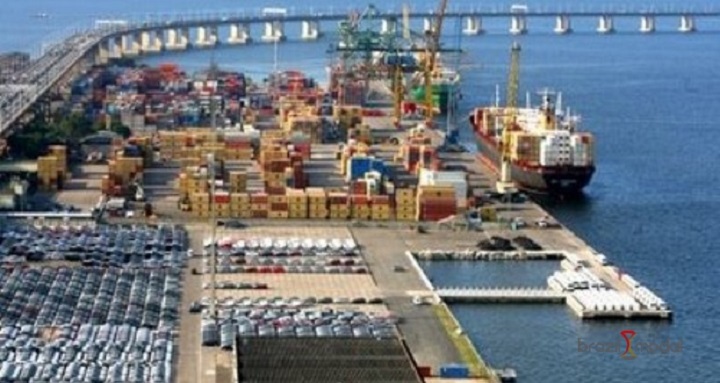

Project Using the Buoy Array at the Port of RJ Is in Tests and Will Mark the Return of Its Activity After 7 Years of Stoppage
A project at the Port of RJ, specifically at the buoy array located north of the Cruise Terminal at the Port of Rio de Janeiro, is in the final testing phase after 7 years of inactivity. Check it out! Efficiency in the Maritime Transport Sector Was Highlighted!
The buoy array operations were tested days ago with the use of the ship Stena Bulk, which is 182.9 meters long and 40 meters wide.
The expectation is that the buoy array will handle about 800,000 tons of oil and derivatives per year for the Manguinhos Refinery (REFIT).
This volume will represent a 214% increase in the movement of this type of cargo at the port, compared to the volume handled in 2018, returning to levels seen in 2003 and 2004.
-
8-Year-Old Finds 900-Year-Old Viking Bronze Buckle on Swedish Beach While Fossil Hunting
-
China Tests Giant 582-Ton Magnets to Contain Plasma Hotter Than the Sun’s Core, Aiming to Cut Superconductor Costs and Generate First Electricity from “Artificial Sun” by 2030
-
Lenovo Unveils Legion Y700 Tablet with RGB Backlighting, 5G, and SIM Card Support
-
Lenovo Unveils Legion Y700 Tablet with RGB Backlighting, 5G, and SIM Card Support
The Transfer
To be sent to the Manguinho refinery in RJ, the liquid bulk cargo unloaded at the buoy array will follow through a pipeline 6.8 km long, with 3.5 km being land-based and 3.2 km being maritime.
During the 7 years that the buoy array was inoperative, the cargo was unloaded in São Paulo and reached the Manguinhos refinery via trucks, so a substantial improvement in logistics and operations is expected, which will provide new business opportunities for the refinery, thus benefiting the state of Rio de Janeiro.
Initial estimates indicate that about 33,000 tons of liquid bulk will be handled per berthing, initially with one ship per month in the first year, and two ships per month starting in the second year, raising annual movement to around 800,000 tons.
Read more here at your CPG portal! Petrobras Pipelines Had a Record 261 Theft Cases in 2018!