





 Portuguese
  English
  Spanish
  3 min of reading
  0 comments


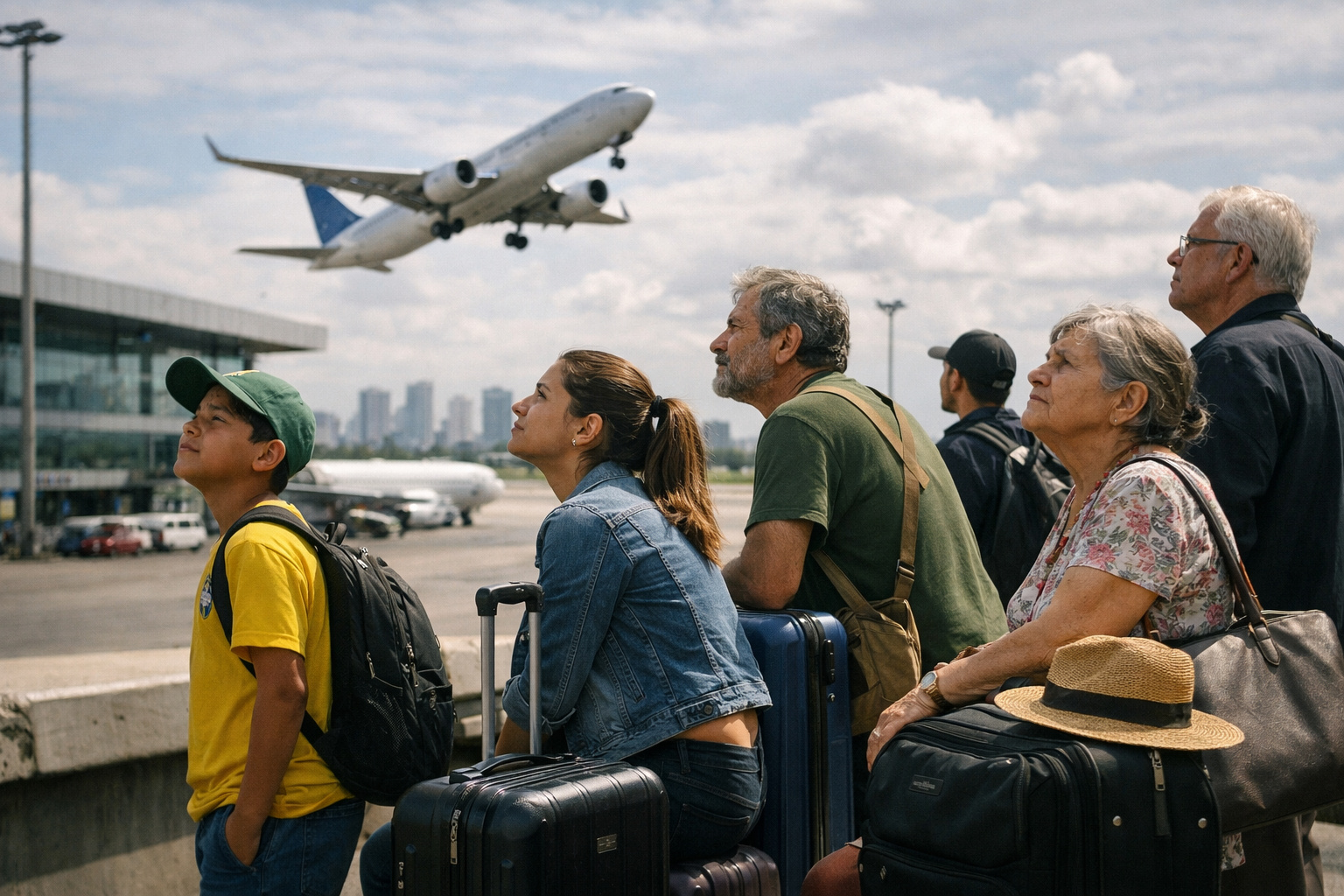
Survey Shows That the Desire to Emigrate Grows Among Young People, Reveals Preferred Destinations Abroad, and Contrasts With Moderate Optimism About the 2026 World Cup
The desire to leave Brazil and seek opportunities abroad has gained strength among Brazilians, especially among the younger population. According to the 18th survey from the Febraban Observatory, 40% of the population expresses interest in emigrating, while 57% say they do not consider this possibility. The survey interviewed 3,000 people across the five regions of the country between November 15 and December 2, providing a comprehensive snapshot of current perceptions about the future in Brazil.
The information was released by the Febraban Observatory, following a national survey published last Thursday (18), highlighting a significant change in social behavior, especially when analyzed through a generational lens. Although the country maintains strong cultural and symbolic ties, the desire to live abroad emerges as a reflection of economic, social, and quality of life expectations.
Desire to Emigrate Varies by Generation, Peaking Among Young Adults
According to the survey data, the interest in living outside Brazil varies significantly by age group. Among members of the Millennial Generation, born between 1980 and 1995, the rate reaches 50%, representing the highest percentage among all groups analyzed. Right behind are Generation Z, born between 1995 and 2010, with 44% expressing a desire to leave the country.
-
Archaeologists find 16th-century silver coin.

-
An 86-year-old farmer rejected a proposal of R$ 76 million to sell his land and surprised everyone by turning down an AI data center on his 105-hectare farm, negotiating for only R$ 10 million for environmental preservation.

-
You have probably crossed paths with it and didn’t even notice: the Brazilian tapiti rabbit lives hidden in the forests and may be disappearing without anyone noticing.

-
Explorers investigate one of the most secret locations in the United States.

In contrast, the interest declines among older groups. In Generation X, made up of Brazilians born between 1965 and 1981, the percentage drops to 35%. Among Baby Boomers, born between 1946 and 1964, only 25% state they consider emigration. These figures indicate that the younger the generation, the greater the propensity to seek opportunities outside the national territory.
This generational contrast reinforces the perception that younger people see living abroad as a viable alternative for professional growth, financial stability, and better living conditions, while older generations tend to maintain more established roots in the country.
Europe Tops Preference Among Destinations, With the U.S. as the Leading Individual Country
Among Brazilians who expressed an intention to leave the country, preferences are primarily concentrated in Western countries, especially those that already host large Brazilian communities. Europe emerges as the favorite continent, accounting for 60% of mentions. Within this group, Portugal leads with 22%, followed by Italy (12%), Spain (8%), England (7%), and Switzerland (6%).
In North America, the United States is the most mentioned country, with 37% of preferences, standing alone as the leading individual destination. Canada follows, with 9% of mentions. In Asia, although with lower representation, Japan (5%) and China (4%) also appear among the destinations cited by the respondents.
These data reveal not only a search for better economic conditions but also a preference for countries that offer greater ease of cultural adaptation, job opportunities, and already established support networks.
Even with the Desire to Emigrate, Brazilians Maintain Moderate Optimism About the 2026 World Cup
Despite the growing interest in emigration, the survey also assessed Brazilians’ perceptions of the 2026 World Cup, revealing a sentiment of moderate optimism. Since the last victory in 2002, Brazil has not won the tournament, yet football remains one of the main symbols of the country abroad, mentioned by 26% of respondents.
When asked about the national team’s chances, 43% stated that Brazil has a chance of winning the title, while 21% believe the country has a good chance, relying on the team’s victorious history. On the other hand, 31% of respondents were more skeptical, asserting that Brazil has no chance of being champions in the next edition of the tournament.
This contrast highlights an interesting relationship: as the desire to leave the country grows, a strong emotional connection to national symbols, such as football, remains, continuing to fuel collective expectations and hopes.
In light of this scenario, does the desire to leave Brazil reflect only a phase of dissatisfaction or indicate a definitive change in how Brazilians, especially the younger ones, view the future of the country?









-

-

3 pessoas reagiram a isso.