





 Portuguese
  English
  Spanish
  4 min of reading
  0 comments


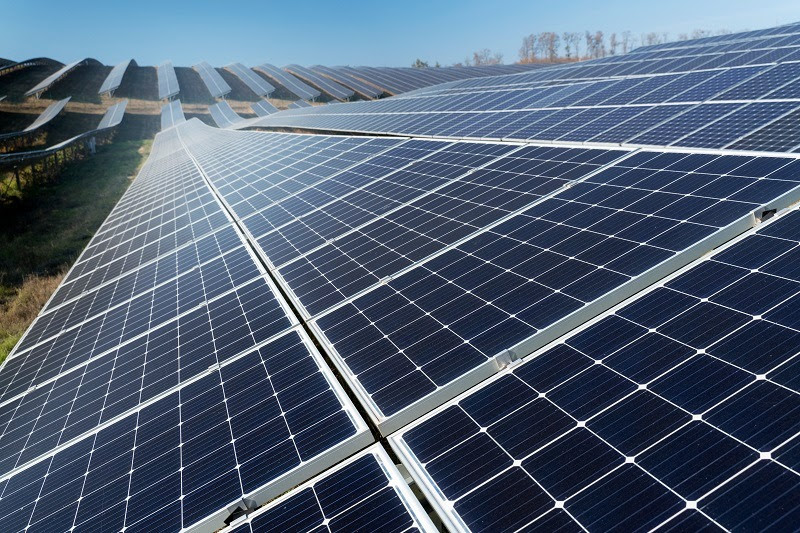
Red Flag And Low Prices Drive The Solar Energy Market. Extra Charge And 20-Year Durability Make Solar Energy A Cost-Effective Option.
Red flag and price reduction stimulate the solar energy market. Tariff increases and a 20-year lifespan position solar energy as an economically advantageous alternative.
With the intense heat and dry season, electricity costs rise in many Brazilian states. Recently, the National Electric Energy Agency (Aneel) announced an additional charge on electricity bills for the month of September. In light of this scenario, more and more people are opting for photovoltaic energy, a renewable energy source that helps reduce long-term expenses. In addition to offering a more sustainable solution, the transition to this clean energy reflects a growing concern for the environment.
Red Flag: Review And Impacts On Electricity Bill
The current tariff flag in effect is the red flag level 1, implying an additional cost of R$ 4.463 for every 100 kilowatt-hours (kWh) consumed. Last week, the National Electric Energy Agency (Aneel) had announced that it would adopt the red flag level 2, but this decision was reviewed. The review occurred after the correction of information provided by the Monthly Operation Program (PMO), under the responsibility of the National System Operator (ONS).
-
The Brazilian state accelerates industrial competitiveness with a focus on the extraction of strategic minerals to boost the energy transition in Goiás.

-
A Canadian retiree creates a hydroelectric system on a real river, generating energy continuously throughout the day and demonstrating how the power of water can supply a house with stability even in a simple structure.

-
Petrobras reaffirms its commitment to the market and ensures that it will carry out the energy transition safely to maintain national sovereignty.
-
Researchers discover a possible hydrogen deposit of up to 46 million tons beneath an ancient coal basin, and the volume could exceed half of the entire global production.


Climatic Challenges And Energy Alternatives
The increase in cost is justified by the current climatic conditions, which forecast rainfall below the historical average, negatively impacting the water levels in the country’s reservoirs. In this scenario, solar energy emerges as a viable and economical alternative. Utilizing the sun for production and reducing energy costs has proven to be an advantageous alternative in 2024.
Economic Benefits Of Solar Energy
Through solar energy generation, with the installation of a photovoltaic system, it is possible to achieve savings of up to 90% on the electricity bill. In addition, it contributes to the production of clean energy, a significant benefit for the environment. The investment in this type of technology has a payback of approximately 3.3 years, after which the consumer will have paid off the system and will start seeing financial returns.
However, from the initial moment of operation of the solar energy system, the savings on bills can reach up to 70%. Another beneficial aspect is the 20-year durability of photovoltaic systems, representing a significant advantage in the medium and long term for consumers.
Price Drop In Solar Energy Kits
Compared to the year 2023, the price of solar energy kits showed a reduction of 30%, according to research by the Greener consultancy. The kits include photovoltaic modules, inverters, mounting systems, cabling, and protection. Anderson Oliveira, co-founder of EcoPower Group, highlighted an increase in sales of photovoltaic panels in June 2024 compared to the same month in 2023. In the last year, 12,290.87 kwp were sold, equivalent to about 22,347 panels of 550 wp. By 2024, sales reached 16,273.70 kwp, or 29,588 panels of 550 wp.
Growth And Price Drop In The Market
This increase represents a growth of 32.4% in the volume sold (kwp) compared to the same period the previous year. The company’s photovoltaic kits underwent a drop of 18.5% in the average kwp value, explained by the price drop in retail, the low demand in the market and the high stock volume of distributors in the first half of 2023.
The Expansion Of Solar Energy In Brazil
According to data from the Brazilian Solar Photovoltaic Energy Association (ABSOLAR), solar energy represents 19.4% of the Brazilian energy matrix, totaling 45,736 MW, trailing only hydropower, which accounts for 46.7% of production. In addition to the economic benefits, solar energy is one of the most promising and expanding renewable energy sources both in Brazil and globally, attracting investments and support from governments around the world. Since 2012, solar energy initiatives have prevented the emission of 55.4 million tons of CO², according to accumulated figures from ABSOLAR, establishing itself as a source of sustainability.
The Trajectory Of EcoPower In The Solar Energy Market
EcoPower, with 11 years of experience, began operations in Barretos (SP) in 2013, with a family structure. Founders Anderson Oliveira and Náchila Oliveira, married since adolescence, have followed the development of electric energy generation technologies in Brazil and invested in the solar energy segment, focusing on the installation of photovoltaic panels.
After a modest start, the couple’s photovoltaic system installation techniques gained recognition, especially in the interior of São Paulo and Goiás. Currently, the company has over 350 franchises, operates in 26 Brazilian states and the Federal District, with more than 50,000 installations carried out in residences, industries, businesses, and rural areas.
EcoPower’s mission is to provide solar energy solutions with cutting-edge technology and personalized projects to meet the specific needs of each client, significantly contributing to the expansion of renewable energy in Brazil.
Source: Press









Seja o primeiro a reagir!