Portuguese
  Spanish


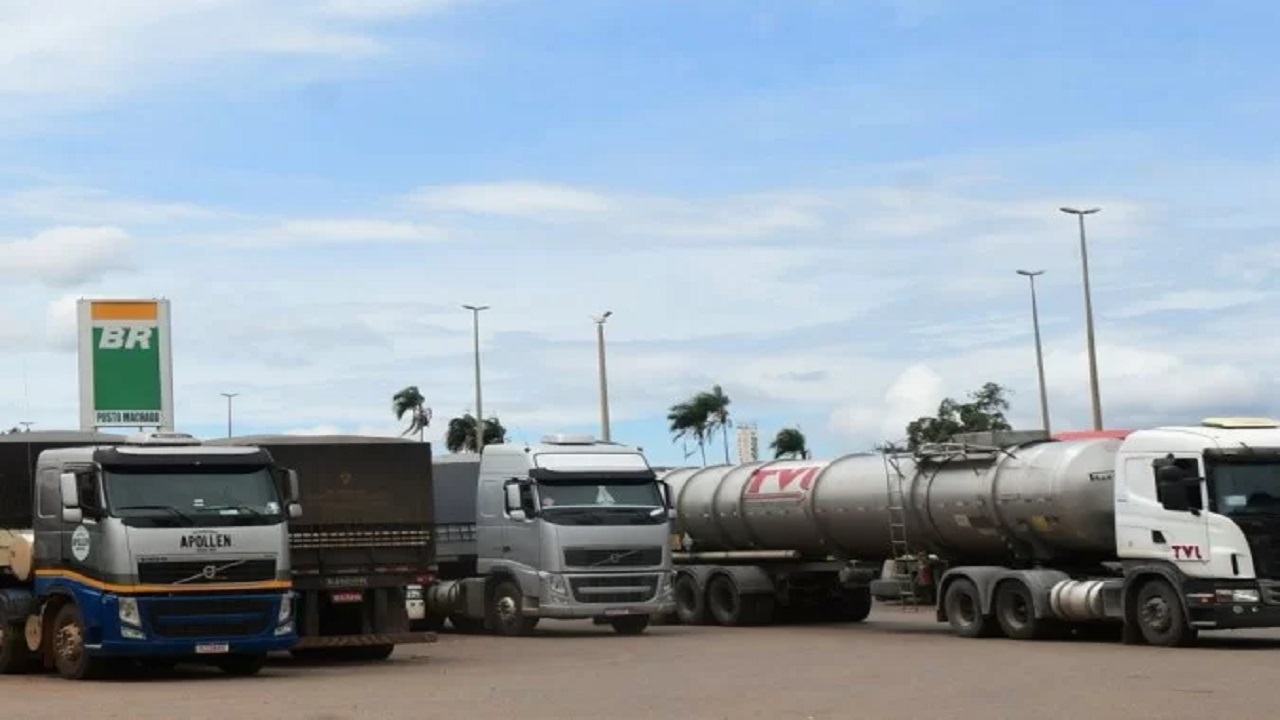

Truck Drivers Hold Strike in Espírito Santo Due to Diesel Price Increase Announced by Petrobras and Federal Government. The Strike Continues This Friday (13) with No Forecast for Return in the State.
On Thursday (12), truck drivers began a new strike with no forecast for return in the state of Espírito Santo (ES). The announcement was officially made by the Union of Autonomous Road Transportation Workers of Goods of Espírito Santo (Sindicam/ES), which explained that the cause of the strike relates to the increase in diesel prices. The organization also emphasized that truck drivers, especially the self-employed, are the ones who suffer the most when there is a rise in diesel prices. Thus, the union from Espírito Santo, Coopercolog, ACA, and representatives of truck owners joined forces to combat this increase.
Abrava Expresses Irritation After Diesel Price Increase


The group of truck drivers and entities participating in the strike in Espírito Santo claim that the situation has become unsustainable, both regarding the diesel price increase and the other supplies that are part of the truck drivers’ daily routine.
At the beginning of the week, the Brazilian Association of Motor Vehicle Drivers (Abrava) expressed outrage at the new diesel price increase and in a statement to the press, Wallace Landim, a representative of the truck drivers, who is nicknamed Chorão, stated that both the Federal Government and Petrobras changed their strategy for increasing fuel prices.
-
France Revamps 530 Social Housing Units with Large Balconies and Glass Facades Without Demolishing Existing Buildings

-
Facing high rent, couple transforms parents’ garage into a fully functional apartment, creating a complete home at a fraction of the market cost.

-
10-Year-Old Max Makes History with Paris Fashion Show, Launches Own Brand, Hires Staff, and Sets World Record as Youngest Runway Designer

-
MIT Scientists Develop Method to Transform CO₂ into a Construction Ally, Boosting Cement Strength by 13% in 24 Hours for More Sustainable Infrastructure




“One week natural gas becomes more expensive, then gasoline, diesel, and so on,” highlights Wallace. According to Wallace regarding the diesel price increase, truck drivers and other entities cannot remain silent, as this increase will heavily impact the groceries of many workers.
In a statement, Sindicam of Espírito Santo states that the scenario has reached its limit. “Sindicam/ES, ACA, and Coopercolog, together with the representatives of truck owners, support this movement. We understand that the situation for the self-employed has become unsustainable after so many increases, whether in diesel prices or the supplies that form the daily life of truck drivers,” says the statement.
Fuel Adjustment
The announcement regarding the diesel adjustment, which triggered the truck drivers’ strike in Espírito Santo, was made by Petrobras last Monday (9), taking effect on May 10. Since then, the average price of the fuel rose from R$ 4.51 to R$ 4.91.
For now, only the price of diesel will be adjusted and kitchen gas and gasoline remain unchanged. Diesel will become more expensive after 2 months without any price changes, considering that the last adjustment was made on March 11.
At that time, the justification was based on a reflection of rising market prices. Observing the latest adjustments made by the state-owned company, an accumulated increase of 47% in the refineries of the oil company can be seen. In a statement, Petrobras stated that the move aims to standardize the actions of other fuel suppliers in the country, which have already made price adjustments in relation to market reality.
International Oil Prices Rise by 4%
According to the state-owned company, taking into account the mandatory mix of 90% diesel A and 10% biodiesel in the composition sold at gas stations, Petrobras’ share of the price paid by consumers will increase the average price per liter from R$ 4.06 to R$ 4.42.
It is worth noting that this is the sale price at the pump. The adjustment occurred while both diesel and gasoline prices showed a lag compared to the international scenario.
A disparity of -27% was observed for the former, versus -22% for the latter. In the last week, international oil prices recorded a 4% increase, during which the Brent type barrel, the most traded, remained above the US$ 100 mark.