





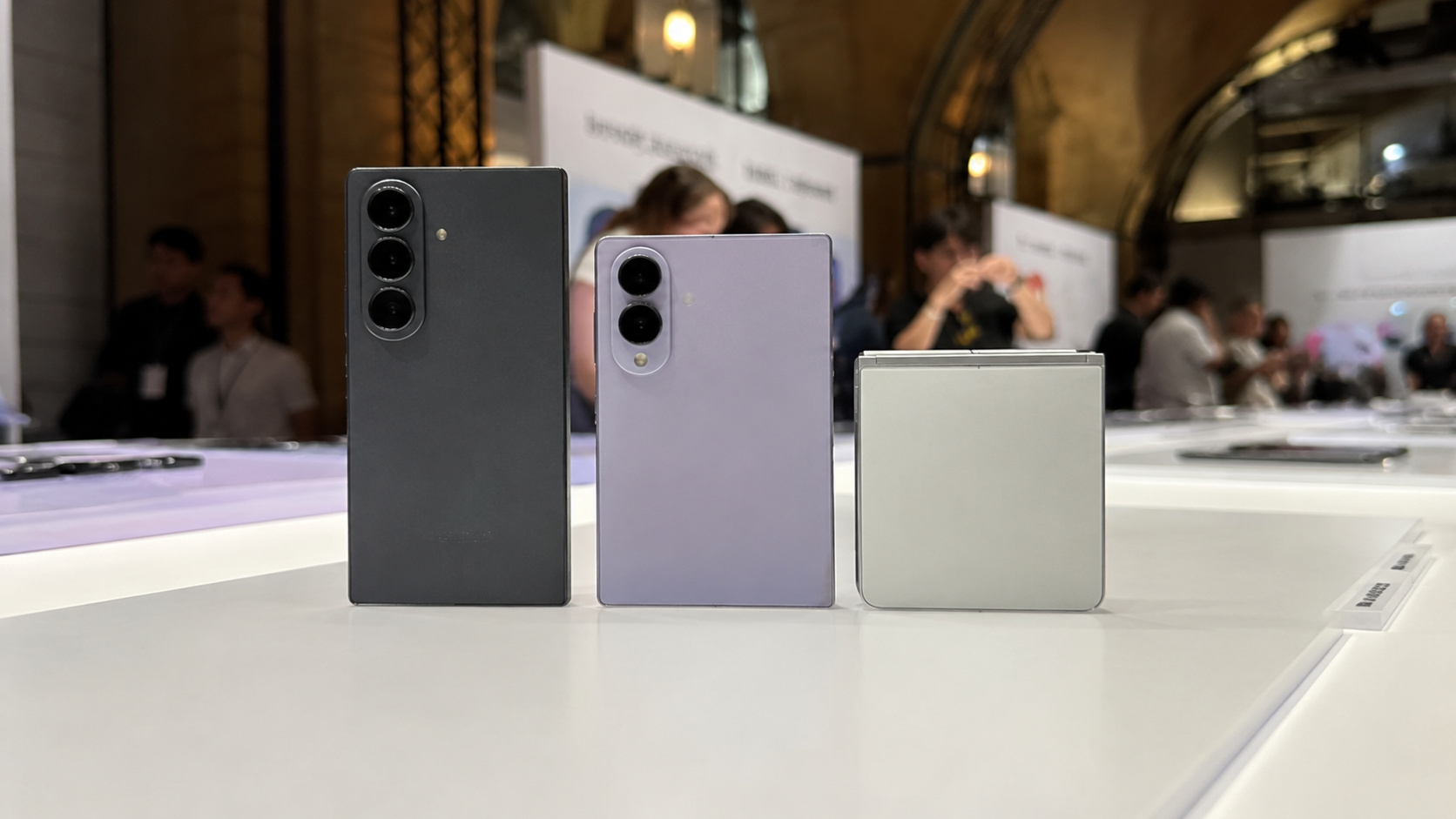

Meet the new Samsung phones with silicon-carbon battery; Samsung technology increases autonomy, improves efficiency, and optimizes internal space.
In an announcement made during the Galaxy Unpacked in London this Wednesday, July 22, 2026, according to Tecmundo, Samsung officially presented its first smartphones equipped with a silicon-carbon battery. The novelty debuts in the foldables Galaxy Z Fold 8, Galaxy Z Fold 8 Ultra, and Galaxy Z Flip 8, as well as the smart watch Galaxy Watch Ultra 2.
This is the most significant technological leap for the manufacturer in the energy storage segment in ten years, since the launch of the Galaxy Note 7 in 2016. The innovation increases energy density, optimizes internal space, and paves the way for thinner devices with greater autonomy and stability.
The energy leap in the new Samsung phones
The South Korean giant inaugurated a new stage in mobile hardware engineering by integrating the silicon compound into the carbon in the anode of the electric cells. This structural change expands the charge retention capacity without requiring an increase in the physical volume of the devices, something crucial for the advancement of foldables.
-
Goodbye traditional air conditioning: French technology does not have a condenser, uses indirect evaporation, thermal power of 2 kW with low electrical consumption, and aims to replace the compression cycle with water cooling in spaces up to 40 m².

-
Transporting 129.6 million passengers and growing 9.4% in the year, Brazil’s air transport set a historical record in 2025, with the domestic market carrying 101.2 million people and the international market advancing 13.4% to 28.4 million.

-
Goodbye traditional washing machine: TCL surprises and introduces the Super Drum version with a giant 540 mm drum, six internal paddles that mimic hand washing, jetBubble foam, automatic stain removal, steam, auto-dosing, and Wi-Fi control.

-
Giant planet hidden 63 light-years away is revealed within a bright dust disk, has at least twice the mass of Jupiter, and shows that huge worlds can still be invisible in systems studied for decades.


After years of research and investments in safety following the Note 7 case, each new Samsung phone undergoes rigorous stress testing before reaching the market.
| Device | Battery Capacity | Charging Power |
| Galaxy Z Fold 8 | 4,800 mAh | 45W (Charger included in the box) |
| Galaxy Z Fold 8 Ultra | 5,000 mAh | 45W (Charger included in the box) |
| Galaxy Z Flip 8 | 4,300 mAh | 25W (Charger included in the box) |
| Galaxy Watch Ultra 2 | 800 mAh | Special optimization for wearables |
How the silicon-carbon battery works
The chemistry of this solution replaces traditional graphite with silicon in the anode. Silicon stores a substantially larger amount of lithium ions, reaching almost ten times the capacity of conventional structures in the same volume.
However, silicon tends to expand and swell during recharge cycles. To make the silicon-carbon battery feasible, engineers needed to redesign components such as the cathode, the electrolyte, the separator, and the anode itself.

Although the silicon-carbon battery is now debuting in Galaxy line devices, the chemistry made its commercial debut in 2013 and is already present in several industry competitors:
- Motorola Signature: 5,200 mAh
- Motorola Razr Fold: 6,000 mAh
- Xiaomi 15 Pro: 6,100 mAh
- Redmi Note 15 Pro: 6,580 mAh
- Realme GT 8 Pro: 7,000 mAh
- Industry prototypes: Batteries in testing reaching from 10,000 mAh to 15,000 mAh
Despite the competition offering higher numerical capacities, the brand chose to limit the capacity to up to 5,000 mAh to prioritize thermal control, longevity, and device slimness.
Rigorous engineering and safety protocols
The memory of the Galaxy Note 7 in 2016 made the company radically change its testing methods. During that period, incidents with batteries swelling or catching fire led to the product recall and the model being banned on aircraft.
According to executive Sunghoon Moon, responsible for the company’s hardware research and development sector, the company created specific algorithms to control silicon expansion and ensure stability in daily use.

In addition to the autonomy gain, the new line features advances in recharge power. The top-of-the-line models support wired chargers up to 45 watts, which will come in the box of the Galaxy Z Fold 8 and Galaxy Z Fold 8 Ultra. Meanwhile, the Galaxy Z Flip 8 will support 25 watts with an included adapter.
- Release date in Brazil: August 6
- Prices for the local market: To be revealed in the coming weeks
The importance of advancement for the next generation
The consolidation of this chemistry paves the way for the next decade of thin and efficient electronics. The constant quest for slimmer devices was hindered by the limits of graphite, but the controlled expansion of silicon resolves this mechanical obstacle.
With this achievement, Samsung’s technology elevates the technical standard of foldables and establishes new engineering benchmarks for the entire mobile industry.

The use of silicon-enriched anodes represents a precise balance between high energy density, compact form, and proven safety. Consumers benefit from lighter devices with greater autonomy.
With the launch scheduled for the Brazilian market at the beginning of August, Samsung’s new phones demonstrate engineering maturity and reinforce the brand’s commitment to responsible and high-performance innovation.


