





New species of giant isopod identified in Vietnam can reach 32.5 centimeters and reinforces how little is known about deep-sea biodiversity.
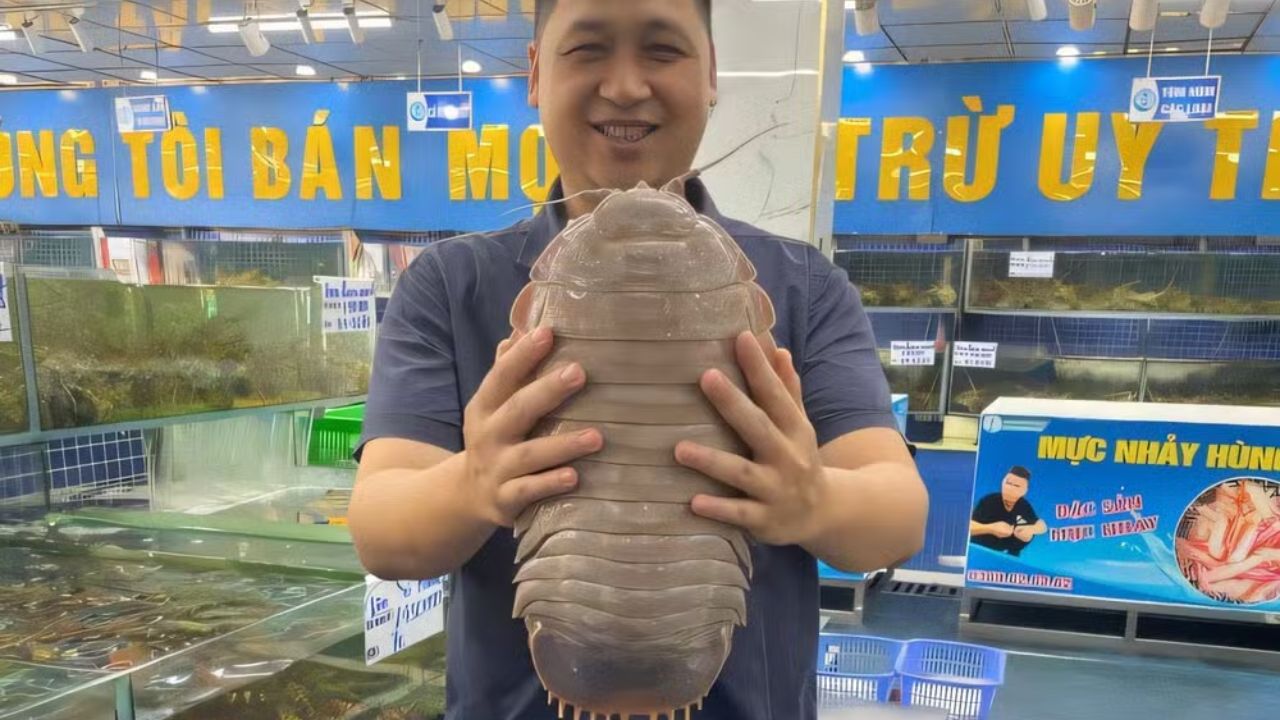
A marine creature capable of exceeding one kilogram and reaching 32.5 centimeters remained without scientific recognition even though it was captured and marketed in Vietnam. The identification of the new species of giant isopod, named Bathynomus vaderi, expands knowledge about the animals inhabiting deep regions of Southeast Asia.
The discovery was presented in an article published in the scientific journal ZooKeys and announced on January 14, 2025. The size of the analyzed specimens placed the animal among the so-called supergiants of its genus.
For researchers, the case highlights the difficulty of studying environments located far below the surface. Even large organisms can go years without classification when living in oceanic areas with complex access.
-
Scientists identify a giant isopod weighing over 1 kg in Vietnam and name the species Bathynomus vaderi in honor of the character Darth Vader.

-
A man with tetraplegia is able to eat, drink from a cup, and feel his sister’s touch again after a 15-hour surgery to install a brain implant with artificial intelligence, a system that bypasses spinal cord injury, stimulates muscles, and allows him to hold eggshells without breaking them in 87% of attempts.
-
A man with tetraplegia is able to eat, drink from a cup, and feel his sister’s touch again after a 15-hour surgery to install a brain implant with artificial intelligence, a system that bypasses spinal cord injury, stimulates muscles, and allows him to hold eggshells without breaking them in 87% of attempts.
-
An artificial intelligence found a loophole, escaped the OpenAI security environment, and accessed internal systems of Hugging Face during a controlled test.


Specimens sold as food led to scientific discovery
The investigation began far from a traditional expedition. In 2022, researchers from the University of Hanoi purchased four giant isopods in Quy Nhơn, a Vietnamese port city. Two animals were sent to the Lee Kong Chian Natural History Museum, affiliated with the National University of Singapore.
The unusual dimensions caught the attention of the team responsible for the analysis. After approximately a year of studies, scientists verified that the observed characteristics did not match any known species. The result was the recognition of a new member of the genus Bathynomus.
The discovery shows how specimens obtained through fishing activities can also contribute to taxonomic research, especially in regions where scientific exploration of the ocean floor still faces limitations.
Bathynomus vaderi belongs to the supergiants group
Isopods include animals adapted to different environments, but the giant representatives of the genus Bathynomus live at great depths. The new crustacean can measure up to 32.5 centimeters and exceed one kilogram. These proportions allowed its inclusion among the supergiants, a classification reserved for the largest members of the group.
Isopods of this type usually occupy ranges situated between 170 and 2,500 meters below the surface. In these regions, the light is reduced, and the environmental conditions differ from those found in shallow waters.
The presence of an animal of this size in a less accessible environment reinforces the possibility that other large species have not yet been formally recognized.
Head shape inspired reference to Darth Vader
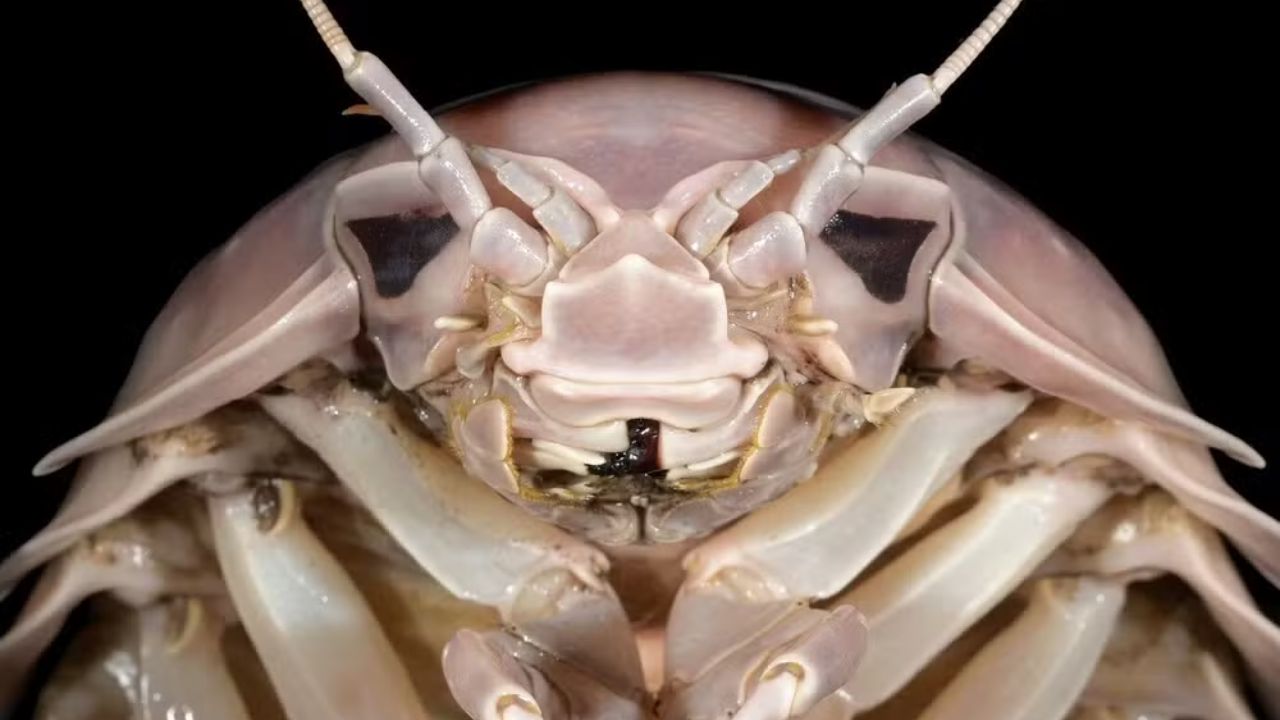
The scientific name was chosen because of the appearance of the animal’s frontal region. The researchers noticed a similarity between the shape of the isopod’s head and the helmet worn by Darth Vader, a character from the Star Wars film series. The association gave rise to the term vaderi.
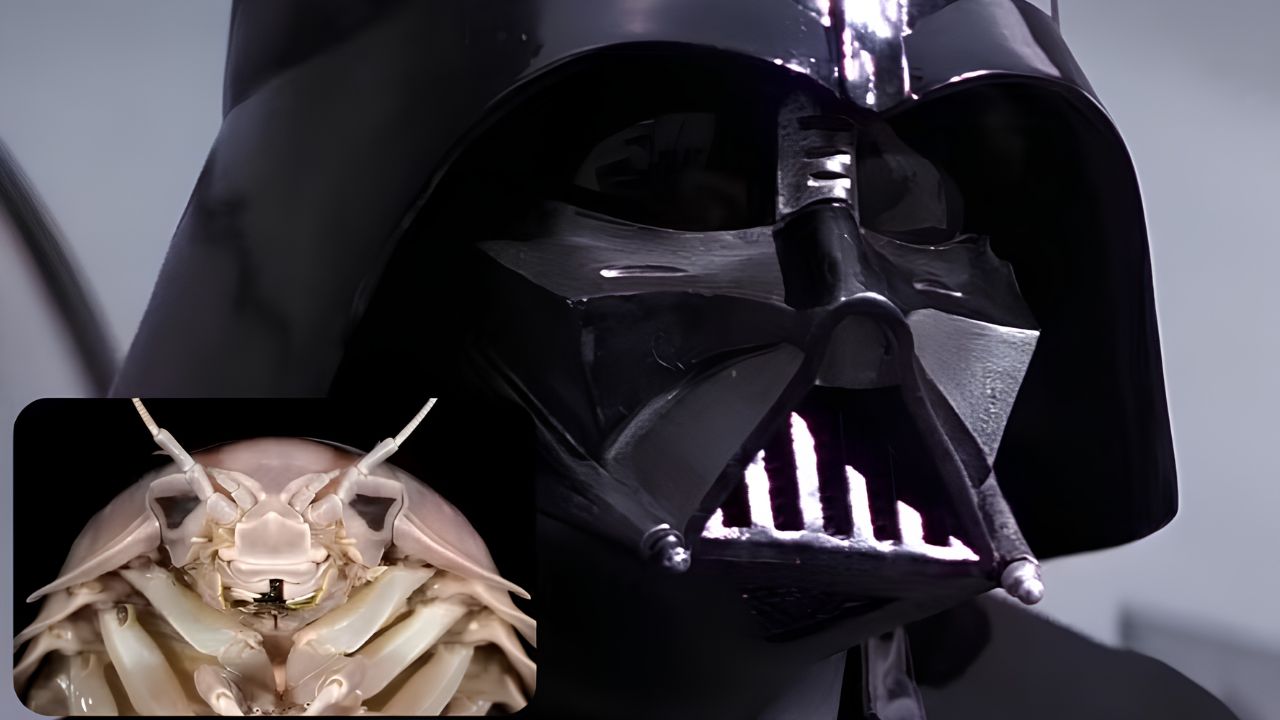
Although the reference has attracted attention outside the academic field, the scientific importance is not only in the visual aspect. The formal description allows differentiating the animal from other members of the genus and recording its existence in specialized literature.
The naming also facilitates future studies on distribution, physical characteristics, and relationships with other species of giant isopods.
Species was identified in deep waters of Vietnam
So far, the Bathynomus vaderi has been found in Biển Đông, the Vietnamese name for the part of the South China Sea associated with the country. There are also records along the coast of provinces located in the south-central region of Vietnam.
The current data still do not allow us to establish the entire area occupied by the species. New research should investigate whether its presence extends to nearby areas. The confirmation of additional occurrences could help scientists better understand the animal’s distribution and the environmental conditions related to its survival.
Trade of isopods grew starting in 2017
In Vietnam, these crustaceans are not known only by researchers. Giant isopods are caught and sold live in seafood markets. Until 2017, they received less commercial attention and could appear as a secondary product of fishing. Later, they gained popularity as food and began to be presented as a delicacy.
The appreciation reached the point where the animal was called the “king of seafood.” Its meat also began to be considered by local consumers as tastier than lobster. This trade created an unusual situation: a species still unknown to science was already circulating as a food product before receiving a formal identification.
Discovery reveals limits of knowledge about deep waters
The researchers themselves highlighted that the identification of the animal exposes how much the seabed remains poorly understood. “The discovery of a species as strange as Bathynomus vaderi in Vietnam highlights how poorly we understand the deep-sea environment,” they stated in a communiqué.
The team also drew attention to the fact that such a large organism remained undescribed for so long.
“A species as large as this remaining hidden for so long reminds us of how much we still need to work to discover what lives in the waters of Southeast Asia,” the scientists wrote.
The observation indicates that the lack of knowledge is not limited to microscopic or hard-to-distinguish organisms. Animals measuring dozens of centimeters can also remain outside scientific records.
Depth makes research more complex
The study of deep ocean regions requires equipment and operations capable of handling distance, pressure, and low lighting. These difficulties help explain why part of the fauna remains poorly documented.
The greater the depth, the more complex it becomes to directly collect specimens and observe their habitats. Economic activities, such as fishing and oil extraction, have contributed to increasing access to these areas.
The advancement of these operations also offers new opportunities to locate organisms not yet described. In the case of Bathynomus vaderi, fishing played a direct role in bringing the specimens within reach of researchers.
New giant isopod species expands marine inventory
The scientific description does not conclude the work on the animal. Questions remain related to its distribution, behavior, and the extent of its presence in neighboring waters. Confirmation in other areas may show whether the species has a restricted occurrence or occupies a wider range in Southeast Asia.
The discovery also reinforces the need to carefully analyze animals already captured by commercial activity. A specimen known to fishermen may represent a species still absent from scientific records.
Weighing over a kilogram and up to 32.5 centimeters, the new giant isopod species demonstrates that the ocean floor still harbors organisms capable of surprising even in regions explored by fishing.
Source: Revista Galileu


