






 Portuguese
 Spanish


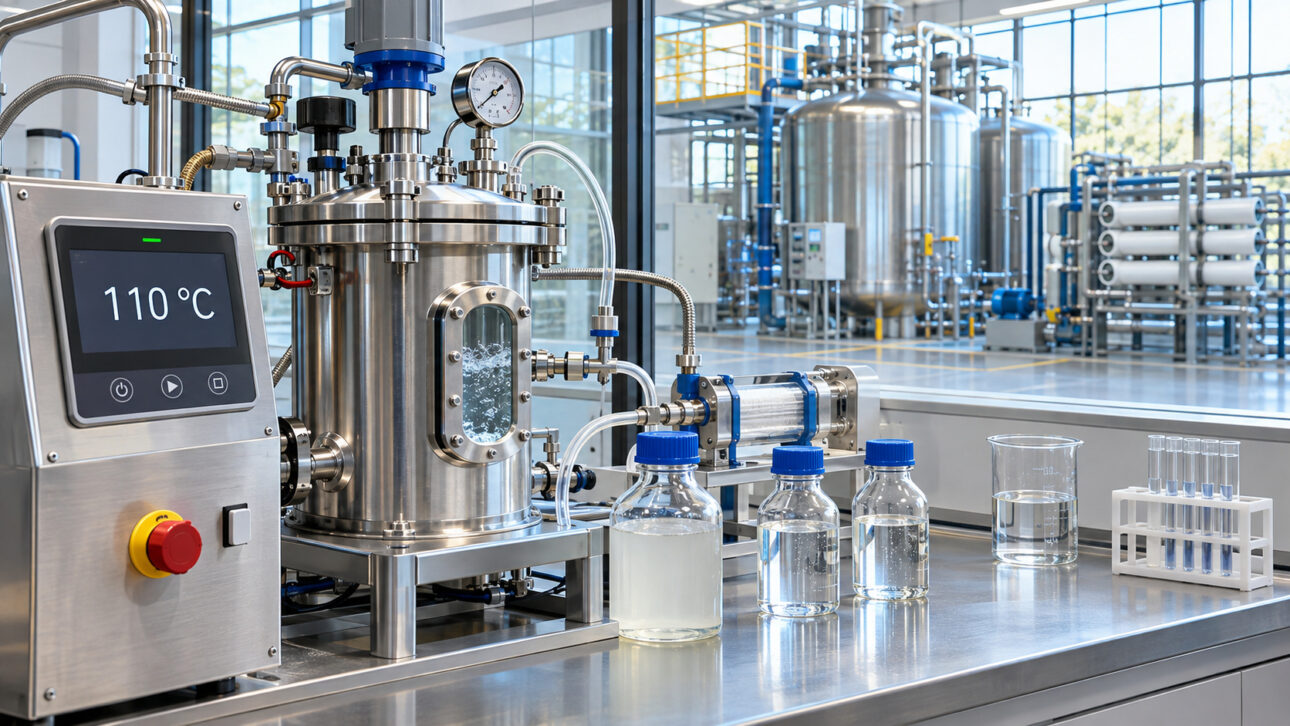

University of Utah research uses chemical reagents to break the extremely strong bonds in PFAS, substances found in industrial products, plastics and contaminated water sources. The results were published in the journal Communications Chemistry.
Scientists at the University of Utah developed a technology that can destroy different types of forever chemicals (PFAS) at temperatures near 110 °C. The discovery marks progress in the search for alternatives to eliminate industrial contaminants that can remain in the environment for decades.
The result stands out because of the difference in temperature. While some incineration processes for PFAS-containing waste operate at 1,000 °C or higher, the new method uses chemical reactions to break down the structures of these substances under far less intense conditions.
The research was published on October 28, 2026, in the scientific journal Communications Chemistry and received international attention in a ScienceAlert report published on November 20.
-
NASA-backed scientists cultivate potatoes in lunar-like soil using worm-produced fertilizer, achieving Earth-like yields and paving the way for space agriculture

-
WhatsApp Begins Rolling Out Scheduled Messages in Brazil, Allowing Users to Choose Day and Time for Automatic Sending of Texts and Images
-
Astronomer Patryk Sofia Lykawka says a hidden Planet X2 with 1.5 to 2 times Earth’s mass could be circling the Sun at least 200 times farther out than Earth, in a model that ran 4.5 billion years of Solar System history

-
Geologist Robert Stern says a robot diving 20,170 feet down a wall of the Mariana Trench found the deepest explosive volcanic rocks ever documented in any ocean, left by a Pompeii-style flow that should not exist there


The innovation could open the way to treating industrial waste, materials used in batteries and concentrates from water filtration systems. Development remains at the laboratory stage, with further tests planned to assess its potential for commercial-scale use.
Why are forever chemicals so difficult to destroy?
PFAS, short for perfluoroalkyl and polyfluoroalkyl substances, are a broad family of chemical compounds used in industrial processes and consumer products.
These substances are found in nonstick coatings, waterproof fabrics, firefighting foams, electronic components, and industrial materials resistant to heat and chemicals.
The defining feature of PFAS is the bonds between carbon and fluorine atoms, which are considered extremely strong.
That stability made the compounds useful to industry, but created an environmental problem: once released, many resist natural degradation and can reach rivers, soil, groundwater, and water supply systems.
Some PFAS are also associated with risks to human health, depending on the compound, concentration, and duration of exposure.
There is an important difference between removing these substances from water and destroying them.
Filtration systems can concentrate contaminants in absorbent materials, which then need to be disposed of properly. The new method was developed specifically to address this second stage of treatment.
Technology breaks strong chemical bonds at temperatures of 110 °C


The team led by Professor Ling Zang, a materials science and engineering specialist at the University of Utah, used a process called nucleophilic defluorination.
In practice, the researchers used reagents known as nucleophiles to attack the carbon-fluorine bonds responsible for PFAS’ high stability.
By breaking those bonds, the process releases the fluorine in the molecules as fluoride, making it possible to move forward with breaking down the contaminants.
The experiments demonstrated high defluorination efficiency across different substances, including perfluorooctanoic acid (PFOA) and trifluoroacetic acid (TFA), which is known to be difficult to treat.
The technology also showed promising results with fluorinated plastic materials such as PVDF and PCTFE, which are used in industrial applications and certain battery components.
Most of the tests were conducted at 110 °C or below. Some materials required temperatures of up to 150 °C, still far below those used in conventional high-temperature incineration processes.
Another notable detail is that the reactions were carried out under ambient-air conditions, eliminating the need for certain equipment and specialized environments used in other PFAS destruction technologies.
According to information released by the University of Utah, the research also aims to reduce the risk of simply transferring contamination from one medium to another.
Discovery could change how industrial waste and contaminated water are treated
The technology’s potential lies in combining two steps: first, capturing PFAS in water; then, destroying the concentrated substances collected during filtration.
This approach is of particular interest to industrial operations that need to control persistent contaminants in their processes and waste.
The temperature difference could also offer an energy advantage. Heating a system to 110 °C requires very different thermal conditions from those needed to operate equipment at temperatures close to 1,000 °C.
Total energy consumption, however, will depend on the amount of reagents used, heating requirements, solvent recovery and the characteristics of the waste being treated.
This is precisely where the discovery presents both an opportunity and an industrial challenge.
A technology capable of breaking strong chemical bonds at lower temperatures could expand treatment options. To become commercially competitive, it will need to demonstrate efficiency, safety and suitable costs in continuous operations.
The study also stands out for its potential to treat fluorinated polymers, broadening the research’s relevance to materials used across different supply chains.
Next steps are testing the method on real waste and assessing costs
The researchers are now working to refine the reagents and assess the technology’s performance under conditions closer to those found at treatment facilities.
Issues requiring further study include chemical consumption, solvent recovery, the safety of the resulting waste and operating costs.
The team also plans to investigate applying the process to real waste streams, where PFAS may be mixed with other substances.
The advance has already prompted patent applications related to the technology, according to the University of Utah.
The discovery marks an important step toward addressing one of the most persistent problems in environmental chemistry: turning hard-to-remove contaminants into products that can be safely treated and disposed of.
The next challenge will be to show that laboratory results can be replicated with industrial equipment, with environmental and economic performance suited to the needs of decontamination systems.


