Portuguese
 Spanish


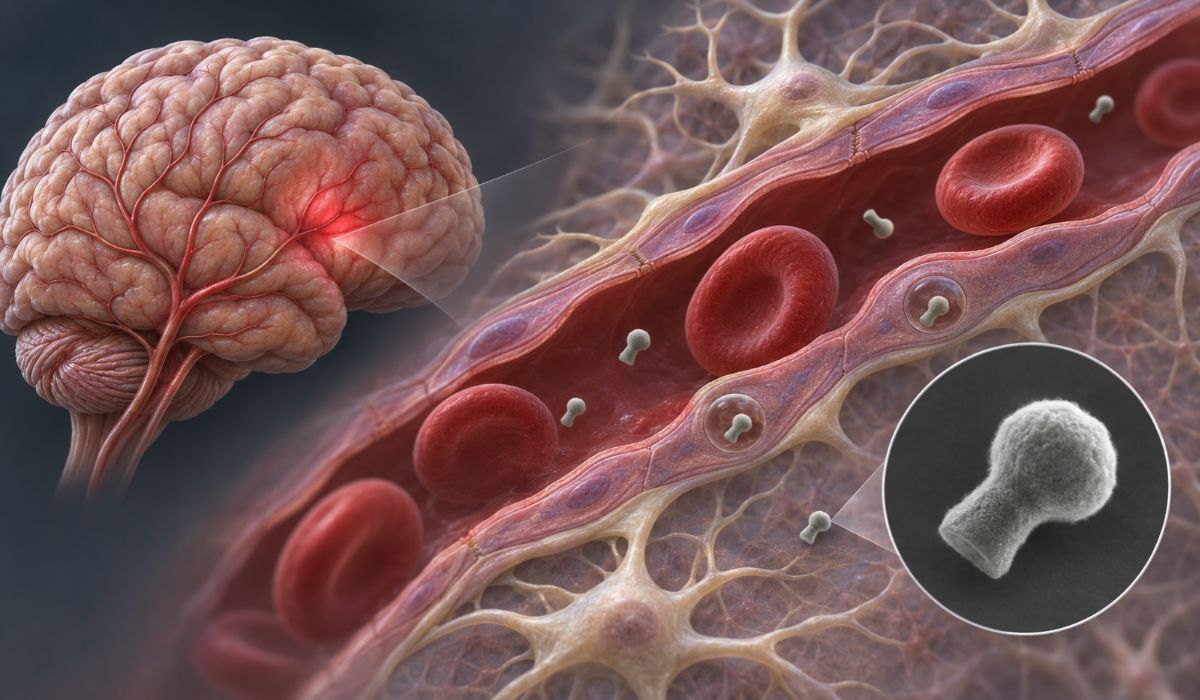

Technology developed by researchers in the United States and South Korea uses structures hundreds of times smaller than a human hair and increases the amount of drugs delivered to the brain in preclinical tests.
One of the human body’s most effective natural defenses is also one of medicine’s biggest obstacles: the blood-brain barrier. While it protects the brain from harmful substances, it prevents many drugs from reaching the areas where they need to work.
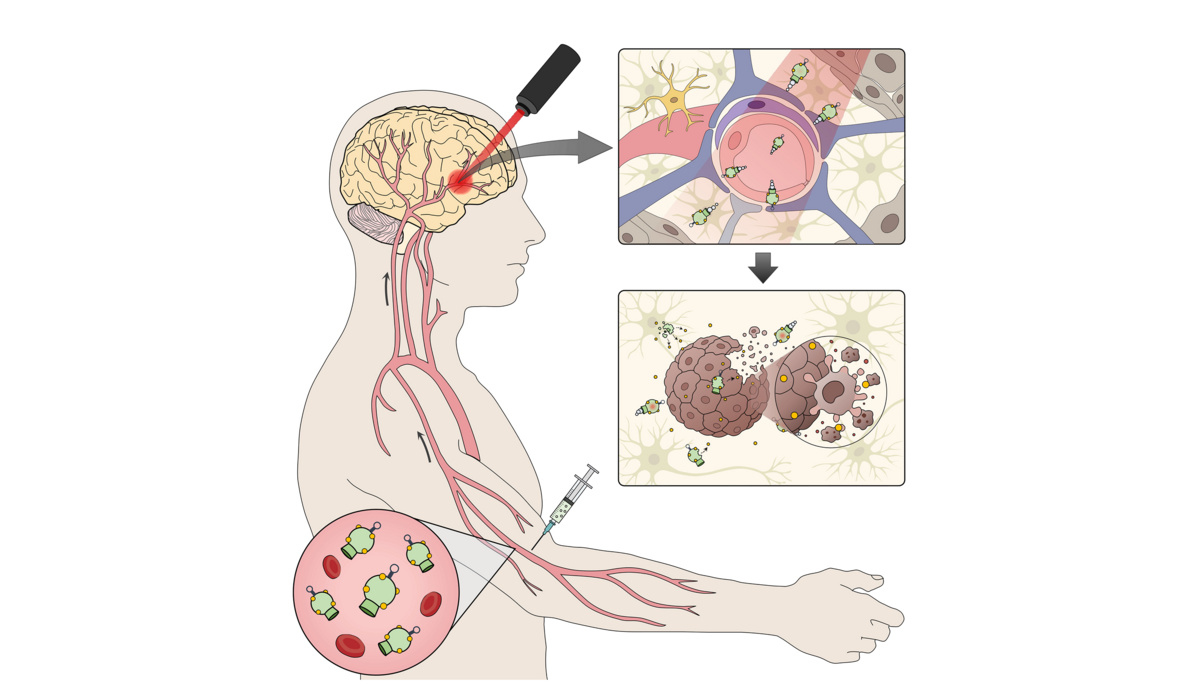
An international team of scientists has found a way around this problem using nanorobots that circulate through the bloodstream and gain propulsion when exposed to light.
Called BrainBots, the tiny structures were developed by researchers at the California Institute of Technology (Caltech) in the United States, in collaboration with South Korean institutions.
-
Brazil opens its first ancient DNA lab and uses genetics to investigate the mysteries of a historic cemetery in Amapá

-
Brazilian sisters lead research on an unprecedented mission to Antarctica’s highest point, 4,892 meters high, testing technologies in extreme conditions
-
Brazilian scientists will track up to 6,000 people for 10 years to find ways to slow human aging
-
Dead star races at more than 5 million km/h and may have overtaken the debris from the explosion that created it




The findings were published on November 25, 2026, in the scientific journal Science Robotics.
In preclinical tests in mice, the light-activated nanorobots delivered about five times more of the drug to the brain than those that received no light stimulus.
Why is it so difficult to deliver drugs to the brain?
Contrary to what its name might suggest, the blood-brain barrier is not a standalone membrane surrounding the brain.
It is made up primarily of cells lining the brain’s blood vessels, joined together particularly tightly and supported by other cellular structures.
This system controls the passage of substances between the blood and brain tissue.
While essential elements such as oxygen and water can pass through, many potentially harmful molecules are blocked.
The problem is that this protection also limits the entry of many drugs, including substances used to treat cancer.
Increasing the amount of a drug in the bloodstream does not always solve the problem and can expose other organs to high concentrations of the substance.
The researchers set out to develop a transport system that could use the brain barrier’s own cellular mechanisms, rather than disrupting its structure to let drugs in.
Nanorobots turn light into motion
At about 250 nanometers, BrainBots are hundreds of times smaller than the thickness of a human hair.
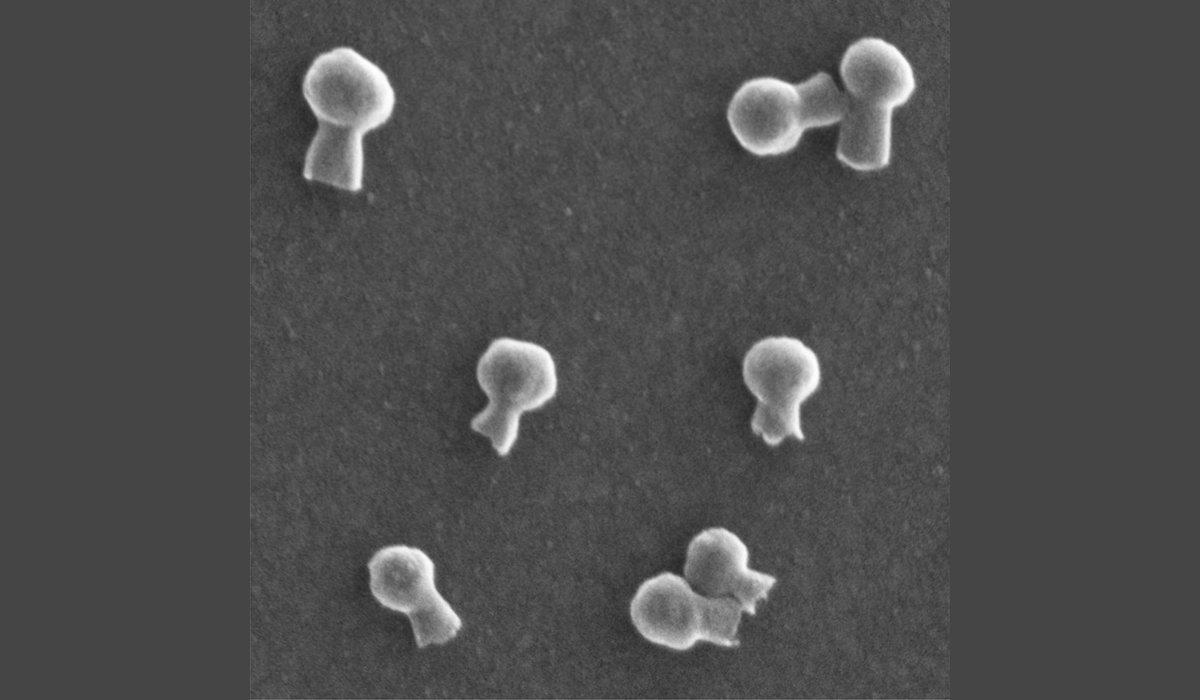
Despite their small size, each structure combines components responsible for propulsion, cell recognition and delivery of the therapeutic substance.
They contain no gears, electric motors or conventional electronic circuits.
Their movement is driven by a chemical reaction triggered by light.
The scientists developed tiny silica capsules containing ammonium bicarbonate and indocyanine green, a substance that can absorb near-infrared light and convert it into heat.
A kind of temperature-sensitive cap keeps the fuel protected as the nanorobots circulate in the bloodstream.
When the nanorobots receive the light stimulus, the heat opens this passage and generates gas, producing the force needed to move them.
Propulsion, however, solves only part of the problem.
The surface of the BrainBots carries specialized DNA molecules called aptamers, which help the structures recognize and bind to cells in the blood-brain barrier.
The combination of molecular recognition and active movement promotes a process known as transcytosis, in which a substance is taken up by a cell, transported through it and released on the other side.
In this way, the nanorobots can take advantage of a biological transport mechanism without relying on the widespread opening of the junctions that protect the brain.
Technology boosts drug delivery to tumors
To assess the therapeutic potential of BrainBots, the scientists selected doxorubicin, a drug used in chemotherapy.
The experiments investigated its use against glioblastoma, an aggressive form of brain tumor.
Eight hours after administration, the amount of doxorubicin found in brain tissue was 5.2 times higher in the group that received light-activated nanorobots than in the group treated with the same structures without activation.
Follow-up MRI scans also revealed differences in tumor progression.
After 12 days, tumor volume had increased nearly sevenfold in the control group, while growth remained below twofold in the group treated with activated BrainBots.
The researchers also observed longer survival and reduced systemic toxicity compared with conventional administration of the chemotherapy drug.
The tumors were not eliminated, but the results showed that improving drug delivery can significantly change its performance in experiments.
Another important finding was that the blood-brain barrier remained intact, with no detectable damage in the scans performed during the study.
Nanorobotics opens new possibilities for medicine
The researchers’ interest is not limited to treating tumors.
Because the platform was developed to carry substances across the blood-brain barrier, the authors see potential for adapting it in the future to investigate treatments for diseases such as Parkinson’s, Alzheimer’s and epilepsy.
Replacing the drug being carried could also enable research involving proteins and nucleic acids, expanding the technology’s potential applications.
Important engineering challenges remain, however.
Light will need to reach regions of the brain in larger organisms without causing harmful tissue heating. Possibilities mentioned in the study include developing localized lighting systems, including devices based on optical fibers.
Researchers will also need to monitor how the nanorobots degrade in the body and investigate the safety of repeated administration over longer periods.
The team is now working to improve these mechanisms, a necessary step before the technology can advance to clinical research in humans.