





 Portuguese
  English
  Spanish
  3 min of reading
  0 comments


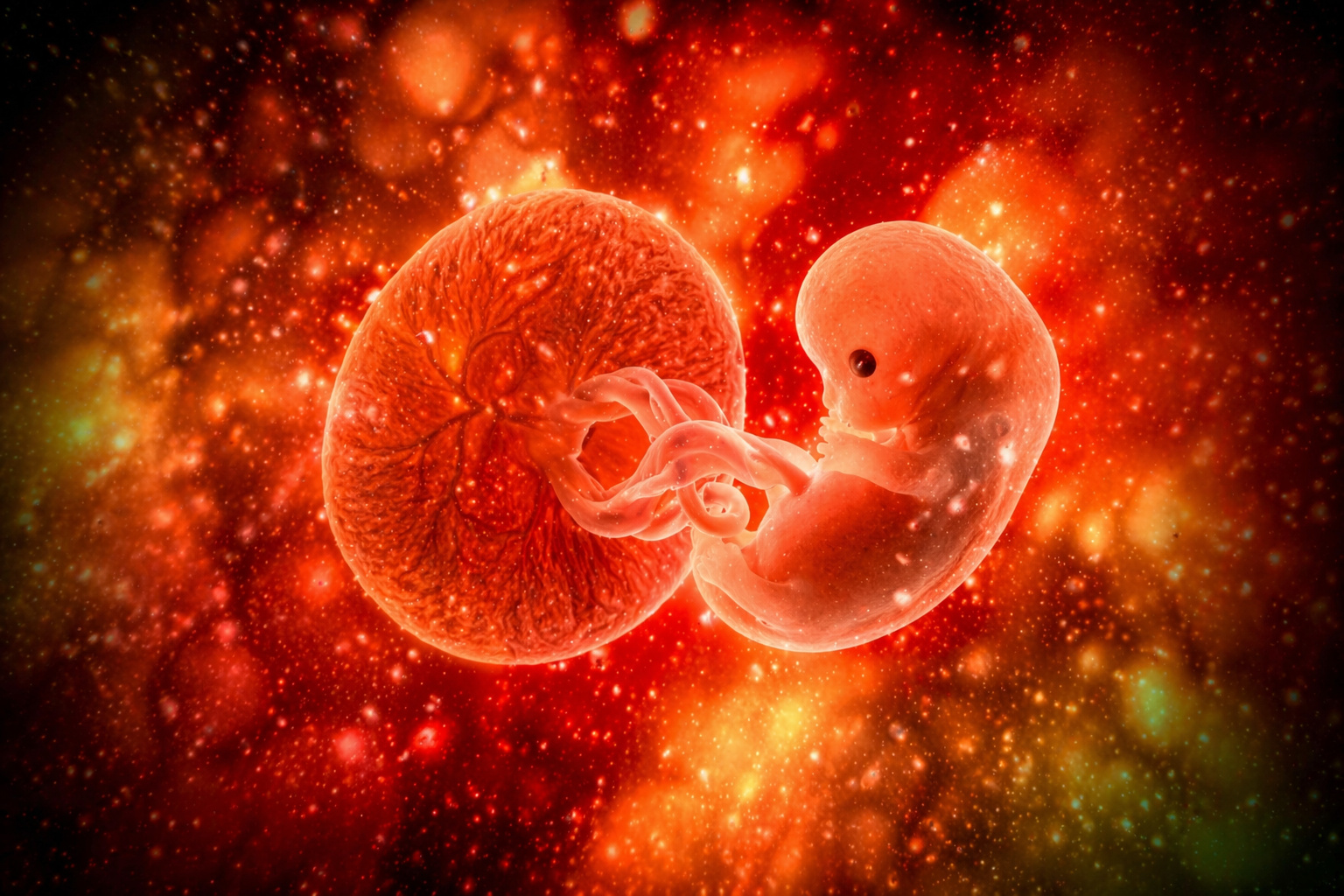
The new mapping of pregnancy reveals an exclusive cell from this period, alters scientific understanding, and reorganizes knowledge about maternal and fetal health
A significant scientific discovery was presented when researchers published in Nature the identification of a novel cell (still without a widely established or popularized name outside the study) present only during pregnancy.
The study integrates a broad mapping of the transformations of the female body throughout pregnancy and expands the understanding of this biological process.
Scientists analyzed the uterus from the early weeks to the end of pregnancy and identified a new adaptive cell subtype.
This type arises as the organism’s need to support fetal development and was not observed outside this gestational period.
Scientific discovery reveals exclusive adaptation of the female body
The identification of this cell results from detailed analyses conducted throughout the entire pregnancy and highlights a specific biological adaptation.
Researchers emphasize that the female organism undergoes profound transformations and new cellular structures may temporarily arise.
This cell has been described as a functional element that accompanies the evolution of pregnancy and plays an essential role in this process.
The discovery reinforces the existence of mechanisms that are still poorly understood that support fetal development.
SEE THE FULL ARTICLE HERE!
Direct function in the placenta and blood flow
The identified cell acts directly in the connection between the placenta and maternal blood flow, ensuring the exchange of vital substances.
This process allows for the efficient transport of nutrients and oxygen to the fetus, sustaining proper growth during pregnancy.
Researchers point out that alterations in this mechanism can compromise this essential exchange.
This relationship helps explain the occurrence of preeclampsia and eclampsia, conditions that affect thousands of pregnant women.
-
A true “invisible ocean” of fresh water has been found beneath the Atlantic and could sustain a metropolis like New York for centuries while challenging everything that was known about natural water reserves on the planet.
-
Forget land-based data centers: the company wants to install AI modules inside giant turbines at sea and create floating wind-powered computing farms.

-
From ex-PagBank to “talk to me, Jota”: the Brazilian who wants to retire the card reader, create voice payment, turn the cell phone into a card terminal, and target billions in transactions without the customer even opening the bank app.

-
Beneath Bermuda, scientists have found a colossal rock structure 20 km thick that looks unlike anything ever seen on Earth and may explain one of the strangest geological mysteries of the Atlantic.

Relationship with external compounds draws scientists’ attention
Another relevant aspect of the study involves the interaction of this cell with external substances, especially compounds present in cannabis.
The compounds THC and CBD have shown potential to interfere with cellular function and may impact blood flow in the placenta.
Previous studies have already associated this interference with situations such as low birth weight and premature birth.
The possibility of reduced fetal oxygenation was also observed, reinforcing the importance of this mechanism.
Discovery exposes gaps in knowledge about pregnancy
The identification of this new cell type highlights gaps in scientific knowledge and expands the field of investigation regarding pregnancy.
Researchers state that better understanding these structures could contribute to significant advancements in the medical field.
There is potential to improve diagnosis and treatment of gestational complications, directly impacting maternal health.
The study reinforces the need to deepen the analysis of the biological processes involved in pregnancy.
Pregnancy atlas could transform scientific understanding
The mapping presented by scientists is described as a “pregnancy atlas” and organizes information about the changes in the female body.
The continuation of the initiated research could reveal new biological mechanisms and expand scientific knowledge.
These discoveries could contribute to improving pregnancy monitoring and strengthening fetal health.
The scientific advancement demonstrates that there is still much to be understood about the human body during this unique period.
To what extent can new discoveries like this transform care during pregnancy and enhance safety for mothers and babies?








Seja o primeiro a reagir!