





 Portuguese
  English
  Spanish
 5 min of reading
  39 comments





Traditional Sector Invests in National Career Plan and New Job Titles to Attract Young Professionals, Offering Salaries Above Average and New Technical Opportunities in the Civil Construction Market.
The civil construction sector, currently responsible for employing around 2.9 million formal workers across Brazil, is facing one of the biggest challenges in its history: the lack of young people interested in entry-level positions, traditionally occupied by apprentices and helpers.
This scenario, which is already affecting schedules and the quality of project delivery, has led entrepreneurs, unions, and technical educational institutions to structure an unprecedented career plan to attract and retain new talent.
According to a survey by the Syndicate of the Civil Construction Industry of the State of São Paulo (Sinduscon-SP) published by the newspaper Folha de S. Paulo, young people represent about half of the workforce in the sector.
-
“No one will make us change the Pix,” says Lula after the US report.

-
Lula responds directly to Trump and says that Pix is from Brazil and will not change under pressure from anyone, after a report from the United States pointed out the Brazilian payment system as an American trade barrier.

-
Amazon has just announced a new fee on all deliveries, and your online purchases will become more expensive starting April 17, including for those buying from the United States here in Brazil.

-
He sold his share for R$ 4 thousand, saw the company become a giant worth R$ 19 trillion, and missed the opportunity of a lifetime.


However, in recent years, there has been a sharp decline in the search for entry-level positions.
“We have a very big crisis today. The entrants, apprentices, and helpers are in short supply. They account for 50% of our workforce, and they are no longer coming,” reports David Fratel, coordinator of the Human Resources Working Group at Sinduscon-SP.
The situation is so critical that companies are already having to delay execution stages and revise schedules to cope with the shortage of professionals, compromising deadlines and even the final quality of the constructions.
According to Fratel, the impact is already being felt in various regions of the country.
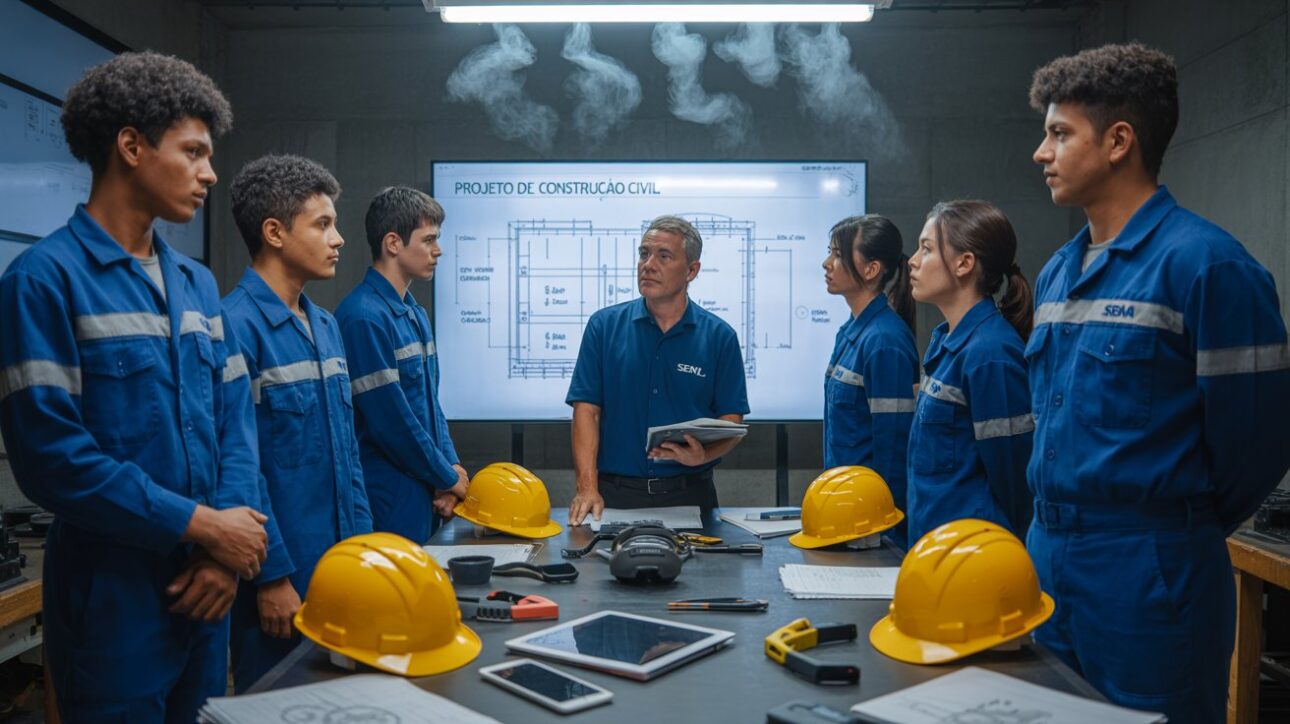
Factors That Drive Young People Away from Civil Construction
Experts point to multiple reasons for the decline in young people’s interest in civil construction.
Among them, there is a negative perception associated with manual labor, physical exhaustion, and lack of career growth prospects.
Furthermore, sectors such as technology, retail, and apps offer environments considered more attractive and less exhausting.
The absence of clear promotion references further complicates the attraction of new professionals.
Many young people fail to envision a promising trajectory within the sector.
As Fratel highlights, “young people do not see a future in the profession, even though the sector offers salaries above average compared to retail and services”.
Attractive Salaries and Real Opportunities in the Civil Construction Sector
Despite the challenges, civil construction offers competitive salaries.
Updated data indicates that the starting salary ranges from R$ 2,500 to R$ 6,000 per month, depending on the role and region.
Experienced professionals, such as masons, can earn between R$ 13,000 and R$ 15,000, while construction foremen can exceed R$ 20,000 per month, without the need for a college degree.
Still, the central problem is not the salaries.
“The problem is not the remuneration, but the lack of a clear progression model. They do not realize that they will thrive in their careers because no one has shown them how to do it,” emphasizes the Sinduscon-SP coordinator.
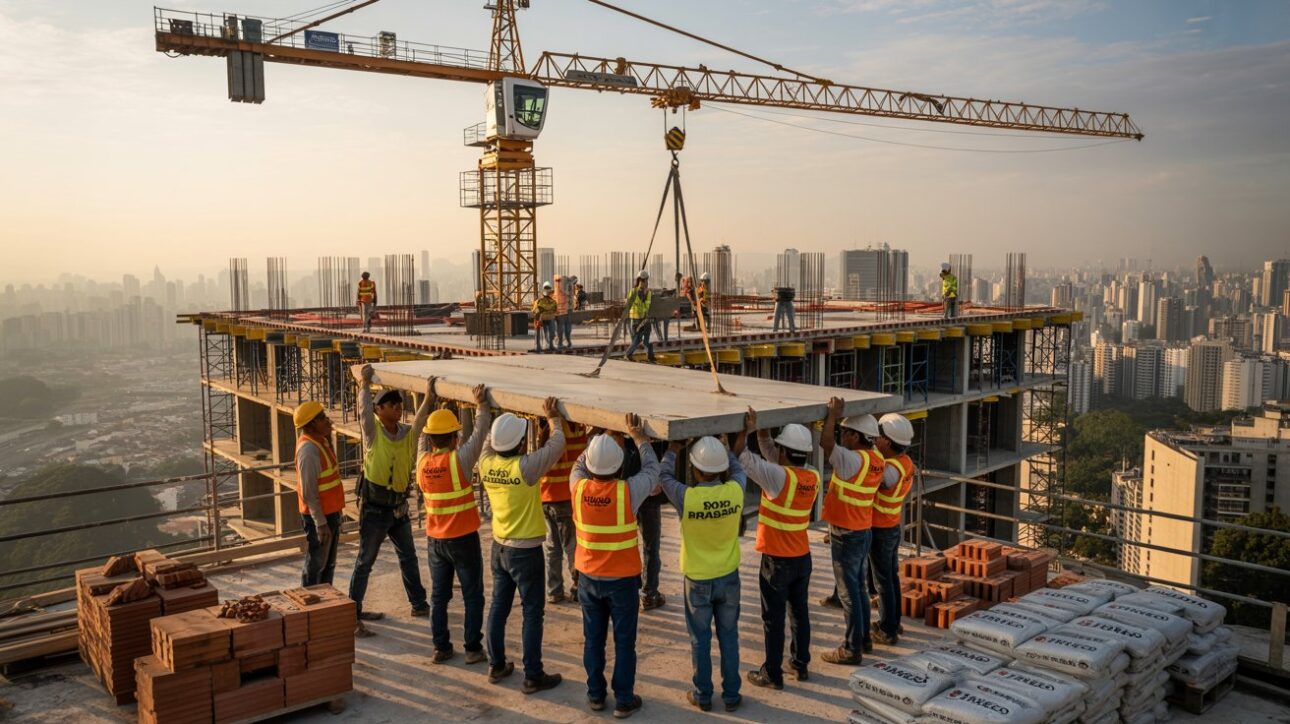
Unprecedented National Career Plan to Value Professionals
In order to reverse the downward trend and professionalize the environment, Sinduscon-SP, the Syndicate of Workers in the Civil Construction of São Paulo (Sintracon-SP), and the National Service for Industrial Training (Senai) are developing a national career plan.
The proposal is to establish a training path for workers, detailing stages from basic functions to technical and leadership positions, thereby promoting professional recognition.
Part of this strategy involves modernizing job titles.
Terms like “mason’s helper” are being replaced by more technical names, such as “construction assistant.”
The traditional term “mason” is also likely to be gradually abandoned in favor of specialized functions, such as “drywall installer” or “infrastructure installer.”
According to Antônio de Souza Ramalho, president of Sinduscon-SP, the intention is to combat the social stigma associated with old titles and recognize technical knowledge:
“Many young people feel demotivated because of the stigma attached to the professions. By adopting more technical names, we seek to show that there is specialization, technology, and progress”.
Practical Examples and Trajectories in Civil Construction
Professional Jéssica Mayra Barbosa dos Santos, 32 years old, who works as a construction helper on a large project in southern São Paulo, will be one of the beneficiaries of the new structure.
She will be referred to as apprentice, a title that will grant access to courses and growth opportunities within the career plan.
According to information from Senai, the worker can start at the base and, as they gain experience and training, reach positions of greater responsibility, such as team leader, technical supervisor, and, eventually, construction foreman.
Each stage will be accompanied by specific courses, nationally recognized certificates, and gradual salary increases.

Professional Education as a Strategic Differential
The Senai, which already offers courses for dozens of roles in civil construction, will be responsible for adapting the curriculum to the new needs of the sector.
The institution will also increase the number of places and modernize the content, including topics such as sustainability, automation, and digital technologies in construction.
These changes aim to align the civil construction sector with the expectations of the new generations, who seek not only good salaries but also purpose, stability, and real growth possibilities.
“We believe that this movement can reverse the talent drain and ensure a qualified workforce for the coming years,” says Ramalho.
Challenges and Future of the Civil Construction Sector
The adoption of the national career plan will be accompanied by campaigns to promote the profession and dialogue with technical schools to showcase existing opportunities.
Nevertheless, experts warn that changing the sector’s image depends on a joint effort by entrepreneurs, unions, and governments.
Meanwhile, the civil construction market remains alert to the job market behavior, aware that the competition for young talent is becoming increasingly fierce, not only with other industrial areas but also with emerging sectors such as technology and digital services.
In light of this scenario, the reflection remains: will the modernization of job titles and the structuring of a technical career plan be sufficient to regain the interest of young people and ensure the future of civil construction in Brazil?








Boa noite Senhores e estudiosos da construção civil tenho 72 anos e 55 anos trabalhando em obra o grande empasse da é salário na minha cidade o pedreiro não chega a 2 salários mínimo ajudante e procura agulha no palheiro o mesmo perderam a motivação.Sou professor do SENAI em Volta Redonda RJ.
Se o CREA fiscalizasse e não deixasse cargos, como auxiliar de engenharia , sendo engenheiro, entre outras nomenclatura para que não pague o piso, o Crea tem uma tabela com valores base de salários, mas na real é bem abaixo, nem nos concursos de prefeituras não pagam, deveriam fiscalizar e exigir das empresas.
Fico eu com meus 45 anos, 25 de profissão, e o mais difícil é ser bem remunerado.
Eu estudei, falo 3 idiomas diferentes, e mesmo assim a valorização do meu trabalho é semelhante ao do piso nacional. Estagiários de engenharia vem e vão das obras. E sinceramente, o que estão ensinando nas faculdades? Falando da dinâmica de uma obra eles se perdem e ficam tentando (diminuir custos), claro, estão pensando no lucro, não que estejam errados. Mas o custo alto do retrabalho gera perdas. Tratar o profissional que construiu o bem mais durável como analfabetos, e pagar salário de escravo, não irá melhorar a rapidez e nem a qualidade do produto. Boa sorte.