Portuguese


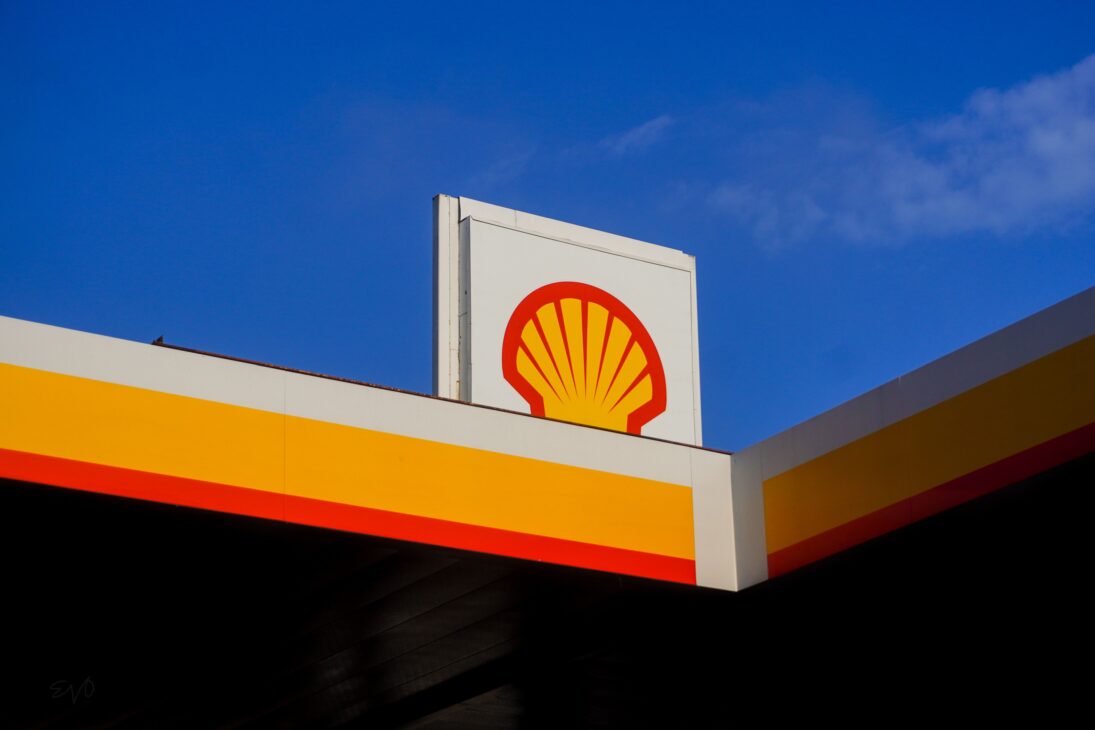

British energy company signs agreement to sell its 16.67% stake in North West Shelf to XRG of the United Arab Emirates. The deal involves LNG infrastructure and is expected to close in 2027.
Shell announced an agreement to sell its 16.67% stake in the North West Shelf (NWS) gas project in Western Australia for $1.45 billion. The company announced the deal on November 3, 2026, and industry publication Offshore reported on it. The buyer is XRG, an international energy investment company associated with ADNOC, the United Arab Emirates’ state-owned oil company.
The deal covers exploration and production rights, as well as stakes in pipelines, processing facilities and commercial contracts. However, the transaction is still subject to regulatory approvals and is not expected to close until 2027.
-
Brava Energia assumes full ownership of the Pescada Cluster, operating three fields in the Potiguar Basin without transferring funds

-
MODEC and Toray develop carbon-fiber technology for permanent repairs to steel structures on FPSOs, reducing impacts on offshore production
-
Seagems’ Owners Consider Selling Company Operating Six Pipe-Laying Support Vessels in Brazil Despite Securing $410 Million Petrobras Contract
-
Rio das Ostras City Government Meets with Major Oil and Gas Companies, Aims to Generate R$20 Million in New Business


Shell plans to direct the proceeds toward other natural gas projects. XRG, meanwhile, is seeking to expand its presence in the global liquefied natural gas market, known as LNG.
Shell to sell 16.67% stake in North West Shelf
The agreement was signed by Shell Australia Pty Ltd, a wholly owned subsidiary of the British energy company.
The contract provides for the transfer of its 16.67% stake in North West Shelf to XRG subsidiaries.
The announced base price is $1.45 billion, subject to adjustments specified in the contract.
Shell may also receive an additional payment if certain milestones are met. The company has not publicly disclosed the amount.
The $1.45 billion therefore represents the deal’s base price, not necessarily the final amount Shell will receive.
Another important point is that the stake being sold does not give Shell operational control of the project.
North West Shelf brings together several companies in gas exploration, production and processing consortia. Participants include Woodside, Chevron, BP, Shell, MIMI and CNOOC.
Woodside leads operations at the facilities, while the other companies hold stakes as set out in the contracts for each asset.
Australian project has capacity to produce 14.3 million metric tons of LNG a year
North West Shelf is one of the longest-running projects in Australia’s natural gas industry.
Located in Western Australia, the complex includes offshore production, pipelines and onshore processing facilities.
XRG says the project has liquefaction capacity of 14.3 million metric tons of LNG a year.
That figure reflects the project’s processing capacity, not its actual output in 2026.
The buyer also reported approximately 4.4 trillion cubic feet equivalent of remaining resources.
The figure is an estimate of energy resources, not a guarantee of future production.
The complex supplies both the Australian market and international buyers, primarily in the Asia-Pacific region.
Its infrastructure is therefore important to domestic supply as well as LNG exports.
XRG, associated with ADNOC, expands investment in global gas markets
The buyer is XRG, the international energy investment arm associated with Abu Dhabi’s state-owned oil company, ADNOC.
The acquisition marks XRG’s first entry into the Australian LNG market.
The operation will allow the company to expand its presence in a region close to major Asian consumers.
XRG’s president of international gas, Mohamed Al Aryani, said the investment is part of the company’s growth strategy in the sector.
Alongside existing production, the buyer highlighted the potential to use the infrastructure for future gas projects.
However, the deal does not amount to a full acquisition of the North West Shelf.
XRG will buy only Shell’s current stake, while the other investors will retain their respective interests.
Declining output from original fields shifts complex’s strategy
One factor helping explain the deal is the shift in the North West Shelf’s business model.
Shell has said gas production from the original fields has been declining, creating spare capacity at the Karratha processing facilities.
As a result, the project is transitioning to a model that combines its own production with gas processing for third parties.
Under this model, outside companies can use some of the infrastructure to process gas under commercial agreements.
The model is known internationally as toll processing, or processing gas for a fee.
The shift could make it possible to use facilities that have already been built, without relying exclusively on production from the fields that gave rise to the project.
However, future use of the available capacity will depend on new contracts, gas availability and investment decisions.
Buyer will also take on decommissioning obligations
The deal includes another important element for the offshore industry: obligations related to the decommissioning of facilities.
Decommissioning involves the steps needed to end operations, remove equipment or dispose of structures when they are no longer in use.
These operations can require technical planning, financial resources and compliance with environmental regulations.
Shell said the purchasing subsidiaries will assume decommissioning obligations associated with the transferred assets.
They will also have to provide guarantees related to those responsibilities.
The transaction, therefore, involves more than the transfer of production and infrastructure interests.
It also accounts for future commitments related to the winding down of certain operations.
However, the company’s public statement did not detail the amounts involved in these obligations.
Shell will continue investing in natural gas and LNG in Australia
Despite the sale, Shell is not leaving Australia’s natural gas market.
The company will continue operating the Shell QGC project and the Prelude FLNG floating facility.
It is also continuing development of the Crux project and retains stakes in the Arrow Energy and Gorgon joint ventures.
The company also said it aims to increase its global LNG sales by 4% to 5% a year through 2030.
That forecast is a corporate target and will depend on market conditions and project execution.
At the same time, Shell is taking part in the development of new technologies for shipping gas. In October, the company unveiled a concept for a hybrid vessel capable of carrying 200,000 cubic meters of LNG, in partnership with Lloyd’s Register and GTT.
Although this initiative is not directly connected to North West Shelf, it shows the company’s presence across different stages of the natural gas value chain.
Oil company also expands its presence in offshore projects in Brazil
The reshuffling of its Australian assets comes as Shell continues to invest in other producing regions.
In Brazil, the company is involved in offshore projects and oil and gas exploration activities.
In September 2026, Shell announced agreements to acquire a 30% stake in the Conifer prospect in the Gulf of Mexico and a 50% stake in the Tupinambá block in the Santos Basin.
The deals involve exploration areas where BP remains the operator.
These investments, however, are independent of the sale of Shell’s Australian stake.
There is no public information indicating that proceeds from North West Shelf will be specifically allocated to the Brazilian projects.
The connection between the operations, then, lies in Shell’s broader strategy for managing its international portfolio.
LNG market also drives investment in Brazil
Liquefied natural gas is important to countries that need to supplement domestic production or meet fluctuations in demand.
After liquefaction, the fuel can be transported on specialized vessels and later regasified for use.
In Brazil, LNG supplies a range of customers, including thermal power plants.
The Brazilian authorization has no direct contractual connection to the deal between Shell and XRG.
The two developments nevertheless show how gas processing, transportation and receiving infrastructure influence the energy sector.
They also underscore the importance of long-term contracts for companies operating in this market.
Sale expected to close in 2027 after regulatory approvals
Although the deal was announced in November, the stake has not yet been formally transferred.
Shell said the transaction has an economic effective date of January 1, 2026.
That date, however, is not the legal closing date of the sale.
The deal is expected to close in 2027, after the conditions set out in the agreement are met and regulatory approvals are obtained.
Until then, the deal will remain subject to the procedures required for its implementation.
The announced base price may also be adjusted under the terms of the contract.
For that reason, the transaction should be described as a signed sale agreement, not as an acquisition that has already closed.
$1.45 billion deal marks a new phase for North West Shelf
The agreement between Shell and XRG marks a change in the ownership structure of one of Australia’s landmark natural gas projects.
For Shell, the sale will allow it to reshape its exposure to a mature asset and focus investment on other opportunities.
XRG, meanwhile, is seeking to expand its presence in the international LNG market, leveraging existing infrastructure and proximity to Asian consumers.
North West Shelf will continue operating with its other partners and could increase the processing of third-party gas over the coming years.
The strategy’s progress, however, will depend on the availability of new resources and investors’ commercial decisions.
For now, the main confirmed details are the 16.67% stake being sold, the base value of US$1.45 billion and expected completion in 2027.
Could selling stakes in major gas projects help oil companies fund new operations, or does it signal a shift in priorities across the energy sector?
Sources: Offshore Magazine; Shell, official statement dated November 3, 2026; XRG, statement dated November 3, 2026.