Portuguese
 Spanish



MBRF Seeking Chinese Approval for Gallbladder Stone Exports
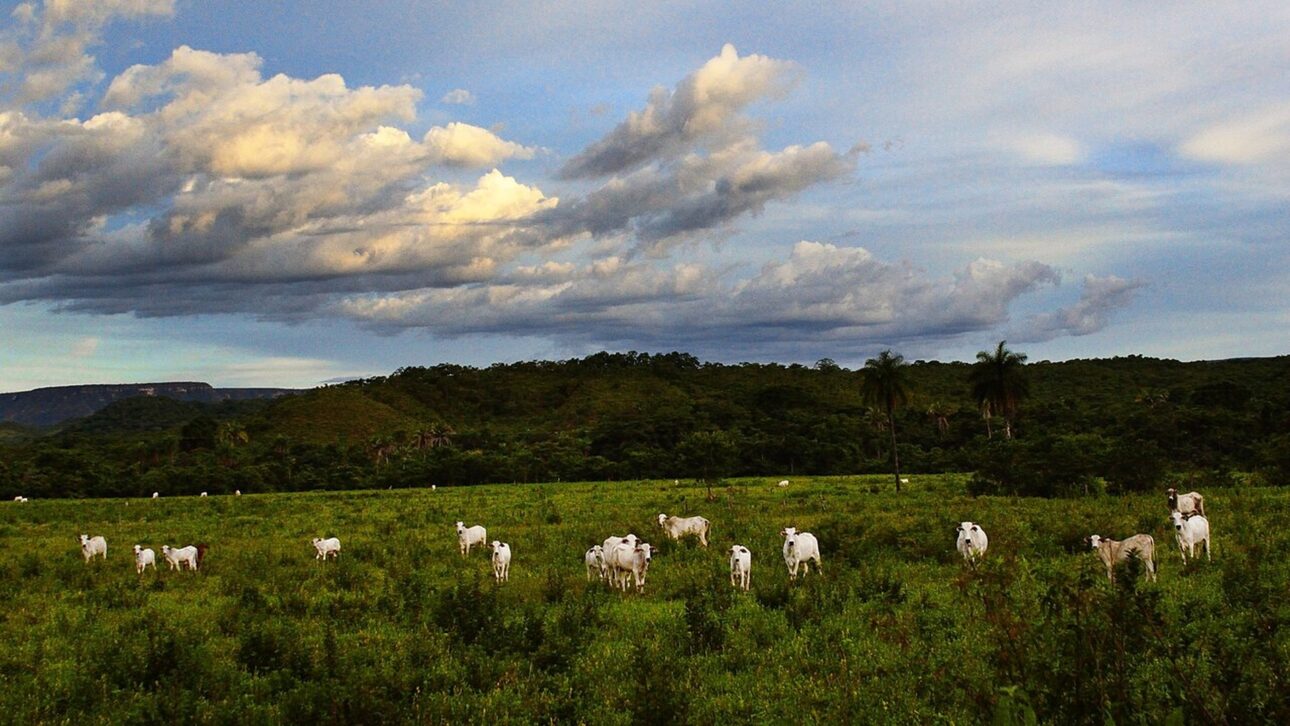
MBRF has asked China for approval to sell stones that form in the gallbladders of cattle slaughtered in Promissão, São Paulo state, and Várzea Grande, Mato Grosso state. Brazil’s federal inspection service issued favorable opinions on November 19 and 20, and the product was quoted at about R$517,000 per kilogram on Friday (20).
The group formed by the merger of Marfrig and BRF wants to enter a market where the product is measured in grams. In six months, the Promissão meatpacking plant in the interior of São Paulo state collected 4.36 kilograms of these stones.
InvestNews reported the figures after reviewing documents from Brazil’s Ministry of Agriculture. In China, the product is called niúhuáng and is used in hundreds of traditional medicine formulas.
-
Baltic Workboats chairman Margus Vanaselja says EUROGUARD, a 45-metre, €95 million prototype launched in Estonia by 27 companies from 10 countries, proves the country can now build its own warships.

-
Newcastle University student Elise Zallu found a 7 cm Roman gold chain on the first day of her first dig, one of the treasures 52 first-year archaeology students unearthed in Redesdale, Northumberland.
-
Queensland heritage officer Celeste Jordan called it remarkable luck that a navy team found HMCS Spitfire, the 19-metre gunboat that was Australia’s first home-built warship, 128 years to the day after it sank.
-
Hai Long chief Tim Kittelhake marked the moment all 73 turbines of Asia’s largest single offshore wind project, 45 to 70 km off Taiwan, went live on the grid with more than 1 GW for over a million homes



Authorization Process and Responses
The company applied for authorization to export bovine gallbladder stones to China from two facilities in Brazil. The first is in Promissão, São Paulo state. The second is in Várzea Grande, Mato Grosso state.
Brazil’s federal inspection service issued a favorable opinion for the São Paulo facility on November 19. The Várzea Grande facility received the same opinion the following day, November 20, according to the documents cited in the report.
Brazil’s opinion is only the first step. Before sales can begin, each meatpacking plant still needs approval from Chinese authorities, which make decisions on a facility-by-facility basis.
Market Value of Gallbladder Stones
On Friday (20), the stones were quoted at 580,000 yuan per kilogram, about R$517,000, in the medicinal ingredients market in Anguo, China, according to InvestNews.
At the same price, the 4.36 kilograms collected in Promissão would be worth nearly R$2.25 million. That is the blog’s calculation, based solely on the November 20 price, and it does not account for costs, freight or the price a buyer would actually pay.
For comparison, the meatpacking plant says it slaughters 290,400 animals a year. The facility collected the stones between January and June 2026, illustrating how much cattle pass through the line to yield just a few kilograms.
Prevalence of Stones Among Cattle
The stones form naturally in the gallbladder or in the ducts that carry bile. Brazil’s Ministry of Agriculture says only 1% to 2% of cattle develop them.
That means volumes remain low even at large meatpacking plants that slaughter hundreds of thousands of animals a year. Workers must separate the gallbladders containing the material on the slaughter line and save every gram.
The report cites a case in Denmark. In 2016, the meatpacking plant in Holsted took months to collect 101 grams and sold the lot to Hong Kong.
Chinese Production and Consumption Disparity
China produces between 600 and 700 kilograms of natural stones a year, according to InvestNews. Estimated demand is 5 to 6 metric tons, nearly 10 times as much.
Brazil’s Ministry of Agriculture reached the same conclusion in a study by its Secretariat of Trade and International Relations. China’s domestic supply is smaller than its consumption, and the country relies on foreign suppliers.
That gap helps explain prices in Anguo: with so little local supply, each imported lot competes for buyers among manufacturers of traditional medicines.
One of the best-known formulas containing the ingredient is the Angong Niuhuang Wan pill, whose recipe was registered in 1798, according to manufacturer Tong Ren Tang.
The Impact of the July Agreement
Brazil and China signed the sanitary protocol authorizing exports of Brazilian bovine gallbladder stones on July 23. Agriculture Minister André de Paula and Ambassador Zhu Qingqiao signed the document in Brasília, the Ministry of Agriculture said.
The protocol sets sanitary and quarantine requirements and defines who inspects, certifies and oversees each shipment. It did not automatically authorize any companies to export.
In the same statement, the ministry also said Brazil is the world’s largest producer of the product, accounting for about 40% of global supply.
Early Moves by Competitors
China approved the first Brazilian meatpacking plants on October 16: Masterboi, in São Geraldo do Araguaia, Pará state, and Naturafrig, in Pirapozinho, São Paulo state.
Both are in major cattle-producing regions, one in southern Pará and the other in western São Paulo state, near Presidente Prudente.
MBRF already sells the product to China from other countries. Quickfood, in San Jorge, Argentina, has been approved since July 2025. Establecimientos Colonia, in Tarariras, Uruguay, has been approved since May 2026.
In Argentina, Chinese pharmaceutical company Zhangzhou Pien Tze Huang announced in April that it had received a license to import the stones. An Argentine shipment arrived at the port of Xiamen in June.
Challenges for Promissão Plant
A Chinese rule also weighs on the application: any meatpacking plant seeking to supply the stones must also be approved to export beef to China.
In October, China suspended beef purchases from the Promissão plant. At the time, MBRF said it would serve the Chinese market through its Várzea Grande plant.
Promissão and Várzea Grande are the two beef slaughtering complexes Marfrig retained in Brazil after selling meatpacking plants to Minerva.
Market Existed Before Formalization
Long before the agreement, Brazilian meatpackers sold the stones to intermediaries who resold them in Asia. Exporter Panabile was already supplying the product to Asian countries in 2017.
Hong Kong, which has a separate customs system from mainland China, imported 1,524 kilograms of Brazilian-origin stones in 2025. That volume represented 77% of all the territory’s purchases that year.
In 2025, the blog had already explained why cattle gallbladder stones can fetch hundreds of thousands of reais per kilogram. The difference now is direct, documented sales to mainland China.
Pending Factors Before First Shipment
China still needs to approve MBRF’s two plants, and no date has been announced. The company has also not said whether it will send China the inventory already collected in Promissão. No public information is available on how much the company plans to sell annually or at what price.
One point stands out for those following the industry: what was once waste from the slaughter line now has documentation, certification and a daily market price.
Was the trade in bovine gallbladder stones already familiar, or did it seem that everything left over from slaughter becomes feed and fertilizer? Share your thoughts in the comments.