





 Portuguese
 Spanish


Petrobras aims to complete receipt of seismic data from the Pelotas Basin, off the coast of Rio Grande do Sul, by 2028. That deadline, however, does not mean oil exploration will begin that year. Before any production can start, the state-owned oil company will need to interpret the geological information, identify potential reservoirs, obtain environmental permits, drill exploration wells and prove that any discovery could be developed commercially.
The possibility of finding oil in deep waters off the coast of Rio Grande do Sul has returned to the center of discussions about the region’s energy future. The reason is the progress of studies Petrobras is conducting in the Pelotas Basin, an offshore area that still must undergo several stages of investigation before any decision about production can be made.
According to information published by Jornal do Comércio on November 19, 2026, Petrobras expects to complete the acquisition and receipt of seismic data from the Pelotas Basin by 2028.
-
Netherlands wins approval for up to €9.5 billion in support for two giant North Sea wind farms, set to generate 7,441 GWh a year

-
Cladtek’s RapidPipe Technology Can Cut Offshore Pipeline Installation Time by Up to 80% by Replacing Welding

-
Over 70 Nutritionists Lead Sodexo’s Offshore Food and Hospitality Services, Ensuring Food Safety and Well-Being

-
Offshore support vessel from DOF issues “Mayday” after fire outbreak in the Campos Basin; vessel was towed and the incident mobilizes Navy and Petrobras


That deadline is an important benchmark for exploration planning, but there is a fundamental difference between studying the seabed and finding enough oil to justify extracting it.
Seismic data help identify geological structures that may contain hydrocarbons. However, on their own, they do not prove that oil or natural gas is present.
So even if the schedule is met, it could still be a long time before any production operation reaches the coast of Rio Grande do Sul.
What Petrobras aims to complete in the Pelotas Basin by 2028
The work Petrobras plans involves acquiring, processing and interpreting seismic data. This information makes it possible to build detailed representations of the geological structures beneath the seabed.
In practice, seismic surveying is an indirect tool for investigating the subsurface.
During an offshore survey, equipment emits acoustic waves that travel through different geological layers. Some of the waves return to the surface after encountering materials with different physical properties.
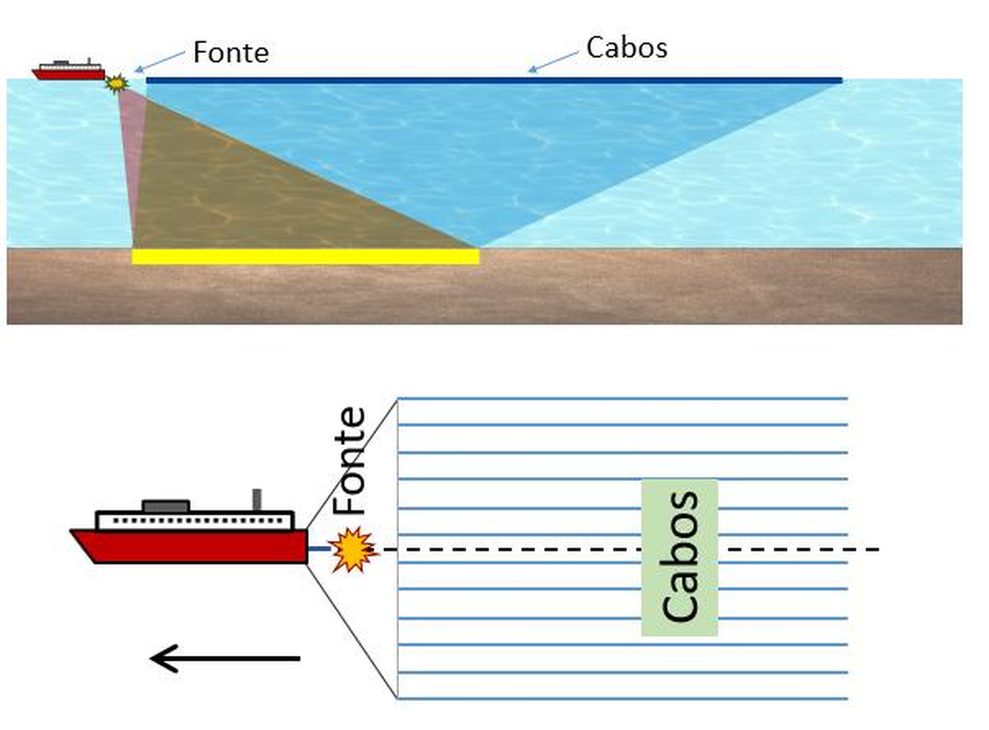
Signals captured by sensors are processed by computer systems, allowing geologists and geophysicists to analyze the arrangement of rocks at depth.
This process can reveal structures that warrant further investigation, such as potential geological traps capable of accumulating oil or natural gas.
However, identifying a favorable structure does not mean an oil field has been discovered.
Completion of the seismic data work by 2028 is expected to expand the technical information available to Petrobras as it evaluates where to focus its next exploration efforts.
Interpreting this information could guide decisions about additional studies and potential drilling. The data delivery schedule, however, does not set a date for discovering oil.
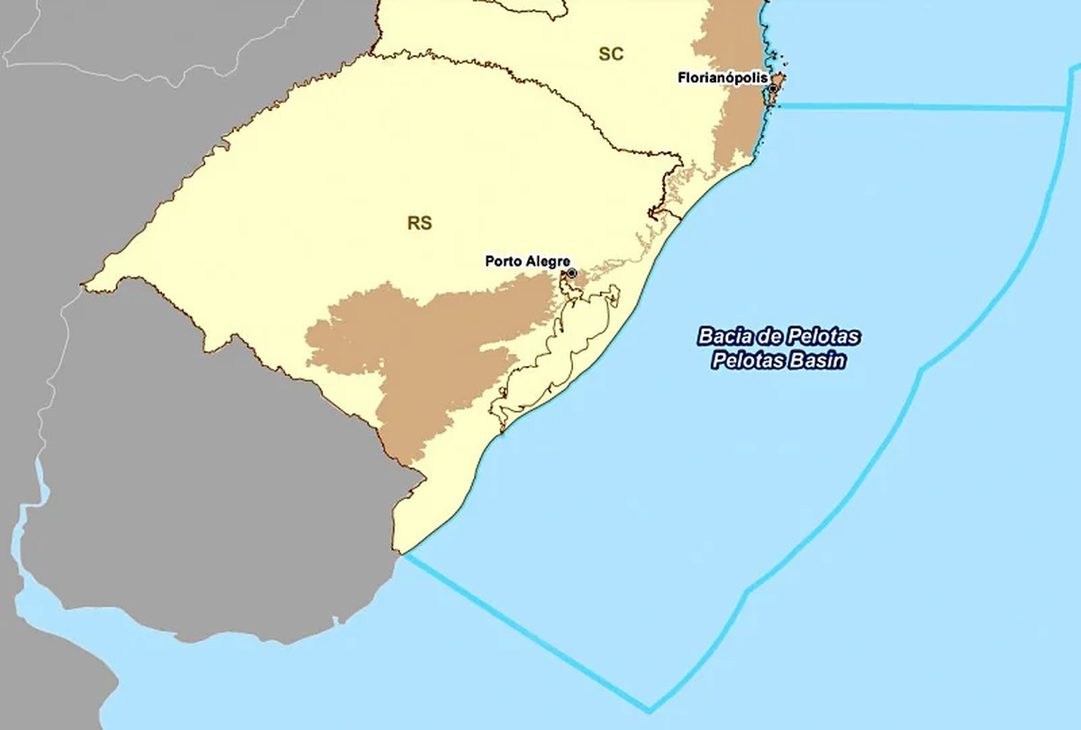
Why the Pelotas Basin is attracting interest from the oil industry
The Pelotas Basin is part of Brazil’s continental margin and covers a vast offshore area along the coast of Rio Grande do Sul and the southernmost part of Santa Catarina.
Interest in exploration there stems from the geological characteristics of the Atlantic margin and the possibility that petroleum systems remain largely unexplored.
A sedimentary basin contains layers of sediment that accumulated over millions of years. Depending on the conditions under which organic matter formed, was buried and transformed, some of these areas may be favorable for generating and storing hydrocarbons.
But several elements must be present and work together for an oil accumulation to form.
There must be rocks capable of generating hydrocarbons, pathways for them to migrate, reservoirs with suitable storage conditions, and geological traps that keep them from dispersing.
The absence of any one of these components can undermine an area’s potential, even when certain seismic images appear promising.
That uncertainty is precisely what makes geological studies essential.
In the Pelotas Basin, further research could help determine which structures warrant investment in more expensive and complex exploration stages.
Geological interest, however, should not be confused with confirmation of commercially recoverable reserves.
What must happen before oil can reach the market from the coast of Rio Grande do Sul
Between the receipt of seismic data and the possible arrival of the first barrel of oil on the market, a series of technical, regulatory and economic decisions must be made.
Each stage depends on the results of the one before it. An unfavorable result could halt the project before drilling even begins.
The oil and natural gas exploration and production process in Brazil involves several stages before a field enters commercial operation.
In the Pelotas Basin, the process could include:
- Seismic data acquisition and processing: collect and process the data needed to understand structures beneath the seabed. Full delivery is expected by 2028.
- Geological interpretation: identify potential areas of interest and assess the risks associated with the presence of hydrocarbons.
- Environmental permitting: obtain the permits required for drilling activities, along with the studies and requirements set by the competent environmental agency.
- Exploratory well drilling: investigate rock formations directly to determine whether oil or natural gas is present.
- Assessment of a potential discovery: estimate recoverable volumes, productivity, costs, and economic viability.
- Development and production: commercial extraction can take place only after a favorable investment decision, approvals, and installation of the necessary infrastructure.
This sequence shows why 2028 cannot be treated as a forecast for the start of production.
The date is tied to an information-gathering stage. Later phases depend on results that have not yet been demonstrated.
Drilling will be the decisive test to confirm whether oil is present
Even after analyzing the seismic data, Petrobras will need direct evidence to confirm the presence of hydrocarbons in the identified structures.
That confirmation typically comes through exploratory well drilling.
Unlike seismic surveys, which provide indirect information about the subsurface, drilling makes it possible to collect rock samples, take measurements, and verify the characteristics of the formations encountered.
The results help answer fundamental questions: Is there oil? At what depths? What is the quality of the reservoir? Can the hydrocarbons be extracted?
Finding oil, however, does not necessarily mean production will be economically viable.
A well may identify hydrocarbons in insufficient volumes, in low-productivity formations, or under conditions that make extraction excessively expensive.
The difference between discovering hydrocarbons and developing a producing field is important to understanding why a positive drilling result does not automatically represent an economically recoverable reserve.
Drilling is therefore a decisive stage, but not necessarily the last one before a development project.
Environmental permitting can affect the exploration timeline
Environmental permitting for offshore activities is another important factor in the future of the Pelotas Basin.
Before carrying out operations subject to permitting, Petrobras will need to meet the requirements of the competent environmental agency, based on the characteristics of each project.
Reviews may cover operational risks, accident-prevention measures, emergency plans, and potential impacts on marine ecosystems.
The region is also home to economic activities tied to the sea, including fishing, which must be considered in the relevant studies.
Permitting is not an automatic formality. The responsible agency may request additional information, impose conditions, or deny permits if applicable requirements are not met.
This means that identifying a promising geological structure does not guarantee immediate authorization to drill.
It is also important to distinguish between permits for seismic surveys and those required for drilling and production. These activities have different characteristics and impacts and are subject to separate reviews.
As a result, environmental and regulatory developments could affect the time between the completion of geophysical studies and the start of new exploration work.
Even a commercial discovery would require investment before production
If Petrobras finds oil or natural gas, it will still need to assess whether the discovery is technically and economically viable to develop.
This phase could include formation tests, productivity studies and additional drilling to determine the extent of the reservoir.
The Discovery Evaluation Plan (PAD) sets out the work program and investment needed to investigate an identified accumulation.
After the evaluation, the company submits its findings to Brazil’s National Agency of Petroleum, Natural Gas and Biofuels (ANP), the country’s oil and gas regulator, and may decide to declare the discovery commercial, subject to regulatory requirements.
That would bring a new challenge: turning an underground discovery into a system capable of producing oil safely.
For a potential offshore project, this could require production units, subsea equipment, oil and gas transportation systems, and support infrastructure.
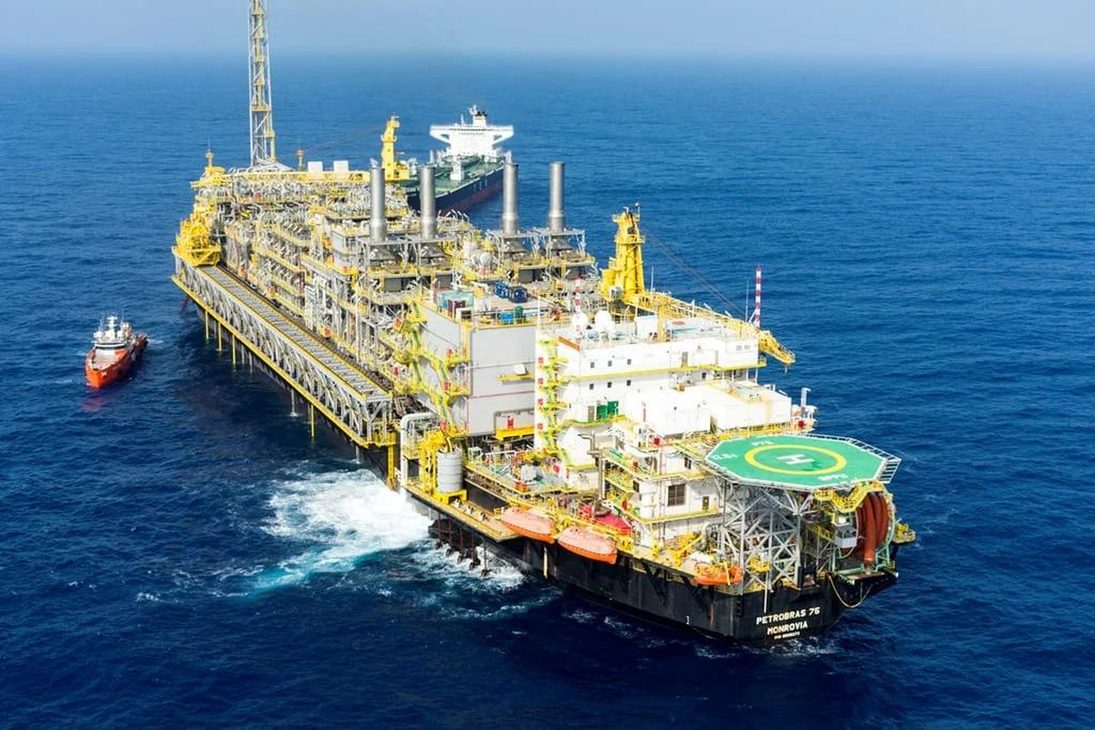
The configuration would depend on the location, water depth, reservoir characteristics and the project’s economic conditions.
The Development Plan for oil and natural gas fields brings together the technical, operational and economic information the ANP needs to review and monitor the project.
Therefore, even a positive exploration result would not make it possible to immediately project a date for first oil.
What exploration could mean for Rio Grande do Sul’s economy
A potential commercial discovery in the Pelotas Basin could create opportunities for companies involved in the oil and natural gas supply chain.
Depending on the project’s size and configuration, demand could grow for offshore support, logistics, engineering, maintenance and equipment supply services.
Ports and industrial facilities could also be considered in operational planning.
However, these effects would depend on future decisions about investment and the location of facilities.
At this point, it is not possible to say how many jobs would be created, which municipalities would receive investment or what the economic impact would be for Rio Grande do Sul.
It would also be premature to project royalty revenues without a commercial discovery, production estimates and other information needed for the calculation.
The current stage of the studies allows for discussion of possibilities, but does not yet support concrete projections of revenue or job creation.
Why the 2028 deadline matters, even without a production forecast
Receiving all the seismic data could improve the quality of Petrobras’ exploration decisions.
The more that is known about geological structures, the better the conditions may be for selecting areas of interest and assessing the risks of potential drilling.
This is especially relevant in regions where knowledge of the subsurface is still expanding.
Petrobras’ expectation of completing the seismic data for the Pelotas Basin by 2028 indicates that the company is continuing its studies of the region’s exploration potential.
Progress through 2028 will be measured mainly by the advancement of the studies, the interpretation of results and possible decisions about new activities.
For the public, the key point is to understand that geological potential, a hydrocarbon discovery, commercial reserves and actual production are distinct stages.
Each involves its own technical and economic requirements.
So far, the announced deadline applies to the expected seismic data, not to the completion of every stage of exploration.
The question that remains for the coast of Rio Grande do Sul is not just when Petrobras will finish studying the Pelotas Basin, but whether the results will justify drilling that can establish the existence of commercially viable oil.
Until that answer is available, 2028 should be understood as a milestone in advancing geological knowledge, not as a scheduled start date for oil extraction in Rio Grande do Sul.


