





 Portuguese
  English
  Spanish
 4 min of reading



Smart City: The Technology Applied Allows for Better Management of Public Lighting, Generating Greater Energy Efficiency and, Consequently, Savings for the Public Coffers and More Safety for the Population of MG
Cities consume approximately 75% of all the electricity produced in the world, which is why the search for better management of public funds and optimization of energy distribution is a constant challenge for many municipalities in Brazil. Aiming to overcome this challenge, the city of Extrema (MG) invested in a new model of public lighting and adopted the remote management system – a monitoring service conducted remotely that will not only generate savings for the public coffers but also puts the city at the forefront of the smart city concept.
Read Also
LEDStar Applies Cutting-Edge Technology on MG Streets
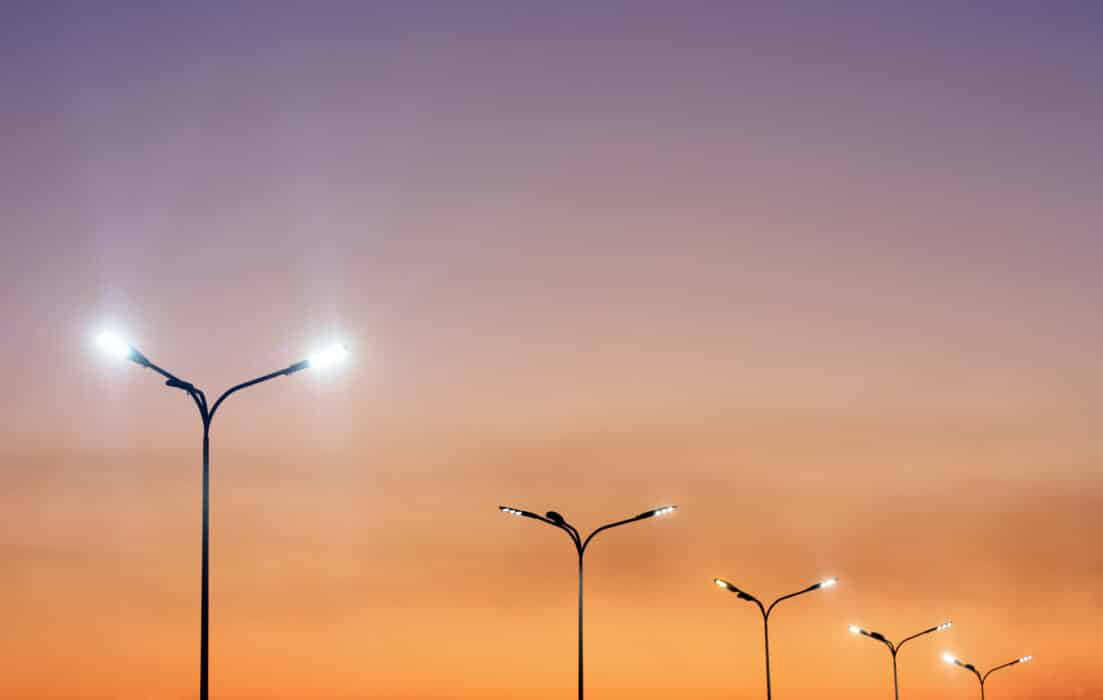
The city hall is replacing old public lamps with new, more economical and efficient LED fixtures, and took the opportunity to install the management system offered by LEDStar, a company of the Unicoba group, one of the largest specialists in energy solutions in Brazil.
“The savings from the solution come as a result of two main pillars. First, because LED consumes less energy and is proven to be more durable than others. And second, because, combined with the intelligent system, it allows for dimming the fixtures,” explains Eduardo Park, CEO of Unicoba.
-
The factory shows how PHC piles and precast tubes are made; steel turns into a welded cage, high-strength concrete enters the mold, spins in centrifugation, cures in steam, and is ready in hours.

-
A fine of R$ 115 thousand puts Goodyear at the center of an environmental case in Americana after oil and grease appeared in a stream and the company was forced to act quickly.
-
Small house with natural light becomes a trend in sustainable architecture and reveals how smart designs reduce energy consumption and enhance comfort in compact spaces.

-
Guaratuba Bridge enters the final phase with high-standard road signage implemented by IASIN and inauguration scheduled for April 2026.
In practice, this means that during sunrise and sunset – when natural lighting is lower but not nonexistent – public lighting in Extrema does not need to be on at 100% of its capacity, but can be at 25% or 50%, depending on the incidence of natural light, which can generate savings for public coffers. “The LED itself does not have that intelligence, but it is the right technology for us to apply remote management – a network that can accept remote dimming through the Internet of Things concept,” adds the executive.
Smart City – IoT and Innovation in South of Minas
Internet of Things, or IoT (its acronym in English), is a network of physical objects that are equipped with sensors, software, and other technologies aimed at exchanging data and information with other devices and systems over the internet. In the case of the monitored network in the mine city, each new fixture is equipped with a wireless control module that communicates with the others, relaying data and information.
This innovation places the South of Minas region at the forefront of the smart city concept, meaning a municipality that uses information and communication technology to improve its operational efficiency and thus provide better quality of management and life in general for its citizens. Additionally, LEDStar technology is capable of generating reports on the functioning of each monitored point, with data on electrical measurements, historical data, dimming levels, proper functioning, among others.
“The software offers a graphical interface to the user, with all the necessary control data, and provides the opportunity for the manager to configure multiple scenarios and schedules, creating a dynamic lighting program,” points out Eduardo. “Control can be carried out at the Operational Control Center (CCO) or even via cell phone, tablet, or computer of the program administrator.”
Technological Advancement Positions Municipality in the Third Wave of Electric Public Lighting
The advancement positions the municipality in what would be the third wave of electric public lighting, the first being made from mercury vapor – less powerful and with a shorter lifespan; and the second, the LED options, which are more energy-efficient and can generate up to 50% savings compared to the previous one. “The third wave builds off the technology used in the second to create an intelligent system capable of self-management.”
The project in the city is currently expanding, with about 90% of poles updated with the new program. “In addition to the technical facilities that the technology provides, the population will be able to enjoy public spaces with greater safety, as practically all streets will be fully lit,” concludes the Unicoba executive.
About Unicoba
UNICOBA® is one of the largest energy solutions companies in Brazil. Founded in 1973, the company develops energy efficiency and storage solutions by combining extensive experience in electronics manufacturing with operational agility to lead client markets.
Present in over 85% of Brazil’s largest companies, UNICOBA® has more than 1,000 direct employees and is recognized for its consultative, innovative, and entrepreneurial approach over these four decades of operation.
Its headquarters is located in São Paulo/SP and it has two industrial plants (Manaus-AM and Extrema-MG) and a commercial partnership with two offices in Asia (Seoul and Shenzhen).









Seja o primeiro a reagir!