





 Portuguese
  English
  Spanish
  6 min of reading
  0 comments


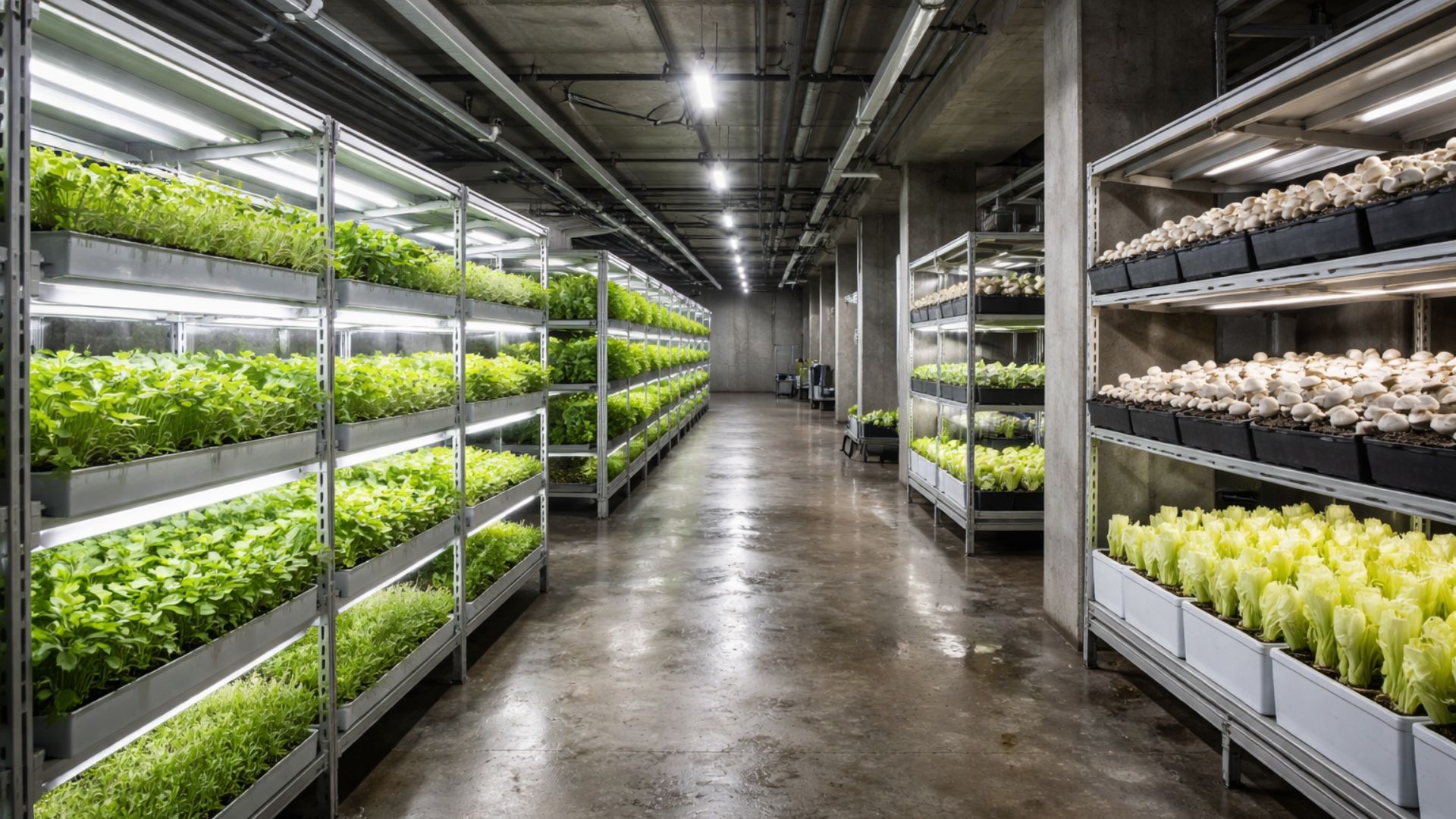
Abandoned Parking Lot in the Basement of a Housing Complex in Paris Turned into High-Density Urban Farm, Combining Mushrooms, Endives, and Microgreens Grown with LED and Hydroponics. Experience Transforms Space Previously Dedicated to Cars into Agricultural Infrastructure Integrated into the Neighborhood.
In the 18th arrondissement of Paris, a former underground parking lot beneath the Raymond Queneau residence has stopped serving cars and now houses an urban farm in a controlled environment.
Known as La Caverne, the operation combines mushroom, endive, and microgreen cultivation in a space that has become a reference for repurposing idle infrastructure for local food production.
Empty Parking Lot Turns into Urban Farm in Paris
Located in a complex with 300 social housing units managed by ICF Habitat La Sablière, the farm emerged as a response to two pressures that began to coexist at the same address: the increasing vacancy of parking spaces and the search for new uses for underutilized urban areas.
-
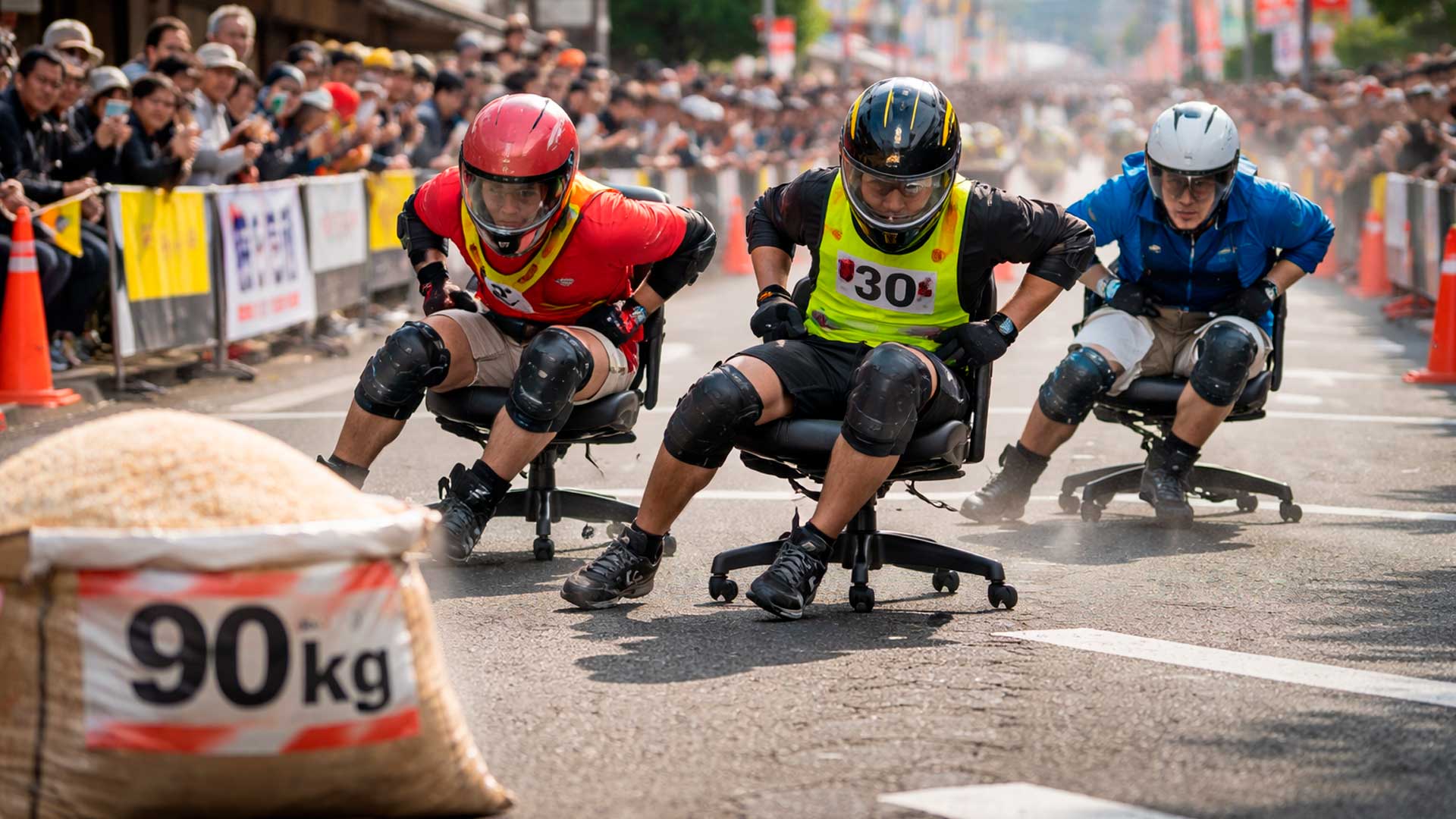
With an unusual prize, Japan transforms office chairs into a resistance race on the streets, the ISU-1 Grand Prix grows, fills events, and pays 90 kilograms of rice.
-
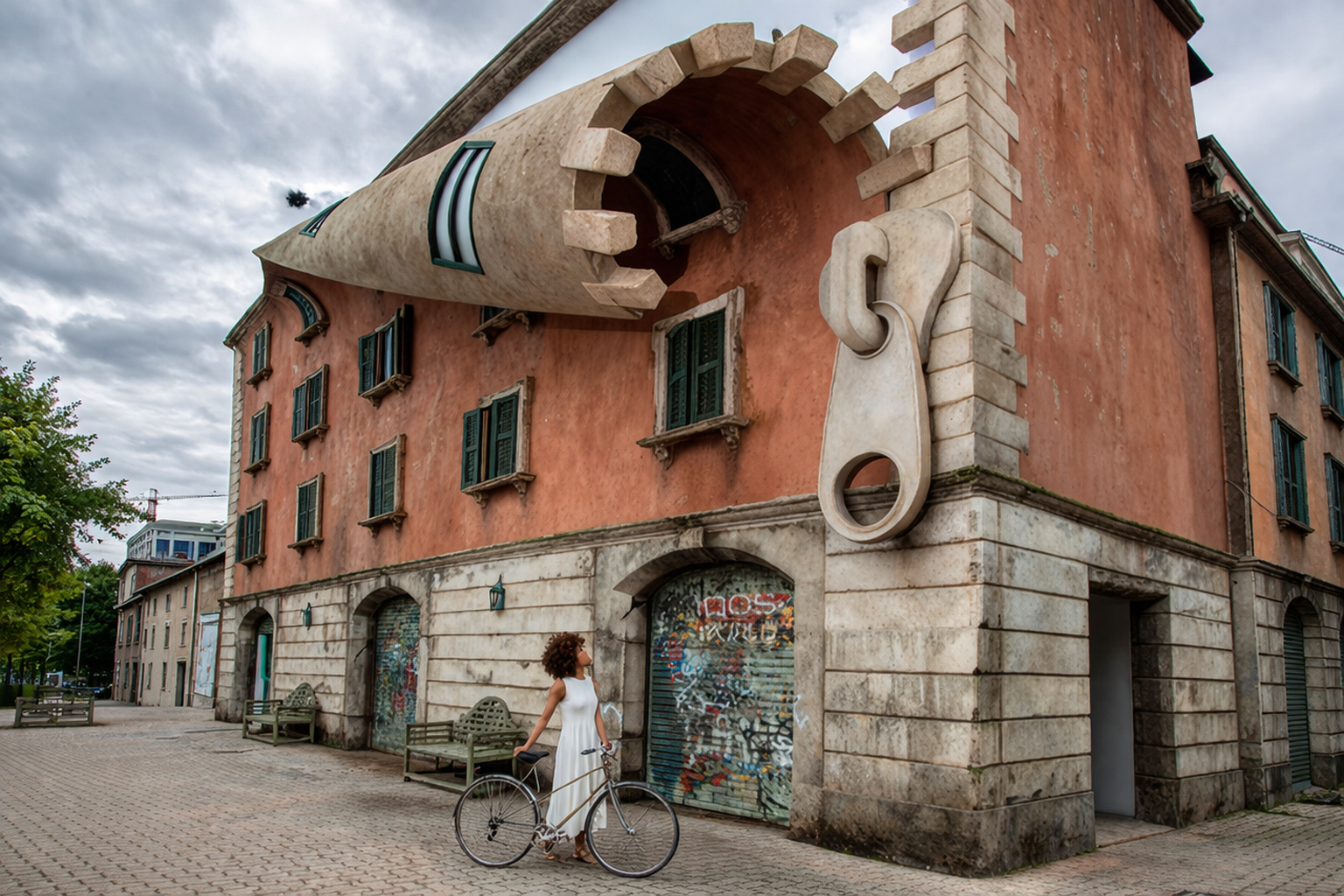
With a façade that resembles a giant zipper, the building in Milan creates a sense of strangeness, featuring lighting that transforms engineering and attracts the attention of residents and tourists.
-
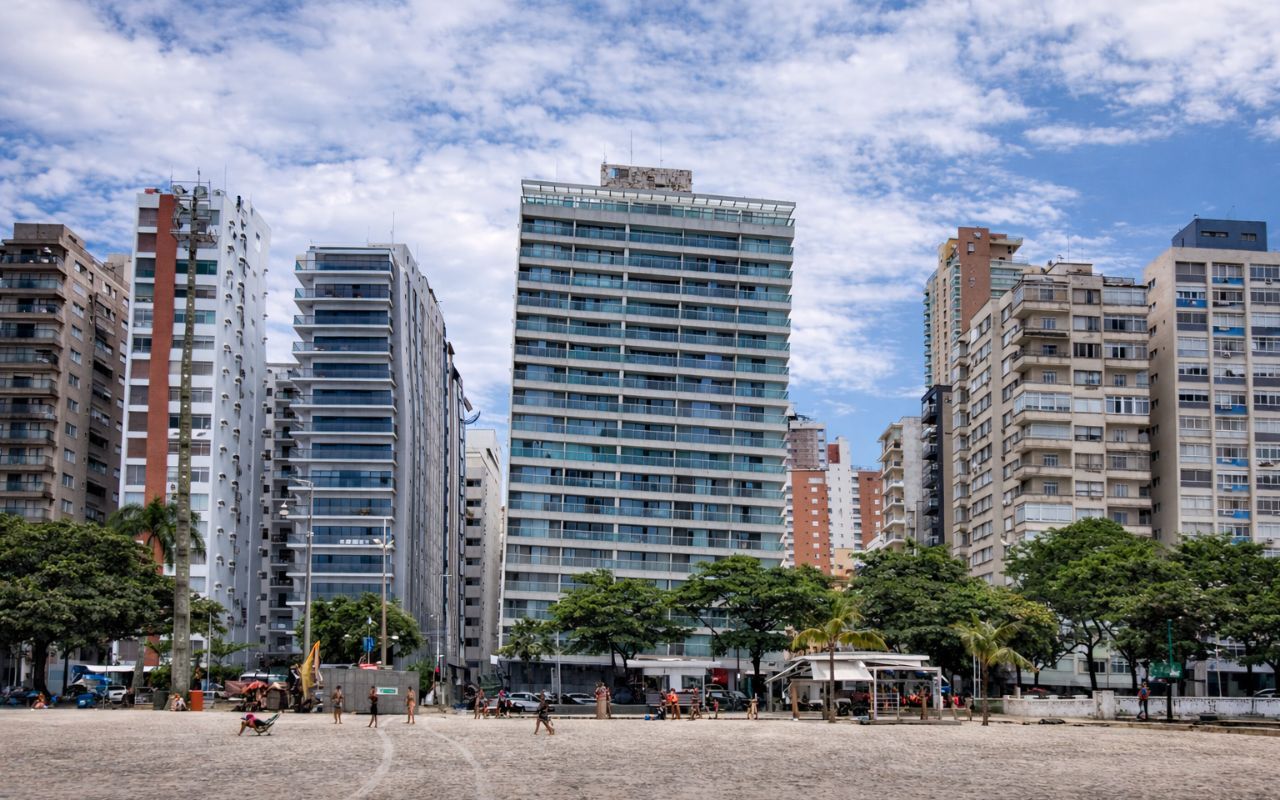
The Brazilian city has 319 crooked buildings built on sandy soil without proper deep foundations, houses the largest beach garden in the world, with over 5 km, and is still considered the birthplace of surfing — meet Santos, in São Paulo.
-
New Zealand builds a shimmering building that vibrates, featuring a 62-seat cinema, moving sculptures, and an environment where sound, light, and energy are felt in the body.

The property manager itself states that the gradual reduction in car use among residents and the high cost of maintaining spaces for renters have accelerated this emptying process.
It was in this context that the basement gained another function.
Instead of remaining an inactive area, the parking lot began to host a selected urban agriculture project under the Parisculteurs program, an initiative by the City of Paris aimed at the productive occupation of spaces in the city.
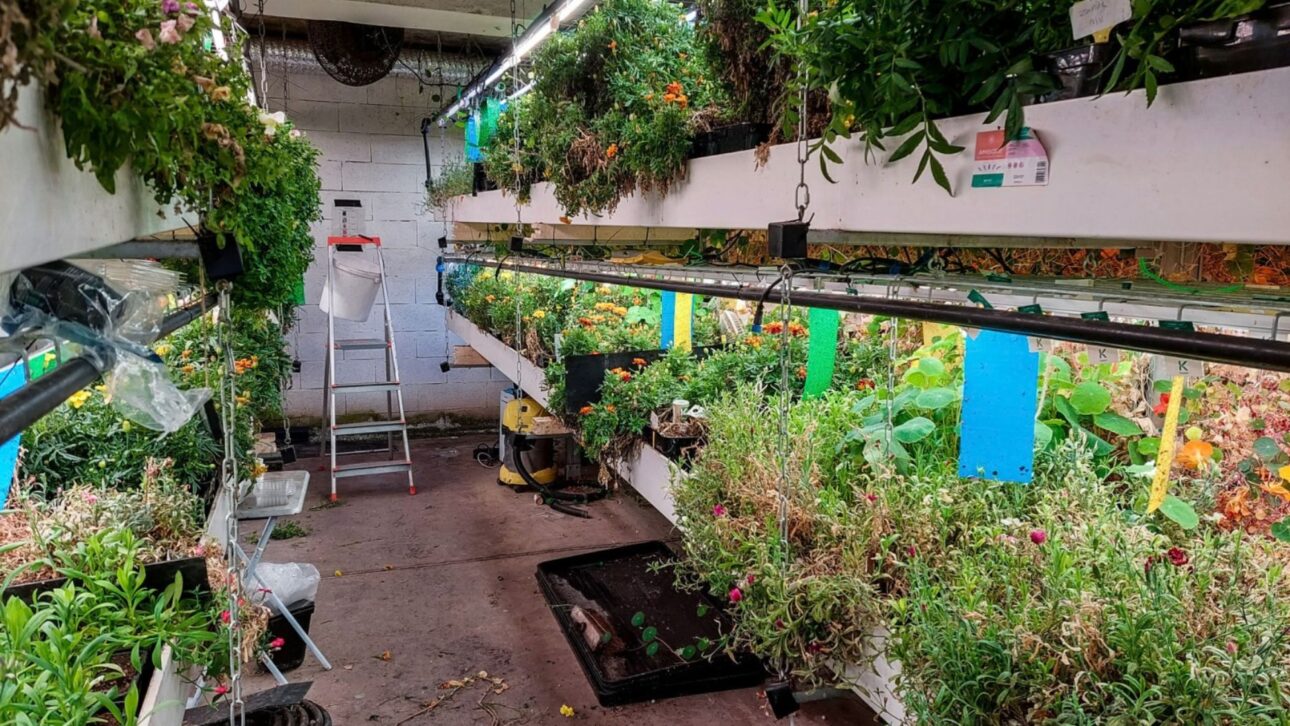
Institutional sources linked to the program describe La Caverne as the first underground proposal of this public policy and as a microfarm designed to combine production, technical innovation, and integration into the neighborhood.
Agricultural Technology Under the Concrete
The structure was designed to accommodate three main cultivation fronts.
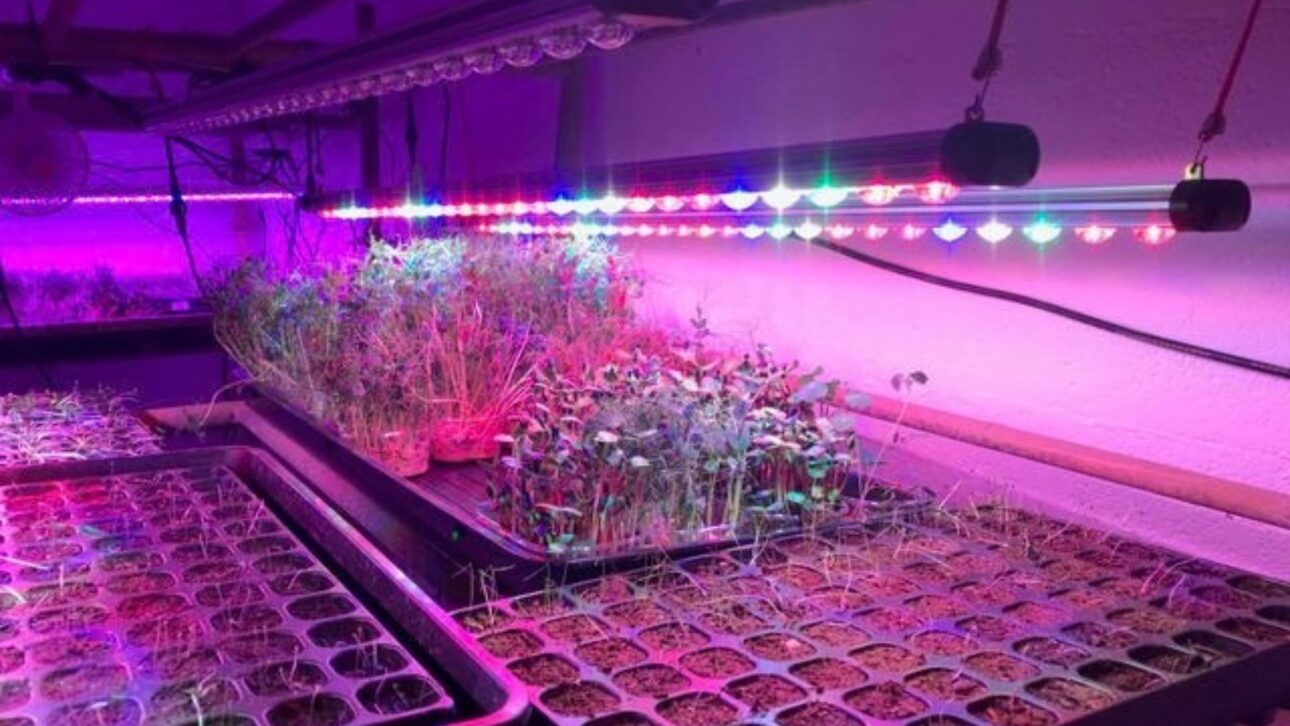
According to the Parisculteurs page, the operation combines mushroom production, horticulture under LED lighting, and vertical cultivation of microgreens, a term used in France for sprouts and young leaves harvested at the beginning of the cycle.
The proposal was presented from the start as a combination of low-tech and high-tech solutions in the same underground environment.
The contrast between the space and agricultural activity helps explain why the site attracted attention.
Instead of open soil and natural light, part of the production develops on vertical shelves, with horticultural lighting and control of cultivation conditions.
Other crops take advantage of what the basement offers more stably, such as darkness and regular temperature, characteristics favorable to products like mushrooms and endives.
The Forall Studio office, responsible for the architectural intervention, reports that the transformation took place in a 3,500 square meter parking lot, at 24/26 rue Raymond Queneau.
The project describes the creation of an underground urban farm on a parking level of an existing residential building, with areas adapted for laboratory, mushroom cultivation, microgreen production, and endive growth.
In the Parisculteurs documents, the area specifically reserved for urban agriculture in the second basement appears at 2,900 square meters.
The difference between this number and the 3,500 square meters cited in other public sources is explained by the way the entirety of the space is measured.
One reference deals with the area allocated to the agricultural project, while the other encompasses the broader intervention in the former parking lot.
Food Production Within the City
The logic of the farm is not limited to the visual effect of LEDs lit under concrete.
Since its implementation, the proposal was to bring production closer to urban consumption and shorten the journey between harvest and sale.
In material from the City of Paris, the declared goal of the team was “offrir aux urbains une production locale de qualité,” that is, to offer residents a production of quality local goods.
This productive design also helps understand the choice of crops.
Mushrooms, endives, and microgreens require less horizontal area than conventional crops and adapt better to controlled systems.
The combination allows the use of corridors, shelves, and technical rooms in an intensive manner.
This transforms a space created for cars into a high-density agricultural unit aimed at short circuit urban supply.
Institutional sources from ICF Habitat also indicate that the residents of the housing complex now have access to direct sales at a preferential rate of around 30% below the usual price.
The project has also been associated with local hiring and awareness actions on urban agriculture and organic waste sorting.
The proposal seeks to connect the economic activity to the routine of the housing complex.

Replicable Urban Agriculture Model
When the proposal was presented to Parisculteurs, the official expectation was to reach 30,000 kilos per year of fruits and vegetables and 24,000 kilos per year of mushrooms.
The project also foresaw the creation of eight full-time jobs.
With the operation underway, ICF Habitat started to report a higher result in direct and indirect employment from the project.
The manager claims that 10 positions have already been created as part of the initiative, including the hiring of residents from the housing complex itself.
The Parisian farm has become a showcase for the strategy of Cycloponics, the company behind La Caverne.
On the company’s most recent institutional website, Paris appears as the pioneering address of the operation.
The group claims to maintain seven active sites in France.
The same page reports that 25,000 square meters of underground parking have already been transformed into urban farms.
These locations now combine agricultural production and other activities related to food, entrepreneurship, and productive occupation of the underground.
This progress helps reposition the Paris experience.
The project has ceased to be merely an architectural curiosity to become proof of concept of a replicable model.
Rather than treating the underground as dead space, the operation seeks to convert it into active infrastructure, capable of generating food, jobs, and new economic circulation in dense neighborhoods.
Urban Basement as New Agricultural Infrastructure
The symbolic strength of the initiative lies precisely in the shock between the old function and the current use.
Where once there were concrete corridors aimed at the logic of the automobile, today there are cultivation shelves, technical rooms, trays of microgreens, rows of endives, and areas dedicated to mushroom production.
This is not a decorative garden tucked into a corner of the building, but an agricultural operation structured within the urban fabric.
At the same time, the experience exposes a broader change in metropolises.
The decline in the use of certain parking lots, especially in dense and expensive areas, opens room to consider new destinations for previously underutilized underground surfaces.
In the case of Raymond Queneau, the reconversion brought together public policy, architectural adaptation, food production, and local action at a single address, without disrupting the residential routine of the surroundings.
Thus, La Caverne remains one of the most emblematic cases of urban agriculture in a closed environment in the French capital.
Under a social housing complex, in a parking lot that lost part of its original function, the basement has begun to operate as a productive area and a distribution point for food grown just meters away from those living in the neighborhood.
The result is less a futuristic scene and more a concrete example of how cities can rethink the fate of their forgotten spaces.





-

-

-

-

-

16 pessoas reagiram a isso.