





Sigiriya, in Sri Lanka, transformed a rock of almost 200 meters into a palace, fortress, hydraulic garden, and symbol of ancient engineering.
In the center of Sri Lanka, an isolated rock of almost 200 meters high was transformed into one of the most impressive fortresses of the ancient world. Known as Sigiriya, or Lion Rock, the formation dominates the surrounding plain and seems to rise abruptly from the vegetation, like a natural stone tower.
The site was occupied and transformed into a royal complex during the 5th century, in the period associated with King Kashyapa I. The rock served not only as a lookout or refuge. It was converted into a palace base, defensive system, painting gallery, monumental entrance, and symbol of power.
UNESCO recognizes the Ancient City of Sigiriya as a World Heritage Site since 1982, highlighting its importance as an ancient urban, palatial, and artistic center of Sri Lanka. The complex brings together architecture, hydraulic engineering, landscaping, mural art, and an extreme adaptation of the natural relief.
-
They spent six years transforming a decommissioned underground reservoir into an unlikely home, bought for 98,000 pounds a tank that stored 2.5 million liters of water, demolished 650 square meters of concrete roof, repurposed the rubble in the yard, and sanded the old walls by hand, creating a surreal four-bedroom residence.

-
Old Cold War missile silo for sale in Kansas with 18 acres, access surrounded by barbed wire, underground concrete structures, and an interior surprisingly larger than many traditional properties.

-
An architect spent seven years searching for an impossible plot to live on, found a 12,000-year-old glacial rock in an old quarry, and built around the block, transforming the natural formation into the center of the house where he lives with his wife and two children.

-
At the entrance of a cave in Malaysia, 1,550 cubic meters of concrete and three years of work turned into a 42.7-meter golden statue, the largest in the world dedicated to the god Murugan, covered by hundreds of liters of gold paint.


Fortress of Sigiriya transformed geography into natural defense
The main strength of Sigiriya lies in the choice of location. The elevated rock, with steep faces and difficult access, offered a rare natural defense. Even before the construction of walls, moats, and staircases, the relief itself already functioned as a barrier.
By installing a palace on top of the formation, the builders took advantage of the height as an instrument of protection and demonstration of authority.
Those approaching the citadel saw the rock dominating the landscape, with the royal residence at the highest point.
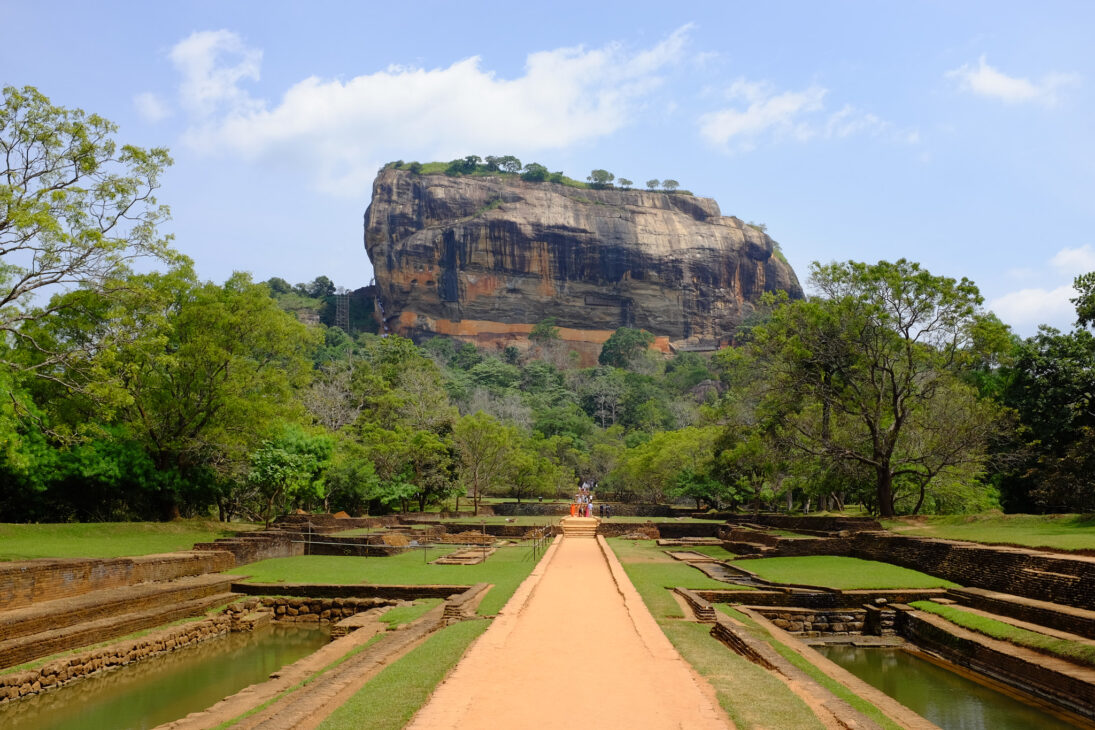
This decision transformed geography into architecture. The mountain was neither circumvented nor merely occupied. It became a central part of the project, functioning as a wall, pedestal, and visual symbol of royal power.
Palace on top of Sigiriya created a vertical citadel
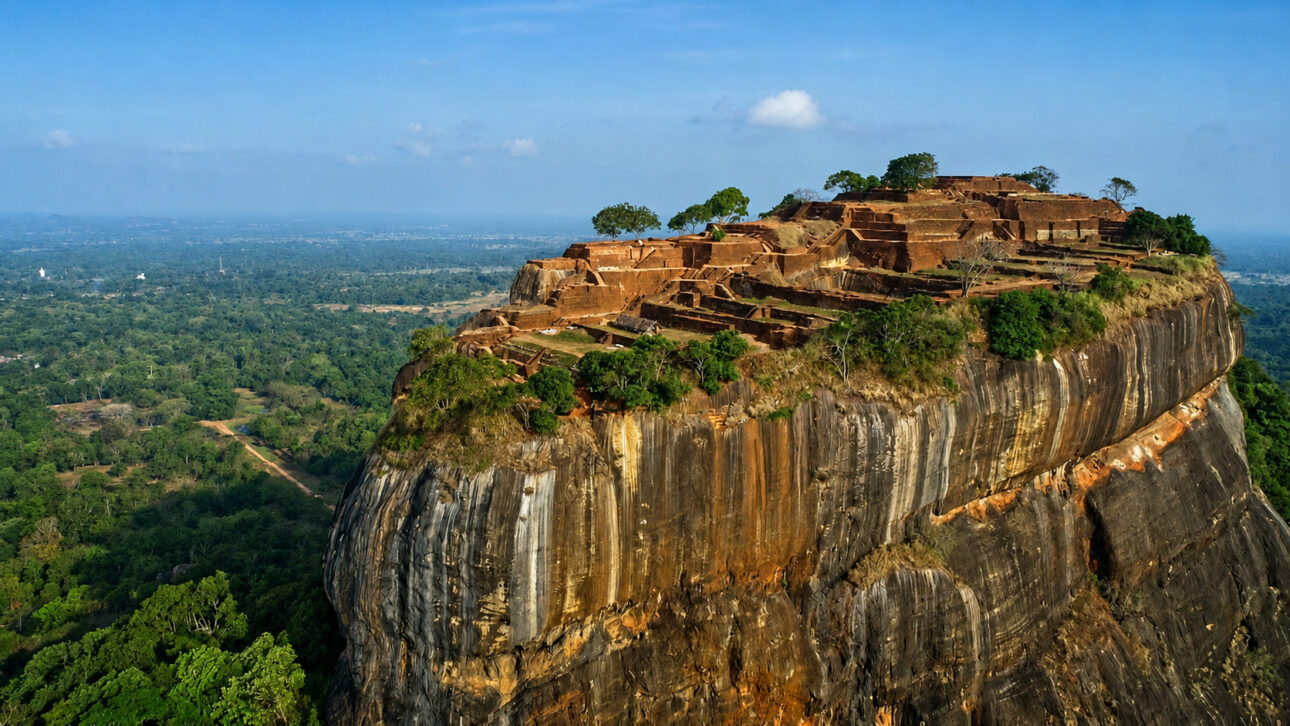
The flat top of the rock received structures associated with the ancient palace. Even today, ruins, foundations, terraces, and reservoirs reveal that the upper area was planned to house a sophisticated occupation, not just an improvised construction.
The climb to the top reinforces the feeling of a vertical city. The journey begins in the base gardens, passes through walls, staircases, painted areas, and monumental entrances until reaching the highest point of the rock formation.
This layered organization makes Sigiriya different from a common fortress. The city did not only spread on the horizontal plane. It climbed the rock and transformed each level into a stage of access to power.
Sigiriya’s hydraulic gardens show advanced engineering
At the base of the rock, Sigiriya preserves one of the most important garden systems of ancient Asia. The complex includes water gardens, canals, reservoirs, pools, symmetrical paths, and structures planned to organize the arrival at the complex.
These gardens show that the work did not rely solely on the impact of the rock. There was urban and landscape planning around it, with water control and visual composition designed to impress those entering the city.
The presence of the hydraulic gardens reinforces the technical level of the project. Instead of a dry and isolated fortress, Sigiriya combined defense, beauty, circulation, and water engineering into a single architectural system.
Water systems in Sigiriya reinforce technical mastery
The use of water is one of the most striking aspects of the site. The base of the fortress was organized with moats, canals, and pools, creating a controlled landscape before the climb to the rock.
This hydraulic mastery had practical and symbolic value. The water helped structure the gardens, enhance the monumentality of the entrance, and demonstrate technical capability in an environment dominated by an extreme rock formation.
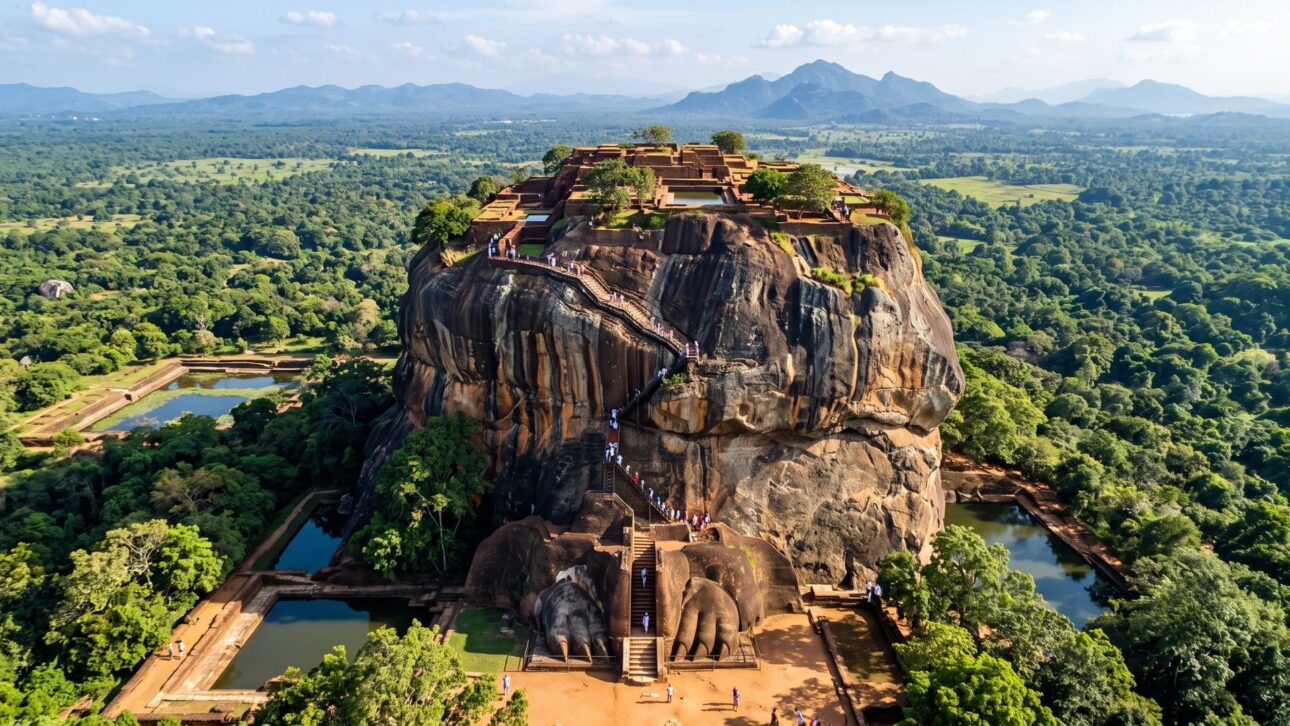
In a citadel built on a rock of nearly 200 meters, controlling the water was also a way to show power. The complex was not limited to occupying the land. It reshaped the landscape around the mountain.
Lion’s staircase marked the entrance of Sigiriya
One of the most famous points of Sigiriya is the ancient monumental entrance associated with the image of a lion. Today, two large stone paws remain at the base of the staircase leading to the upper part of the rock.
The structure gave rise to the name Lion Rock and created a symbolic passage for those ascending to the palace. The visitor needed to pass through the monumental entrance before reaching the top, reinforcing the ceremonial nature of the journey.
This solution shows that the access was not designed merely as a functional path. The ascent was part of the architectural experience. Each stage increased the sense of grandeur, isolation, and authority of the royal complex.
Sigiriya Frescoes Transformed Rock into Artistic Gallery
Besides being a fortress and palace, Sigiriya also became an open art gallery on the rock. The famous frescoes known as Sigiriya Maidens were painted on an elevated wall of the formation, in an intermediate area of the ascent path.
These paintings are one of the greatest treasures of the site. They depict female figures with strong artistic value and remain among the most recognized elements of Sri Lanka’s cultural heritage.
The presence of the frescoes broadens the interpretation of Sigiriya. The rock was not just a military support or palace base. It was also used as an artistic surface, transforming the path to the top into a visual sequence marked by color, shape, and symbolism.
Sigiriya’s Mirror Wall Preserved Ancient Inscriptions
Another important element is the so-called mirror wall, a polished surface located along the ascent route. The name comes from the finish that, according to tradition, reflected the image of those passing by.
Over time, ancient visitors left inscriptions and verses on this wall. These records reveal that Sigiriya already inspired admiration centuries before becoming a modern tourist destination.
The mirror wall functions as a historical archive carved into the fortress’s path. It preserves the relationship between the monument and the people who visited it, recording impressions, poetry, and memory in one of the most symbolic passages of the complex.
Ancient City of Sigiriya United Palace, Defense, and Landscape
Sigiriya was not just a construction atop a rock. The complex combined residential areas, gardens, hydraulic systems, defensive structures, passages, paintings, and palatial ruins.
This combination transforms the site into a true planned city. The base organized the arrival and circulation. The rock concentrated the visual and defensive impact. The top housed the palace and spaces linked to royal power.
The integration between nature and construction is what makes Sigiriya so strong. The landscape was not treated as a backdrop. It was incorporated into the project, creating a citadel that only exists in that form because it was born from that rock.
Sigiriya and the Power of King Kashyapa in the 5th Century
The most well-known history of Sigiriya is linked to King Kashyapa I, who ruled in the 5th century. The choice of the rock as the palatial capital reinforces the political dimension of the project.
Installing the royal residence in such an elevated formation created a clear message of authority. The palace was above the plain, protected by cliffs, walls, gardens, and controlled accesses.
The work also demonstrated mobilization capacity. Transforming a gigantic rock into a center of power required labor, planning, engineering, water knowledge, mastery of stone, and urban organization.
Rocks, Gardens, and Walls Created an Almost Inaccessible Fortress
The defensive structure of Sigiriya combined natural and constructed elements. The vertical faces of the rock made attack difficult, while moats, walls, and narrow accesses increased control over who entered.
The climb to the top itself was a barrier. To reach the palace, one had to overcome staircases, elevated passages, and checkpoints. The fortress used height as a defensive weapon.
This system helped transform Sigiriya into one of the most striking citadels of the ancient world. It did not rely solely on thick walls. It depended on the fusion between terrain, engineering, and military architecture.
World Heritage of Sigiriya Reveals Ancient Engineering and Art
The recognition of Sigiriya as a World Heritage site reinforces the global value of the site. The monument is important because it brings together, in a single ensemble, engineering, urbanism, mural art, landscaping, and defensive architecture.
The nearly 200-meter rock is the most visible element, but the value of the location lies in the sum of all its parts. The hydraulic gardens show sophisticated planning. The paintings reveal refined artistic production. The ruins at the top point to an ambitious palatial occupation.
This combination makes Sigiriya one of the most impressive examples of transforming a natural formation into a political and cultural center.
Fortress of Lion Rock Became a Symbol of Sri Lanka
Over the centuries, Sigiriya has become one of the greatest symbols of Sri Lanka. The image of the isolated rock, the lion’s paws, the gardens, and the paintings are associated with the historical and tourist identity of the country.


The monument is also part of the so-called Cultural Triangle of Sri Lanka, a region marked by archaeological sites of great importance. Within this group, Sigiriya stands out for its visual strength and technical complexity.
Few places combine such an extreme natural landscape with such an ambitious human construction in such a direct way. Therefore, the fortress continues to attract researchers, tourists, and admirers of ancient architecture.
Sigiriya shows how ancient engineering conquered the rock
The construction of Sigiriya required solutions to difficult problems: access to the top, defense, water, circulation, gardens, painting at height, and occupation on an isolated rock formation.
The project overcame these challenges by transforming the rock itself into part of the architecture. Instead of leveling the terrain or building on a flat area, the creators took advantage of the verticality of the formation to create a unique citadel.
The strength of the work lies in this choice. Sigiriya did not try to hide the natural obstacle. It made it the center of the monument.
An ancient citadel built where it seemed impossible to live
Sigiriya impresses because it transforms a simple question into a monumental work: how to build a royal city on top of an almost inaccessible rock?
The answer appears at the site itself. Gardens organize the base. Staircases conquer the height. Paintings occupy the walls. Walls reinforce the defense. The palace dominates the top.
The result is one of the greatest architectural achievements of ancient Sri Lanka. More than 1,500 years later, the rock of Sigiriya continues to show how power, landscape, and engineering could unite in a fortress that seems to emerge from the mountain itself.


