





 Portuguese
  English
  Spanish
  3 min of reading
  0 comments


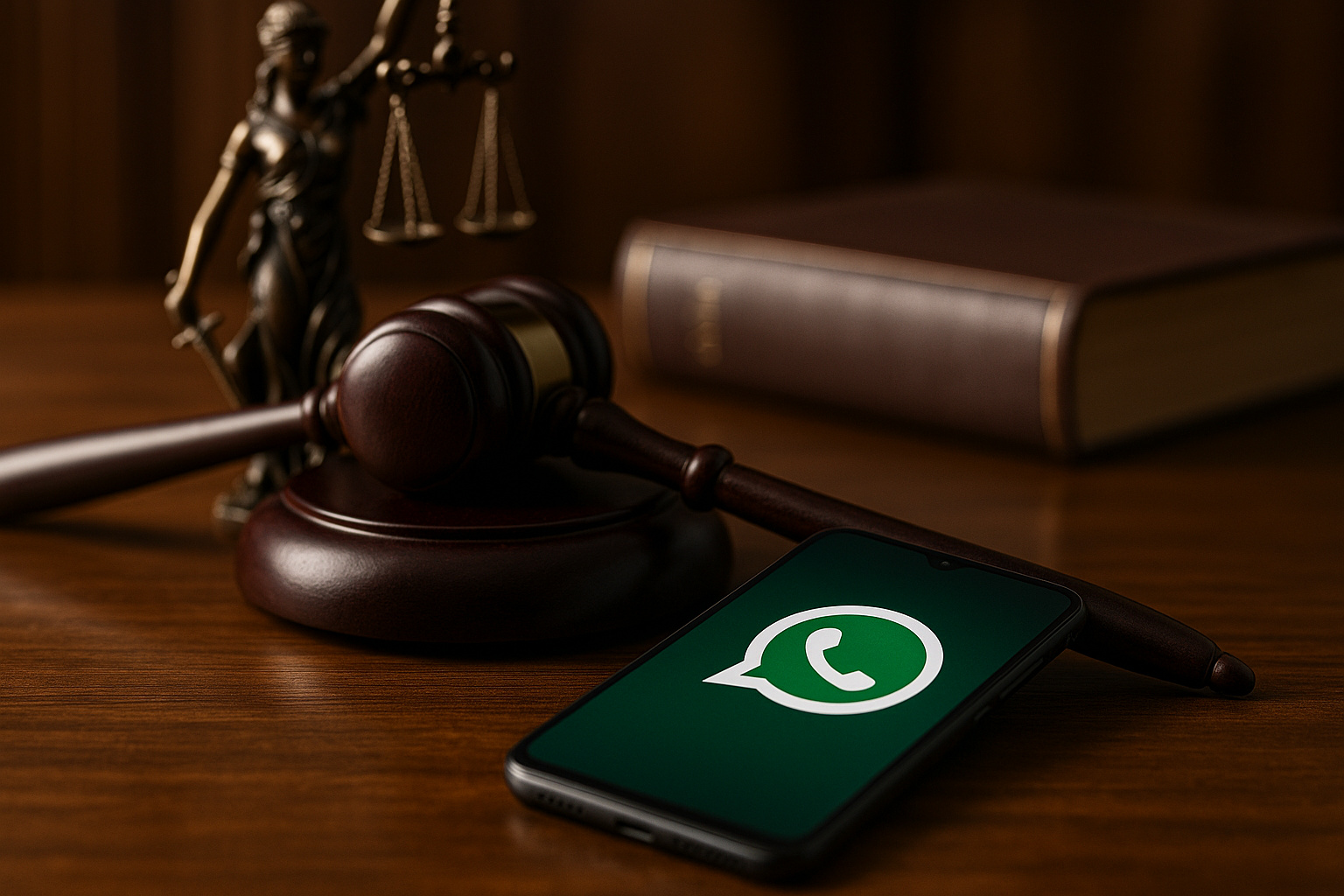
The STJ Faces Conflicting Decisions on Remote Access to Messages and Prepares Binding Thesis to Define Limits and Ensure Legal Security
Since 2018, the Superior Court of Justice has faced significant divergence regarding the validity of evidence obtained through WhatsApp Web mirroring, a technique used by authorities from the reading of a QR code, and thus discusses criteria for its use. While the binding thesis is not established, the criminal chambers adopt different understandings, which increases legal uncertainty. Criminal lawyers consulted, however, advocate for strict restrictions due to the risk of manipulation of conversations.
The mirroring occurs when the police device is paired with that of the suspect, allowing continuous access to old and new messages, as well as the ability to edit and delete content without traces.
Decisions Show Historic Clash Between the 6th and 5th Chambers of the STJ on the Reliability of Mirrored Evidence
In 2018, the 6th Chamber of the STJ, in RHC 99.735, annulled evidence obtained through mirroring and highlighted the possibility of invisible alterations in the content. In 2021, the panel reaffirmed its position, even with prior judicial authorization.
-
The new Civil Code could revolutionize marriages in Brazil with “express divorce” and changes that could exclude spouses from inheritance.

-
Banco do Brasil sues famous influencer for million-dollar debt and intensifies debate on delinquency, risks of seizure, and direct impact on Gkay’s credibility.

-
The Senate approves a bill that criminalizes misogyny, hatred, or aversion towards women, and includes the crime in the Racism Law with a penalty of up to 5 years.

-
Chamber Approves Bill That Allows Pepper Spray for Women Over 16 and Imposes Strict Rules for Purchase, Possession, and Use as Self-Defense

In 2024, the 5th Chamber of the STJ adopted an opposite understanding. The ministers validated mirroring as a special investigative technique, as long as there is a substantiated judicial authorization, proportionality, and control. The panel also presumed the authenticity of messages based on the principle of police public faith.
Judges Daniel Avelar and Valdir Ricardo Lima Pompeo Marinho criticize this understanding because it does not set clear temporal limits and transfers an technically impossible burden to the suspect. They emphasize that the state must preserve the chain of custody, not the accused.
Experts Point Out Technical Risks, Lack of Integrity, and Absence of International Standards in Digital Collection
Expert Dellano Sousa classifies mirroring as technically unsafe because it does not generate hashes, logs, or metadata, which are essential to prove integrity. He explains that digital evidence must be integral, auditable, justifiable, and repeatable, according to standards from the Ministry of Justice, ISO, and IEC.
In addition, Sousa points out that methods without certified forensic extraction increase risks and allow access to messages, photos, documents, files, and contacts, which exceed the scope of interception regulated by Law 9.296/1996.
Jurists Suggest Limits, Strict Criteria, and Continuous Judicial Control to Reduce Risks and Prevent Abuses
Lawyer Andréa D’Angelo advocates for strict criteria because mirroring is volatile, manipulable, and compromises authenticity and origin. She proposes substantiated judicial authorization, demonstration of impossibility of another means, a defined timeframe, preservation of the chain of custody, and continuous control by the Judiciary. D’Angelo observes that a total ban is difficult since Article 10-A of the Criminal Organizations Law authorizes virtual infiltrators.
Judges Avelar and Marinho suggest specific regulation to define whether mirroring will be passive or active, with any intervention previously authorized and recorded. They also argue that its use should be limited to serious crimes and criminal organizations.
Understand What Is at Stake in the Debate on Message Mirroring
The discussion involves legal security, preservation of the chain of custody, and a balance between privacy and criminal investigation. The topic also includes evidence integrity, state limits, and the risk of irreversible violations, as mirroring allows silent interventions and unlimited access to private content.
Brazil awaits the binding thesis from the STJ, which will define criteria to ensure legality, authenticity, and reliability of messages obtained through mirroring.










Seja o primeiro a reagir!