





 Portuguese
  English
  Spanish
  5 min of reading
  0 comments



Report Indicates Ghost Railway with 56% of the Network Operating with Fewer Than Two Trains Per Day and Highlights Decades of Road Dependency and Low Investment
The term ghost railway has fully entered the vocabulary of Brazilian infrastructure after the Federal Court of Accounts pointed out that 56% of the network has a flow of fewer than two trains per day, a clear sign of idleness and wasted capacity. The diagnosis sheds light on an old problem: the country prioritized roads, let tracks age, and today pays more to transport goods.
The scenario described by the TCU helps to understand why the ghost railway makes freight more expensive and delays deadlines. Years of road dependency, disconnected sections, and timid investment have created bottlenecks that impact ports, industries, and agribusiness. The cost falls on the entire economy.
Where the Network Disappears: Map of Idleness and Disconnection
The ghost railway is not a lack of tracks, but a lack of trains running. In much of the country, old lines, outdated maintenance, and unfinished sections result in minimal operation throughout entire days. When few trains circulate, the railway loses its main advantage: high volume with lower cost per ton.
-
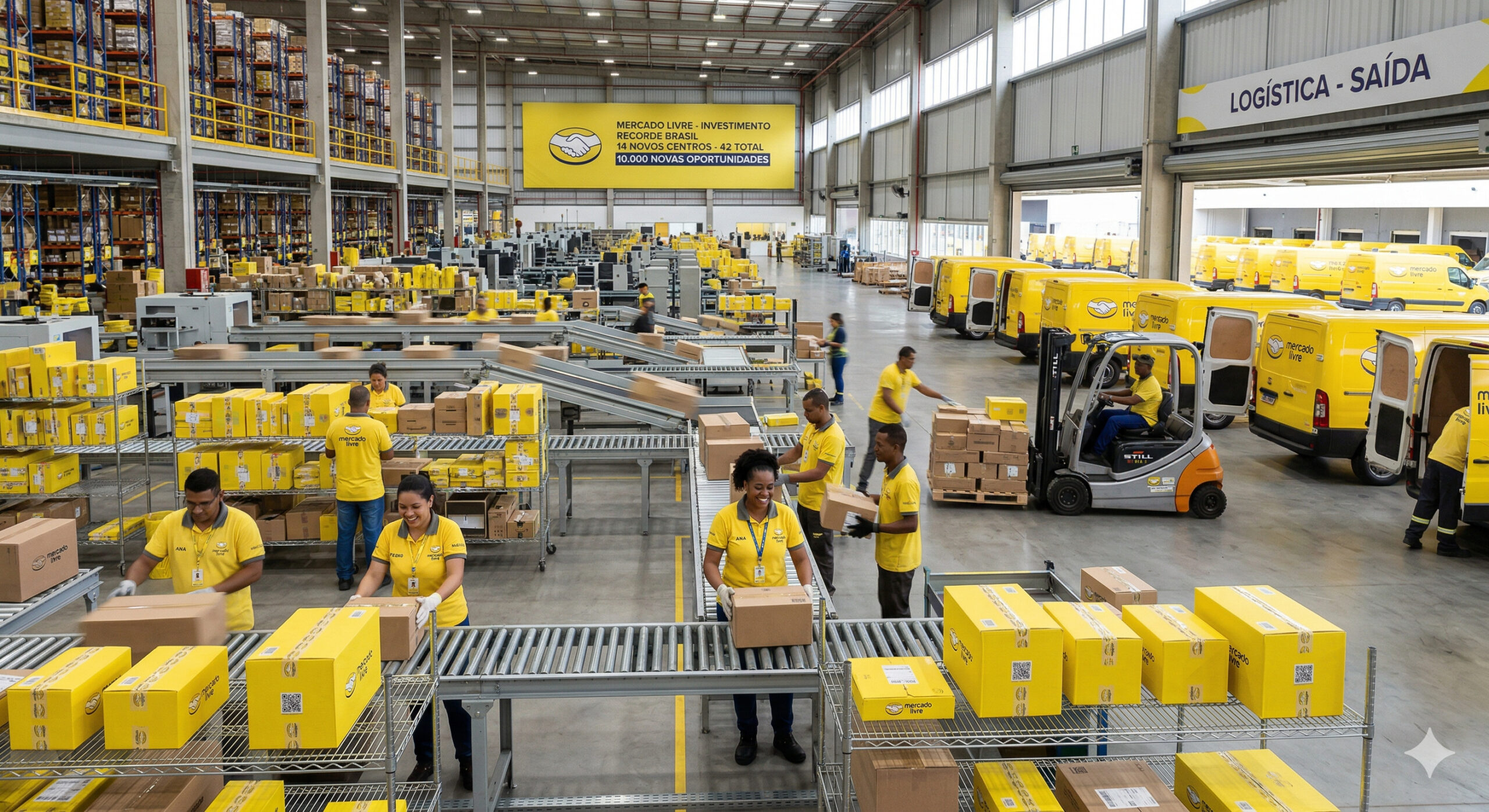
Mercado Livre “opens the vault” and announces a record investment of R$ 57 billion in Brazil in 2026, a value 50% higher than the previous year, with an expansion plan that includes 14 new logistics centers, totaling 42 units in the country and hiring an additional 10,000 employees.
-
How investment in technology can revolutionize the national economy and enhance industrial gains, according to a study that highlights the direct impact on productivity, innovation, and wealth retention within Brazil.

-
The largest food company on the planet, JBS, has just opened a 4,000 square meter laboratory in Florianópolis to develop customized proteins that modulate muscle mass gain, immune response, and metabolic performance.

-
After nearly 30 bids and competition among industry giants, a Spanish company purchases one of the largest airports in Brazil for almost R$ 3 billion and takes over the management of Galeão in a concession that will last until 2039.


Another critical point is the low integration between railways, roads, and ports. Without efficient yards and fluid connections to maritime terminals, the train loses logistical speed. Lines migrate to the port, and waiting costs contaminate freight from start to finish of the chain.
How We Got Here: Decades of Road Dependency and Short Investment
The ghost railway has historical roots. From the 20th century onward, the State concentrated efforts on opening roads, boosting the automotive industry and road networks. Tracks were left behind, without continuous modernization, and the network shrank in relevance.
With the privatization in the 1990s, concessions brought some relief, but prioritized more profitable corridors. Lower-return sections were left without structural works and accumulated returns, operational restrictions, and low interpenetration between networks, which hinders access for third-party loads.
Concessions Under Pressure: What Works and What Bottlenecks
The ghost railway reveals limits of the model. Contract renewals aim for predictable investment, but deliveries and schedules need strict oversight to materialize. When regulation fails, the priority becomes the concessionaire’s own shipments and the system loses cargo diversity.
However, there are correction windows. Rebalancing, performance targets, and third-party access obligations can increase the use of the tracks and reduce idleness. Technical interoperability and clear passage rules are key aspects to transform installed capacity into trains effectively running.
Ports and Terminals: The Link That Determines Efficiency
Even where the ghost railway is replaced by busy sections, bottlenecks return at port accesses. Singly line, conflicts with freight trains, and undersized yards create last-mile bottlenecks. The result is predictable: missed docking windows and extra costs for ship layovers and storage.
The solution involves traffic segregation works, selective duplications, and multimodal yards. Every minute gained in accessing the port reduces costs and increases the competitiveness of exports, especially in agricultural and mineral commodities.
The Investment That Is Lacking: Why the Bill Doesn’t Add Up
The label of ghost railway also reflects a chronic gap in resources. Intermittent public investment and concentrated private returns create an unequal map of works, prioritizing high-volume flow corridors and delaying regional connections that would have a strong social impact.
Without long-term planning and a continuous project portfolio, the sector enters a cycle of peaks and valleys. Strategic sections remain without modernization and idleness persists, even when there is cargo demand that could migrate from asphalt to track.
Turning Signals: Projects and Policies in the Pipeline
For the ghost railway to lose strength, regulatory adjustments and structural projects are on the agenda. Reviewing concessions, planned auctions, and cross investments can address bottlenecks, from port accesses to integration branches with producing areas.
In high-potential corridors, integrating and exporting railways seek to shorten logistical distances. Meanwhile, states and the Union are discussing new authorizations and PPPs to expand reach, reconnect industrial hubs, and scale regional passenger trains where there is economic sense.
Onboard Technology: More Trains on the Same Track
The ghost railway is also a management challenge. Modern signaling, centralized dispatch, and real-time monitoring allow for shortening headways, putting more compositions on the same stretch, and increasing safety. With smart yards and predictive maintenance, asset availability rises and operating windows widen.
On the commercial side, booking systems and guaranteed windows for different clients reduce uncertainty and attract loads currently captive to trucks. The more predictable the train, the more it competes in terms of deadlines and price.
What Changes in the Pocket: Freight, Deadlines, and Competitiveness
The cost of the ghost railway is reflected in freight. Long-distance trucks cost more per ton, consume more fuel, and emit more CO2. Without a robust railway, Brazil loses margins, especially on low-value-per-kilo products, and sees industries pressured by longer deadlines and higher inventory costs.
When the track is functioning, the gain is direct: lower logistical costs, more reliable deadlines, fewer accidents, and emissions. In a competitive global market, every percentage point in freight can decide whether the load leaves through a Brazilian port or loses competitiveness abroad.
The ghost railway is a portrait of past choices, but does not have to be destiny. Integration of networks, focus on port access, performance targets, effective oversight, and technology form the minimum agenda to fill underutilized tracks with trains today.
Do you agree with the TCU’s diagnosis? In your region, is the railway halted? Did your company’s freight increase because of this? Share your experience in the comments and cite practical examples.









Seja o primeiro a reagir!