





 Portuguese
  English
  Spanish
  3 min of reading
  7 comments


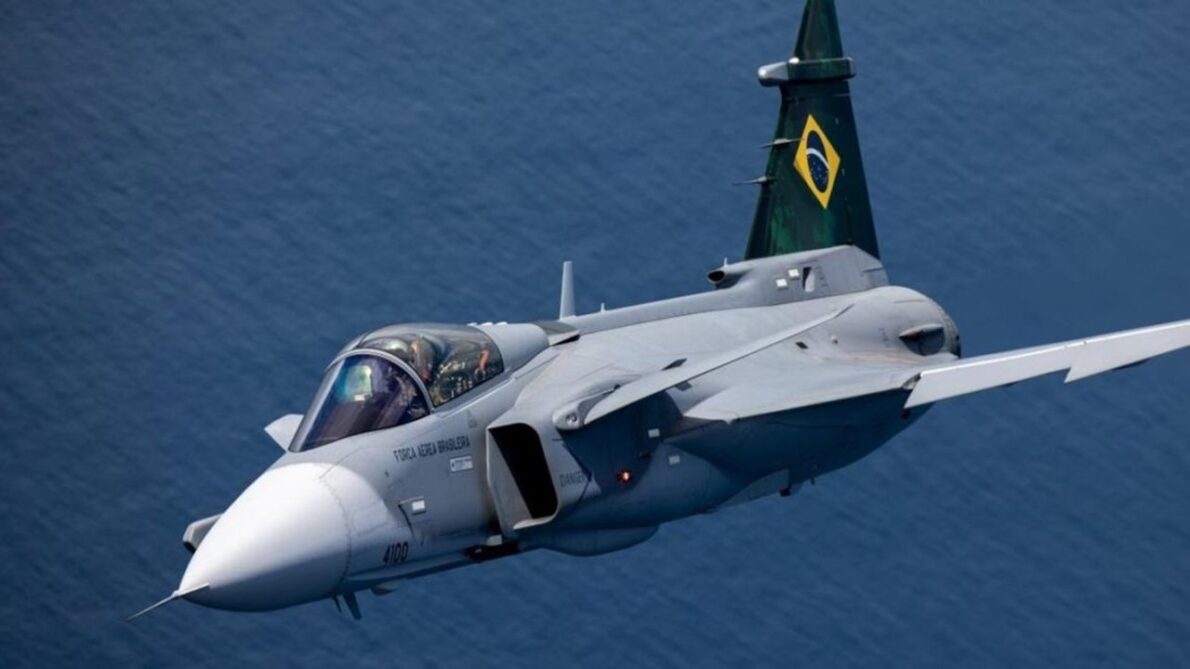

Discover How the Brazilian Air Force Can Use This Stealth Technology to Make the Gripen More Stealthy and Effective in Combat Missions, Positioning Brazil at the Forefront of Military Aviation.
In Brazil, the Brazilian Air Force (FAB) is investing in the early stages of this technology to equip its future aircraft, including the Brazilian Gripen. In 2016, the Institute of Aeronautics and Space (IAE) received a patent for an innovative stealth painting process, a significant milestone in the country’s air defense.
Stealth technology is one of the greatest revolutions in the field of military aviation. Designed to make aircraft, ships, and missiles less detectable, this technology minimizes an aircraft’s signature, making it nearly invisible to adversary surveillance systems. Notable examples of stealth aircraft include the F-22 Raptor and the F-35 Lightning.
Stealth Technology Aims to Reduce the Visibility of an Aircraft to Radars
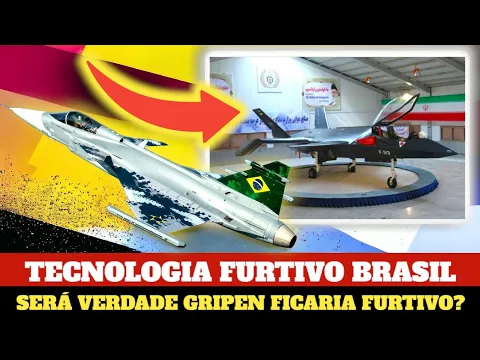

Stealth technology aims to reduce the visibility of an aircraft to radars and other detection systems. To achieve this, radar-absorbing materials are used in the aircraft’s paint. These materials scatter radar waves instead of reflecting them back, significantly reducing the aircraft’s radar signature.
-
Historic bankruptcy of Centauro shocks the market, and the century-old company puts more than 500,000 products, machines, and complete infrastructure up for online auction.

-
São Paulo surprises the world with a colossal railway network project that promises over 1,000 km of tracks, R$ 194 billion in investments, and 40 projects connecting the capital to the interior with fast and sustainable trains.

-
The world’s largest escalator, measuring 905 meters in China, reduces urban travel time from 1 hour to about 20 minutes and transforms mobility in mountainous regions with an engineering solution adapted to the terrain.

-
New shoe factory in Ceará is expected to create 400 jobs and strengthen the local economy.


The Institute of Aeronautics and Space, in São José dos Campos, has been working on the project since 1998, culminating in the 2016 patent for a stealth paint. This paint not only absorbs radar waves but can also be used as shielding in electronic equipment and commercial aviation.
JAS 39 Gripen Is Not Considered a Stealth Fighter at the Same Level as the F-22
Although the JAS 39 Gripen is not considered a stealth fighter at the same level as the F-22 or the F-35, it incorporates several features to reduce its radar signature. The stealth paint developed in Brazil could further enhance its stealth capability.
In addition to the special paint, the Gripen’s design includes angular surfaces and sharp edges that help to dissipate radar waves. Camouflage patterns are also used to disrupt the aircraft’s shape, making it harder to detect visually.
Adoption of Stealth Technology in the Brazilian Gripen Improves Survival Capability
The adoption of stealth technology in the Brazilian Gripen improves the aircraft’s survival capability in combat operations. This means that, with the adoption of this technology, Brazil is at the forefront of military technological innovation, strengthening its air defense and increasing the safety of FAB missions.
The incorporation of stealth technology in the Brazilian Gripen is an important step for the Brazilian Air Force. With the new stealth paint and other design features, the Gripen becomes a harder aircraft to detect, improving its effectiveness in combat and highlighting Brazil on the military aviation stage.









Muito bom ver qo Brasil está se protejendo
Não é apenas a pintura, precisa mudar partes importantes da aeronave, asas, entradas de ar, exaustão. Isso não é tão fácil assim!
Esse avião pinta meio fio?
Acho que a FAB deveria buscar um parceiro para caças furtivos, com desenvolvimento conjunto e transferência de tecnologia nos mesmos moldes do Gripen, pois temos engenharia com capacidades aeronáuticas suficientes para isso