





 Português
  Inglês
  Espanhol
  4 min de leitura
  0 comentários


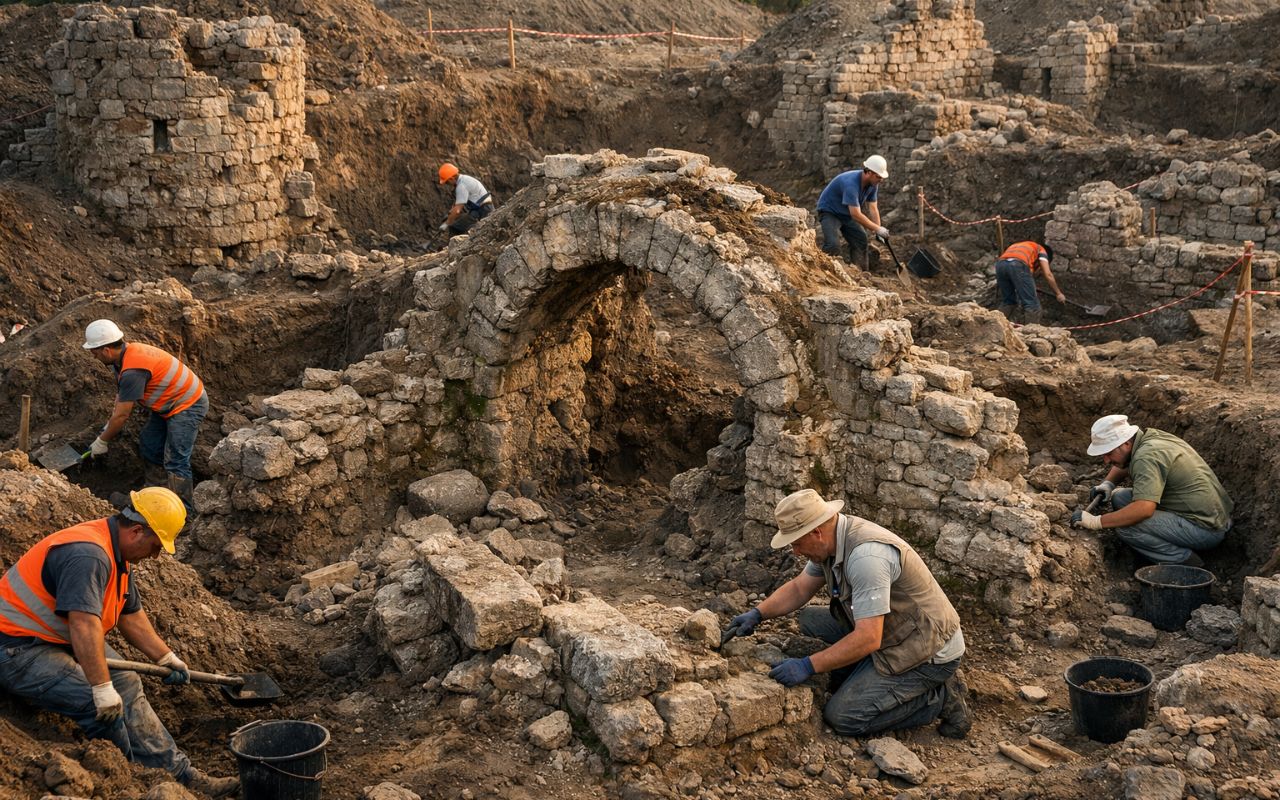
Excavations for a New Apartment Complex in Belgium Uncovered a 16th Century Spanish Castle and a True Archaeological Treasure, with Objects Linked to Spanish Soldiers.
Excavations carried out for the construction of an apartment complex in the city of Ghent, in Belgium, led to a surprising historical discovery: remnants of a 16th Century Spanish Castle, as well as various objects deemed a true archaeological treasure.
The discovery occurred during the ground preparation work, when workers found stone structures buried underground.
After the initial identification, archaeologists were called to investigate the site. Initial analyses indicate that the castle was used by Spanish soldiers during the period when the territory was under the rule of the Spanish Empire.
-
A 1,900-year-old papyrus found in the Judean Desert reveals a crime of the Roman Empire involving fraud, forgery, and a detailed court hearing.

-
New technology transforms the human body into a “machine”: centaur robot reduces effort when carrying up to 20 kg, improves balance during walking and impresses in practical tests in China.

-
A traffic police robot has started operating at a school, technology from Omoda & Jaecoo expands the use of artificial intelligence in smart cities.

-
44 minutes on the cosmic scale: mysterious object in the Milky Way emits simultaneous radio and X-ray signals and raises an intriguing question about what is really happening in deep space.


Found Objects Form a True Archaeological Treasure
In addition to the ruins of the Spanish Castle, researchers also located various historical artifacts scattered throughout the site.
Among the remnants found were glass bowls, fragments of wine bottles, ceramic pieces, building materials from the Roman era, and even flint tools.
These objects indicate that the region may have been occupied by different civilizations over various historical periods.
For this reason, specialists classified the collection of finds as a true archaeological treasure.
According to the archaeologists, some remnants may even point to human occupations that occurred before the castle was constructed.
Spanish Castle Was Built at the Request of Emperor Charles V
The 16th Century Spanish Castle found in Belgium was built at the request of Emperor Charles V.
At the time, the city of Ghent had revolted against the high taxes imposed by the ruler. In response, the emperor decided to erect a fortification in the region.
The construction had political and military significance. In addition to serving as a base for Spanish soldiers, the castle also functioned as a demonstration of imperial power over the local population.
Ruins Were Hidden for Centuries Beneath the City
Over time, much of the structure of the Spanish Castle was destroyed or fell into ruin.
In the 19th century, a new neighborhood was built in the region, which ended up covering much of the historical remnants.
Even so, some structures remained preserved underground. It was during the excavations for the new real estate project that these parts of the castle reappeared.
Septic Pit May Reveal Habits of Spanish Soldiers
One of the points that generates the most curiosity among archaeologists is the ancient septic pit linked to the castle.
According to archaeologist Robby Vervoort, this type of structure can reveal valuable information about the daily lives of the people who lived in the area.
“We conducted a preliminary study that already indicated a lot, and test trenches were also excavated in the demolished buildings. They revealed stone parts of the castle and even older finds.”
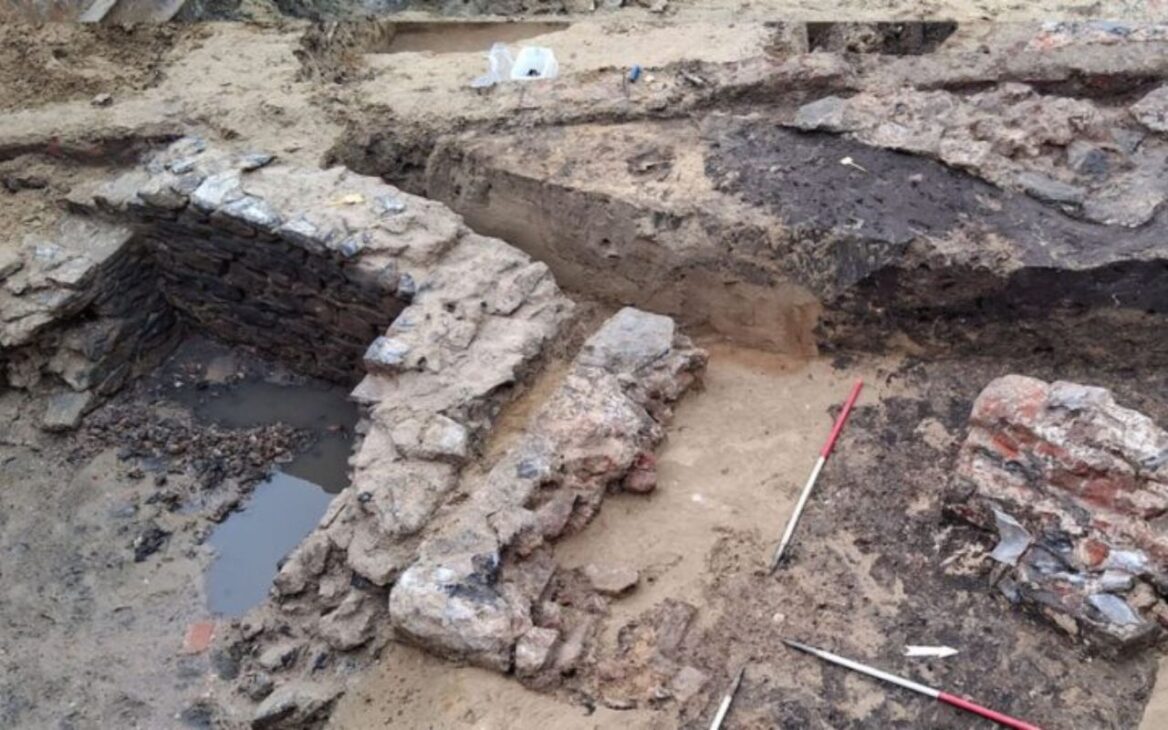
According to Vervoort, objects discarded in the pit tend to remain extremely well preserved.
Therefore, researchers intend to excavate the site carefully, removing the layers of earth little by little.
Animal remains, seeds, and even plant pollen may help uncover what the Spanish soldiers ate and how they lived.
Medieval Cemetery Also Identified in the Area
Another important historical element found in the area was a medieval cemetery.
The castle was built over the ancient Saint Bavo’s Abbey, a religious institution that existed at the site before the fortification was constructed.
Although only remnants of the abbey church remain, the cemetery has been preserved. During the excavations, archaeologists have already found dozens of human skeletons.
The remains found were dated between the 13th and 20th centuries, indicating that the region was used by different generations throughout history.
Complex Construction Will Continue with Adaptations
Even with the discovery of the 16th Century Spanish Castle, the new apartment complex project will move forward.
Local authorities have stated that the project will be adapted to preserve the most important archaeological remnants.
One of the measures taken will be to avoid the construction of basements in much of the buildings. This way, it will be possible to protect the historical structures still present underground.
This way, urban development can continue without compromising the historical heritage revealed by the excavations.
Discovery Reinforces the Importance of Urban Archaeology
The discovery of the 16th Century Spanish Castle in Belgium demonstrates how modern cities still hide important fragments of the past.
In many cases, construction work reveals historical structures that have remained buried for centuries.
For archaeologists, each new remnant found helps reconstruct the history of the region and better understand the lives of the people who lived there over time.
Source: Adventures in History







Seja o primeiro a reagir!