





 Portuguese
  English
  Spanish
  4 min of reading
  0 comments


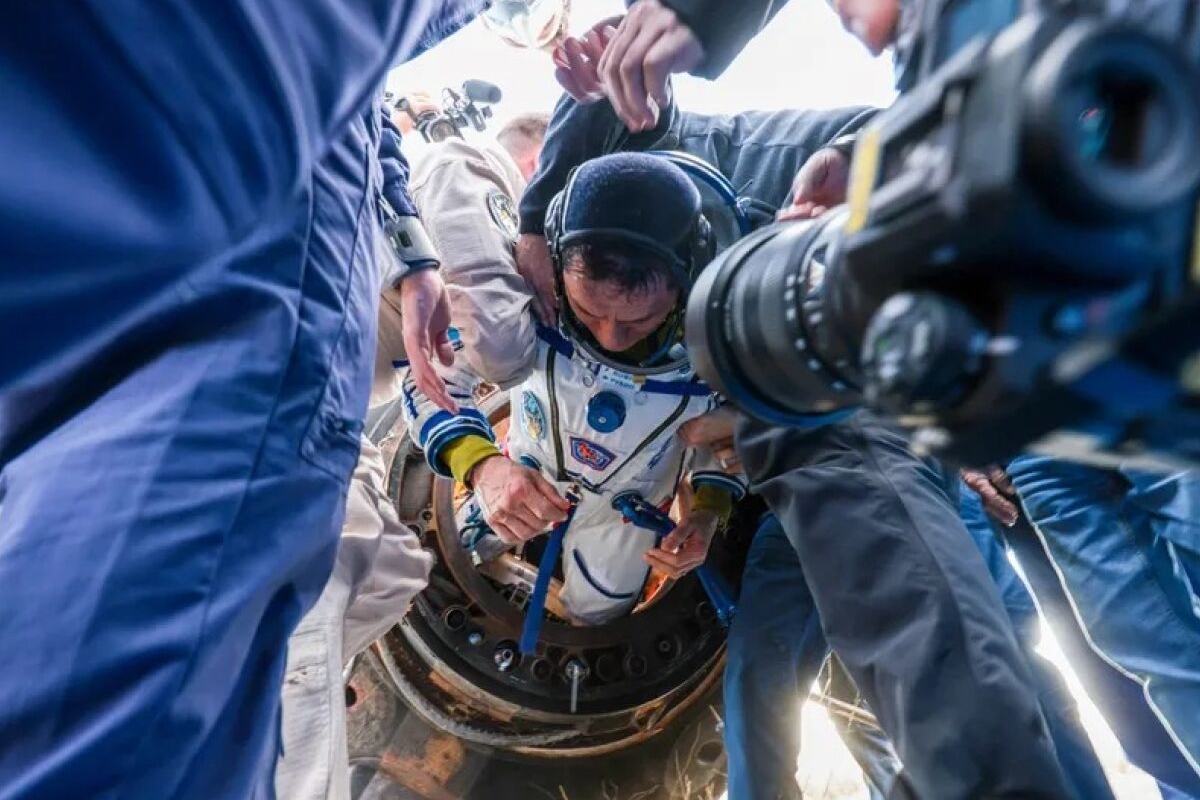
Changes in defense cells during weeks in space require attention because they can increase health risks and influence long-term travel planning
The immune system of astronauts undergoes changes while they remain on the International Space Station, and this becomes significant when the goal involves increasingly longer missions. The human body was not designed to live outside of gravity, and some of the challenges arise internally, with silent adjustments in essential functions.
Right at the beginning of adaptation, nausea and discomfort may arise because bodily fluids stop following the logic imposed by gravity. Over time, the focus shifts to more lasting effects, such as loss of bone density, exposure to space radiation, and changes in complex systems, including immunity.
Aboard the station, the routine includes protocols and experiments to protect the crew’s health and pave the way for future generations. A recent investigation observed the behavior of cells linked to the reprogramming of the defense system and the balance of the organism, using the cell line THP 1, which mirrors the action of monocytes and macrophages.
-
New Zealand builds a shimmering building that vibrates, featuring a 62-seat cinema, moving sculptures, and an environment where sound, light, and energy are felt in the body.

-
Two colored cubes of 2.5 m transform a public bathroom into a selfie spot in Western Australia, costing up to 75% less than traditional construction and helping to reduce vandalism in public spaces.

-
Santa Catarina produces up to 7 times more than it consumes in some sectors, and its century-old industries founded by grandparents and great-grandparents now compete on equal footing with Germany and the United States in the international market.

-
U.S. war giant weighing 9,600 tons and equipped with long-range missiles is sent to the Atlantic to protect global internet and hunt submarines.


Why microgravity affects fluids, symptoms, and initial adaptations of the body
The absence of gravity changes how the body distributes fluids, which helps explain why many astronauts report nausea upon arriving at the International Space Station. Without a clear direction for internal displacement, the body needs to find a new point of balance, which can cause discomfort until adaptation is consolidated.
This initial effect is visible, but it is not the only one. The same change in environment opens the door to deeper alterations in biological processes, especially when the stay extends for weeks, raising the importance of constant monitoring and protection strategies.
How the SpaceX Dragon capsule carried frozen samples and ensured analysis on Earth

The return of the samples was a decisive step in understanding what happens to defense cells under space conditions. At the moment the SpaceX Dragon capsule landed, samples cultivated over weeks were preserved at 80 degrees Celsius below zero, protected from vibrations and the hypergravity of reentry.
With the material secured, the work shifted to extracting and analyzing data, a step that focuses on confirming biological patterns. The goal was to observe whether immune cells change behavior when exposed for weeks to conditions that are strange on Earth but common in space, such as microgravity and ionizing radiation.
What was observed in THP 1 cells and the impact on monocytes and macrophages
The cell line THP 1 was used because it provides a clear picture of how monocytes and macrophages behave, cells that help organize defense responses and influence the functioning of various tissues. Changes in this axis can reverberate in processes of inflammation, repair, and balance of the organism.
The identified changes were described as remarkable, with the potential to affect everything from wound healing to risks related to the cardiovascular system. This matters because, in long missions, any failure in inflammatory response or repair can turn into a bigger problem in an environment with limited resources.
Changes in the heart, blood pressure, and arteries come into focus during long stays
Cardiac anomalies have already been observed in astronauts who spent long periods on the International Space Station. Blood pressure can change, and the heart muscle tends to atrophy because the effort to overcome gravity and pump blood to the upper body ceases to exist.
Radiation also appears as a stress factor, capable of accelerating the degeneration of coronary arteries and increasing the stiffness of vessels such as the aorta and carotid, a scenario that can induce atherosclerosis. In prolonged missions, this set of changes reinforces the need for prevention and physiological monitoring.
Expression of the gene RYR2 changes and may be linked to calcium control in cardiac pumping
Another point observed was the alteration in the expression of the gene RYR2 in the studied model. This gene is involved in controlling the entry of calcium necessary for heart pumping, which helps connect the genetic change to possible abnormalities in cardiac function.
This link gains attention because alterations in calcium flow can affect the contraction of the heart muscle. In an environment where microgravity and radiation act simultaneously, adjustments in genes related to the heart can become a critical component of accumulated risk.
Activity of 52 DNA repair genes decreases and increases concern about radiation and aging
One of the most concerning signs was the reduction in activity of at least 52 genes involved in DNA repair. With a lower capacity to correct damage, the organism may become more vulnerable to the impact of radiation and the natural wear of time, opening the door to a scenario of premature aging.
The practical consequence is direct for long missions, as prolonged exposure to radiation and physiological stress can increase the chance of age-related diseases appearing earlier. This risk adds to other known effects of space, forming a set that requires integrated solutions.
The expectation with these findings is to support the development of drugs capable of supplementing the activity of genes that become deregulated in space, creating an extra layer of protection for the crew. The proposal is to make flights safer both in the short and long term, reducing the toll that astronauts may pay with their own health after returning.
As space travel advances to longer durations, understanding what happens to immunity, heart, and DNA repair ceases to be scientific curiosity and becomes a planning requirement. Each identified adjustment serves as a signal for more robust protocols, focusing on preserving the organism in one of the most extreme environments ever faced by humans.







Seja o primeiro a reagir!