





 Portuguese
  English
  Spanish
  4 min of reading
  0 comments


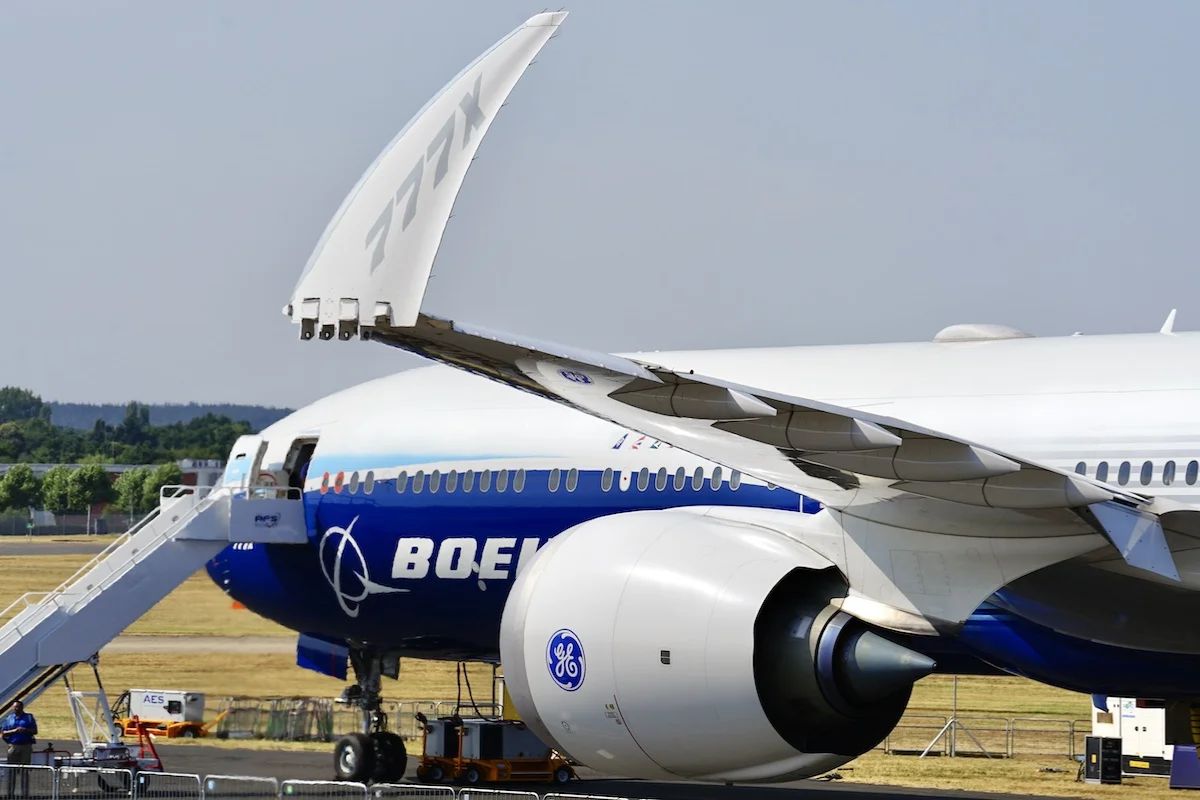
The Boeing 777X, Heir to the Successful 777 Family, Faces a Turbulent Certification Journey, but Its Technology Promises to Redefine Efficiency in Long-Haul Flights
The Boeing 777X is an aircraft of paradoxes. It is the longest commercial airplane ever built and the largest twin-engine aircraft in the world, yet it was designed to ‘shrink’ and fit into the same spaces as its predecessor. However, its journey to the skies has been marked by a series of technical challenges and a rigorous certification process that has delayed its debut by more than six years.
At the heart of its design are two revolutionary innovations: the gigantic General Electric GE9X engines and, the most visible of all, the foldable wingtips. This unprecedented technology in commercial aviation was the engineering solution Boeing found to create an extremely efficient aircraft without making it too large for existing airports. With the first deliveries now scheduled for 2026, the industry’s anticipation for the arrival of the new giant is immense.
The Innovation of Foldable Wings, the Solution to Fit in Airports
The most striking feature of the Boeing 777X is its immense carbon fiber wing. With the wingtips extended, the total wingspan reaches 71.75 meters. Such a long wing is excellent for aerodynamics, as it increases lift and reduces drag, resulting in significant fuel savings. However, this size would create an immense operational problem, as the aircraft would be too large for most existing boarding gates.
-
These are the drivers who may stop paying tolls on highways in a project that promises to reduce costs for those who live from transportation in Brazil.

-
(Video): Italian pilot lands plane on moving train at 120 km/h and achieves unprecedented feat in aviation, even with a narrow runway and without direct visual contact.
-
It seems to have come out of a science fiction movie: A Brazilian city where it rains almost every day, recording over 4,000 mm per year, driven by climatic factors — a direct result of its strategic location in the Amazon.

-
The water crisis that could change everything this year has already begun; it’s not just about the climate, it affects technology, raises product prices, and can halt entire companies without warning.


To solve this dilemma, Boeing opted for an unprecedented and bold solution: the last 3.5 meters of each wingtip fold upwards. In a process that takes about 20 seconds, the wingtips fold upwards when the plane is on the ground, reducing the wingspan to 64.85 meters. This allows the 777X to use the same infrastructure as its predecessor, the 777-300ER, without the need for costly upgrades by airports.
The GE9X Engine, the Power Behind the Giant
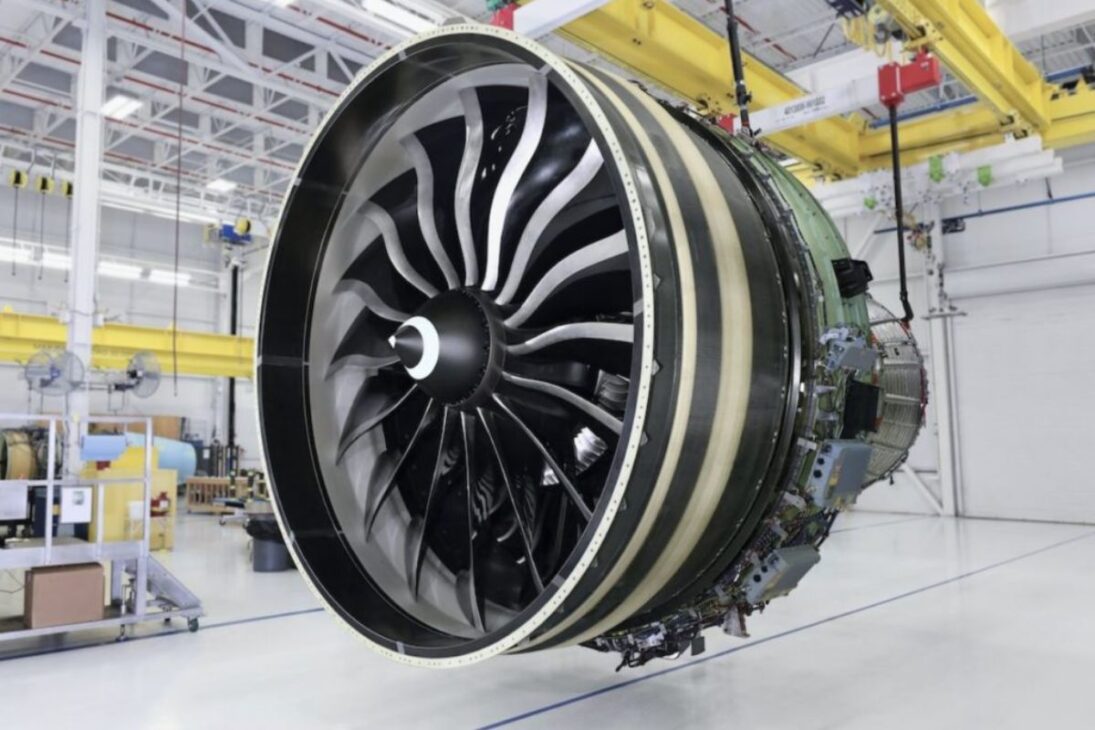
The largest twin-engine aircraft in the world is powered by the largest and most powerful commercial jet engines ever made: the General Electric GE9X. The size of the engine is hard to imagine: the diameter of its fan, at 3.4 meters, is larger than the fuselage of a Boeing 737.
During testing, the GE9X set a world record for thrust, reaching 134,300 pounds-force. However, in daily operation, its power is limited to 110,000 lbf. This practice increases the engine’s durability and reduces maintenance costs for airlines. Combined with the new wings, the GE9X makes the 777X about 10% more efficient than its predecessor.
A Turbulent Journey, the Long Wait for Certification
The development journey of the 777X was a perfect storm of problems. The aircraft, originally promised for 2020, faced a series of setbacks that tested Boeing’s limits. In 2019, a durability issue was found in the GE9X engine. In the same year, during a ground pressurization test, one of the cargo doors exploded.
The first flight only took place in January 2020. The biggest obstacle, however, came from the new regulatory landscape following the accidents involving the Boeing 737 MAX. The U.S. Federal Aviation Administration (FAA) and the European Union Aviation Safety Agency (EASA) began to adopt much stricter scrutiny, especially for an aircraft with so many innovations, which repeatedly delayed the schedule.
How the 777X Faces Its Rival, the Airbus A350-1000
The 777X was Boeing’s response to the threat of the Airbus A350. The competition between the two giants focuses on efficiency. Being lighter, the A350-1000 has a lower cost per trip. Boeing’s bet with the 777-9, which is heavier but carries more passengers (426 in two classes, compared to about 400 for the A350), is to have a lower cost per seat.
For passengers, the choice involves a dilemma. The A350-1000 generally offers wider seats in economy class. The 777-9, in turn, will have 29% larger windows positioned at a better height, ensuring a superior view for everyone on board.
The Status in 2025 and the Future of the Largest Twin-Engine Aircraft in the World


By mid-2025, the program finally seems to have gained traction. After resolving an issue with the links that attach the engine to the wing, test flights resumed in January 2025. The fleet of prototypes has already accumulated nearly 4,000 flight hours, and the aircraft with a complete passenger cabin has been reactivated, a sign that the program is moving into the final phases of certification.
Boeing reaffirms that the first delivery of the largest twin-engine aircraft in the world will take place in 2026 for the German airline Lufthansa. However, most of its robust backlog of more than 500 orders is concentrated among customers in the Middle East, such as Emirates. This reliance on a few customers will be crucial in determining whether the giant in the skies will become a lasting commercial success or an expensive reminder of the risks of innovation.








-

-

-

3 pessoas reagiram a isso.