





 Portuguese
  English
  Spanish
  4 min of reading
  9 comments


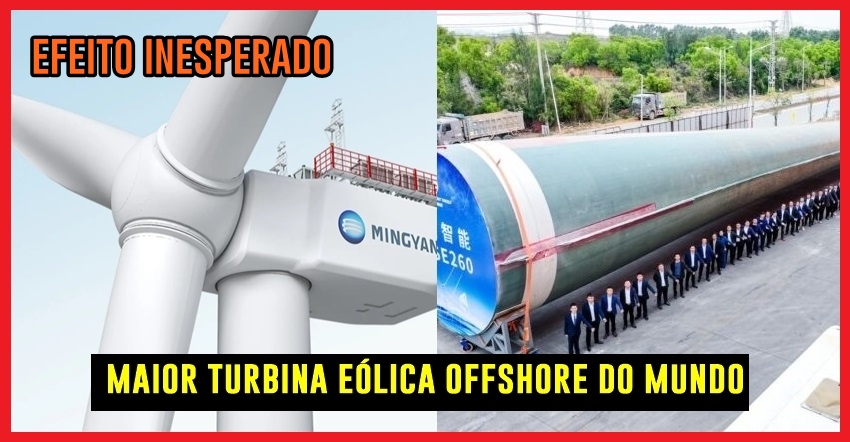

With 20 MW of Power, the Largest Offshore Wind Turbine in the World Is Exhibiting Mysterious Behavior. Understand What May Be Behind This Anomaly and How It Is Impacting Wind Energy on a Global Scale!
The largest wind turbine in the world, with an impressive 20 megawatts (MW) of power, has started to show peculiar behavior. Installed offshore, this machine is part of a growing trend in the energy sector: the search for clean and renewable sources.
However, the regulation of this type of technology needs to ensure that natural habitats are protected and that there is social involvement so that sustainability goals can be fully achieved. With the world undergoing an energy transition, offshore wind energy stands out as one of the most promising solutions.
The Importance of Offshore Wind Energy
Offshore wind energy projects are recognized as one of the best options for clean energy production in the current scenario. With the need to reduce greenhouse gas emissions and combat climate change, this alternative has proven to be highly efficient.
-
Urgent energy transition: Greenpeace advocates for massive investments and points to Brazil as a global leader in wind energy production in the coming years.
-
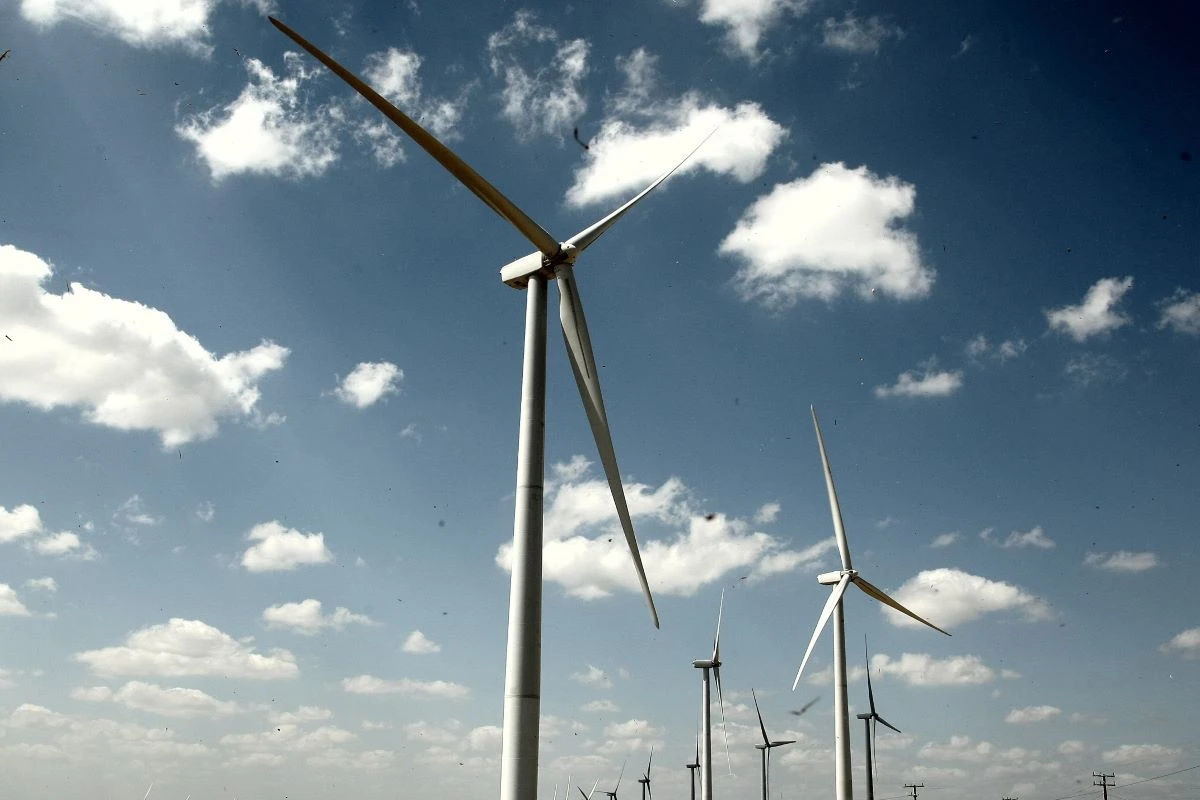
Conflict in the Sertão: Rural communities in Rio Grande do Norte report issues with wind farms and the new challenges of clean energy in the semi-arid region.
-
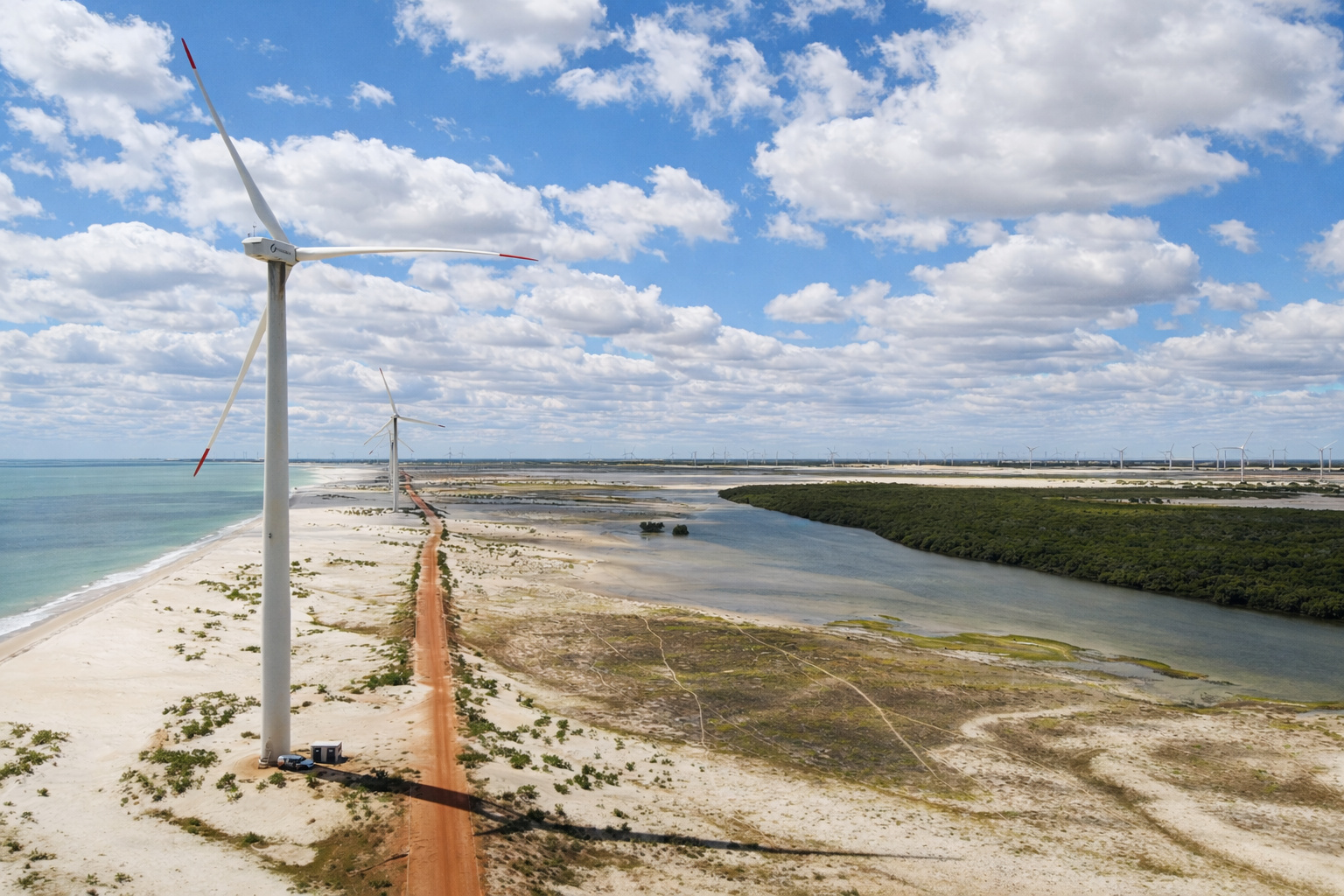
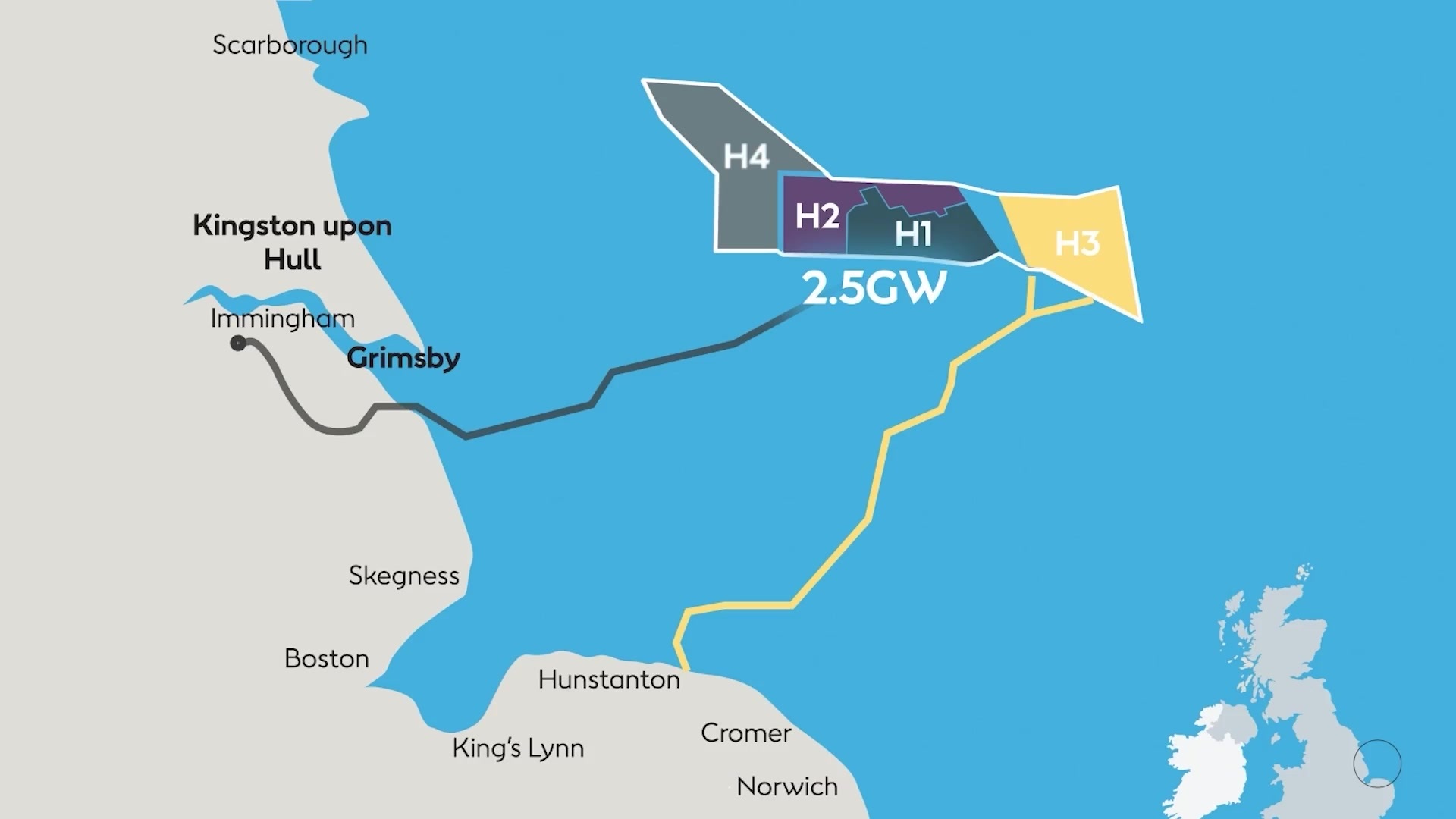
231 turbines of 260 meters at 160 km from the coast, monopiles weighing as much as nine blue whales embedded in the North Sea, and a crane ship taller than the Eiffel Tower: Hornsea 3 will be the largest offshore wind farm on the planet by 2027, and its first components have already arrived in England.
-
International Certification Puts Senai Norte on the Renewable Energy Map and Expands Access to Essential Training for Qualified Wind Power Professionals
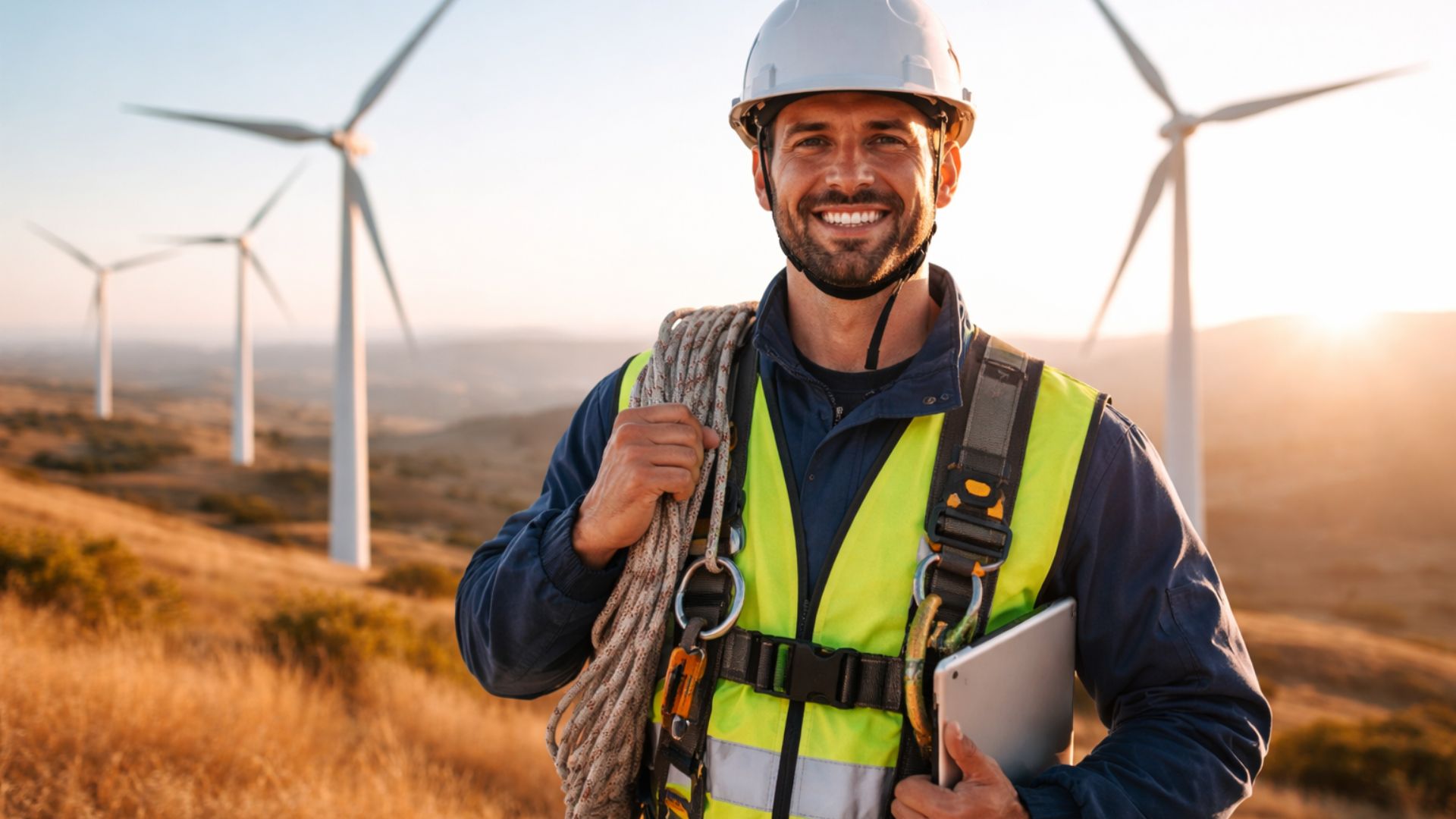

The basic principle of offshore wind energy is to harness the strong winds that occur at sea to generate electricity sustainably. This energy is produced by wind turbines that convert the kinetic energy of the winds into electricity.
In the process, the energy generated is initially in direct current and is converted to alternating current. Through a transformer, the voltage is increased for transportation to a substation. From there, electricity is distributed to meet the demand of homes and industries.
The production capacity of a turbine varies widely based on its size and the diameter of its blades, but modern turbines can generate significant amounts of energy, directly contributing to the decarbonization of the energy sector.
The Unexpected Behavior of the Largest Wind Turbine in the World
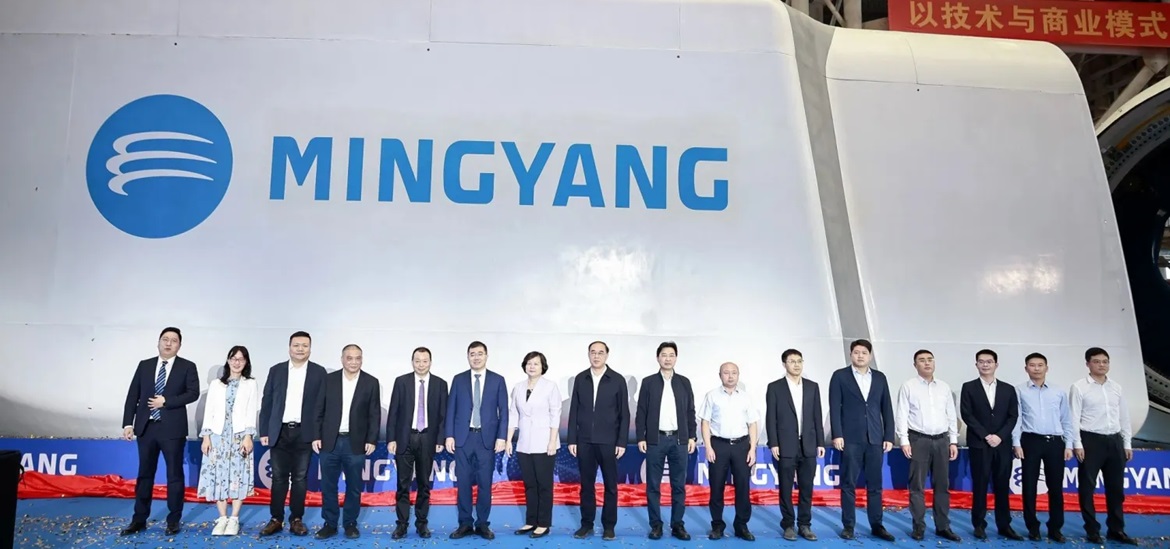
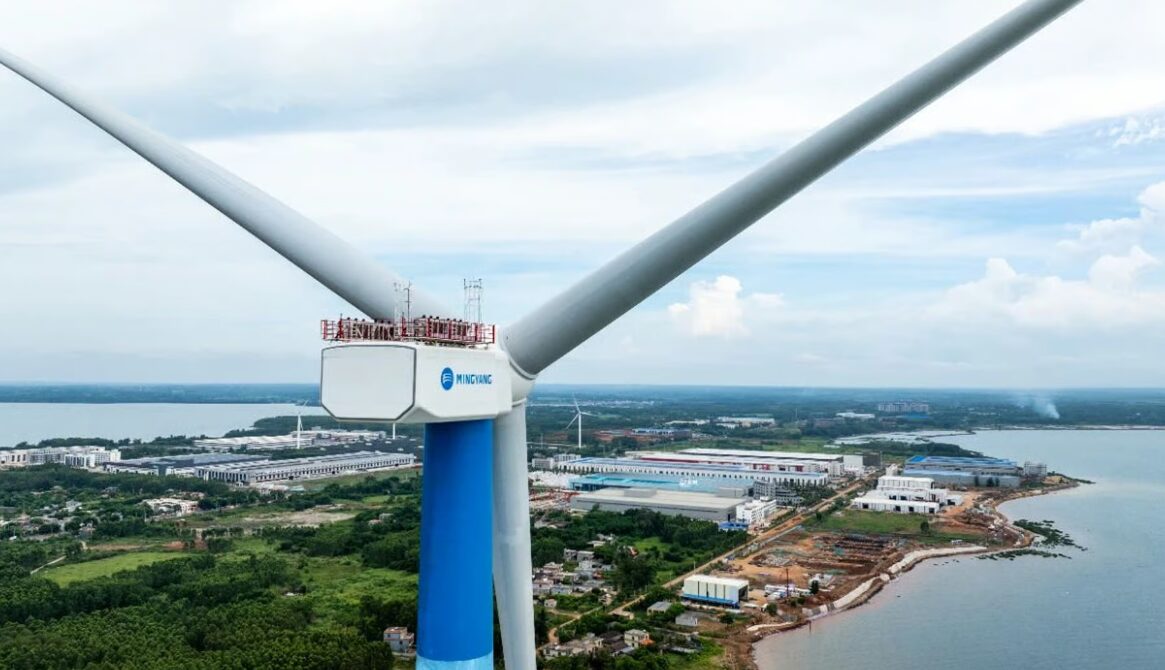
Mingyang Smart Energy, the company responsible for constructing the largest wind turbine in the world, recently announced the installation of the MySE18.X-20 MW in Hainan, China.
Despite advancements, the large size of the turbine has brought unexpected environmental impacts. Research indicates that turbines of this size alter the local microclimate and influence wind patterns, causing changes in wind speeds and temperatures in the area where they are installed.
To better understand the long-term effects of these changes, scientists are closely monitoring these variations.
The turbine is ideal for areas prone to typhoons and was designed to be used globally in regions with medium to high wind speeds.
This giant machine has a rotor diameter between 260 and 292 meters and a capacity to generate up to 20 MW. By way of comparison, this turbine can generate up to 80 million kilowatt-hours per year, which is enough to power nearly 100,000 people.
Additionally, its use can prevent the emission of approximately 66,000 tons of CO2, a considerable benefit for the environment.
However, in recent weeks, the energy sector has been closely observing the behavior of this turbine. Mingyang revealed that the offshore double turbine platform OceanX, which supports two 8 MW turbines, recently faced the impact of Super Typhoon Yagi.
The force of the typhoon, which reached winds of 245 km/h, tested the limits of the structure. Fortunately, the company reported that the turbines withstood the storm well, demonstrating the resilience of the design to extreme weather conditions, such as typhoons.
Technological Innovation and the Future of Offshore Wind Energy
The future of offshore wind energy seems increasingly connected to technological innovation. The MySE18.X-20 MW model was designed with a “modular and lightweight design,” making it easier to install and handle. Moreover, its operational flexibility allows the turbine to function at wind speeds ranging from 8.5 to 10 meters per second, ensuring high efficiency in different weather conditions.
Even more impressive is the anticipation surrounding a new model that Mingyang is developing: the MySE 22MW. With a rotor diameter of 310 meters, this 22 MW turbine is being designed for areas with even more intense winds, indicating that the potential for energy generation may grow considerably in the coming years. Experts point out that floating wind turbine technology may also gain prominence, as it allows for the installation of turbines in sea areas where depth prevents anchoring to the ocean floor.
Final Considerations
The largest wind turbine in the world, developed by Mingyang, marks a significant advancement for the clean energy sector. While its performance under extreme weather conditions is being monitored, offshore wind energy technology continues to gain relevance. Its positive environmental impact, along with the growing demand for renewable alternatives, solidifies its position as a key piece in the global energy transition.
However, the implementation of offshore projects requires heightened care for the environment and local communities. The balance between innovation and sustainability will be crucial for the future of the energy sector, and the largest wind turbine in the world serves as a clear example of how technological advancement can be harnessed to face the climate challenges of our time.






Blá blá blá blá blá blá blá blá blá… isso porquê o cara é especialista…
Ótima Reportagem
Novidades com Responsabilidade
PARABÉNS pelo Conteúdo….
Qual é mesmo o comportamento a que se refere o título?