






 Portuguese


ArcelorMittal Expands Production at Tubarão with Technology for Higher Value-Added Steels, 3,000 Jobs During Construction, and Operations Expected by 2030.
According to an article published on August 28, 2026, by G1, ArcelorMittal has approved an expansion project at its Tubarão facility in Serra, part of the Greater Vitória area, with an estimated value between R$ 4 billion and R$ 5 billion. The initiative includes a new cold strip mill and a continuous coating line to manufacture higher value-added products.
Construction is expected to begin in 2026 and last approximately three and a half years. At the peak of construction, around 3,000 jobs are anticipated. In operation, approximately 450 professionals will be involved in the new structure, with the start scheduled for the first half of 2030.
The new coating line will have a capacity of 560,000 tons per year. The process will utilize hot coils already produced at the facility, thereby enhancing the level of industrial transformation occurring in Espírito Santo.
-
Senate Approves US$ 1 Billion Loan from the World Bank to Fund Tax, Environmental, and Social Reforms and Sends Operation for Promulgation

-
New Pension Reform Proposal Suggests Retirement Age of 67 for Men and Women, Fully Integrates Workers Up to 24 into New System, Creates Transition for Ages 25 to 49, and Preserves Current Calculation for Those 50 and Older

-
MDIC Opens Request for Up to 12-Month Extension in Drawback for Exporters Affected by U.S. Tariffs and Defines Eligibility
-
Mass Layoff: Uber Announces Cut of 3,300 Employees in Largest Reduction Since Pandemic


ArcelorMittal Tubarão Advances in Higher Value-Added Products
The expansion at ArcelorMittal Tubarão increases the processing stages performed within the facility. The project combines cold rolling and continuous coating, allowing the transformation of hot coils into materials with specific characteristics.
The cold rolled and coated products will feature higher corrosion resistance and a differentiated finish. According to the company, they will primarily be aimed at strategic sectors:
- automotive industry;
- construction;
- white goods, household appliances segment.
The strategy aims to diversify the portfolio and advance downstream processes, bringing production closer to industrial customer needs.
The new cold strip mill will provide an additional processing stage for the coils produced in Tubarão. This allows for the creation of cold rolled products prior to any potential metallic coating.


The next stage adds surface protection to the steel. The result is a material more suited for applications where resistance to corrosion and finish are essential.
Thus, the new rolling mill represents not just a physical expansion. It adds processing capability and enhances the level of value-added products manufactured locally.
R$ 5 Billion Investment Could Boost the Capixaba Economy
While the official range is R$ 4 billion to R$ 5 billion, the R$ 5 billion investment corresponds to the upper limit announced for the venture. This value helps to gauge the magnitude of the proposed industrial expansion in Serra.
During approximately three and a half years of construction, the project will involve building, assembly, engineering, transportation, equipment, and specialized services.
The estimated 3,000 jobs at peak highlights the expected impact on the labor market. In the operation phase, the company projects approximately 450 professionals.
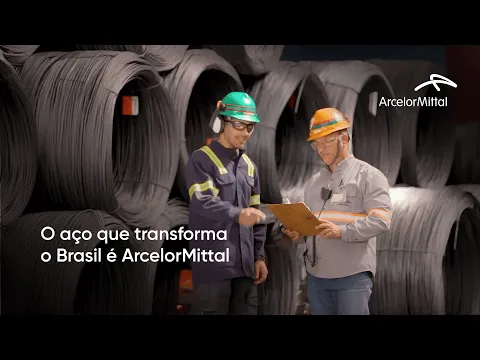
Jobs in Espírito Santo could arise both from activities directly related to the construction and from contracted services to support the implementation. Among the potentially involved areas are:
- industrial construction and assembly;
- engineering and project management;
- maintenance and technical services;
- logistics and equipment supply.
ArcelorMittal officially announced estimates of 3,000 jobs at the peak of construction and 450 professionals for operations. The announcement does not provide a consolidated number for indirect jobs. Therefore, the jobs in Espírito Santo announced by the company should not be confused with the total forecast for direct and indirect positions.
Steel Industry Gains More Processing in Brazil
The project is significant for the steel industry as it adds transformation steps to a raw material already produced at the Tubarão facility. The strategy concentrates a larger portion of the necessary supply chain in Tubarão to meet consumer market demands.
The steel industry operates at various levels of processing. In this case, the integration of hot coils, cold strip mill operations, and continuous coating expands the offerings of materials with more advanced specifications.
Another datum presented by the company helps explain its focus on the domestic market. Brazil’s per capita steel consumption is estimated at 122.5 kg per year, while the global average is 209 kg. According to the company, the gap is 41%.
These figures indicate that per capita consumption in Brazil remains below the global average. However, demand growth will depend on the performance of sectors such as construction, automotive, and consumer goods.
The selected markets for the new products require different properties from the material. In the automotive sector, for example, finish and corrosion resistance may be critical for certain applications.
In construction and the white goods segment, coated steels also have various uses. Diversification allows for expanded commercial opportunities and reduces dependence on a single demand front. For the steel industry, expansion represents a bet on processing and added value, rather than merely increasing volume.
ArcelorMittal Tubarão Strengthens Espírito Santo’s Industrial Position
The location of the facility also plays a role in the strategy. ArcelorMittal Tubarão is situated in Serra, in the metropolitan region of Vitória, and has a structure dedicated to the production of flat steels.
The addition of new stages can enhance the integration of the facility with suppliers, service providers, and consuming companies. The anticipated economic effect, therefore, extends beyond the factory’s physical area.
The president of ArcelorMittal Brazil and CEO of ArcelorMittal Flat Steel LATAM, Jorge Oliveira, linked the project to the generation of opportunities, attraction of businesses, and strengthening of the value chain.
R$ 5 Billion Investment Expands Commitment to the National Market
The R$ 5 billion investment is also tied to the company’s diversification strategy. The aim is to utilize coils already manufactured in Tubarão and add processing stages before the product reaches the customer.
This model increases industrial integration and can enhance the domestic supply of products with specific characteristics. For the company, the strategy represents a way to operate in higher value-added segments.
The schedule foresees construction starting in 2026 and operations in the first half of 2030. As this is a projection, the dates depend on the progress of the implementation phases.
What the project may leave for Espírito Santo
The most immediate impacts are expected during construction, when up to 3,000 jobs are projected. Afterwards, operations are expected to maintain approximately 450 professionals, creating a permanent demand associated with the new structure.
Jobs in Espírito Santo may also stimulate suppliers and services during implementation, although the company has not provided an official estimate for this indirect effect.
ArcelorMittal Tubarão is expected to increase its processing of products destined for the automotive industry, construction, and the white goods, household appliances segment. The coating capacity of 560,000 annual tons is one of the main indicators of the project’s industrial scale.
The final approval transforms the expansion proposal into a project with a defined timeline. The new cold strip mill and coating line are expected to add technology and processing to the existing structure, focusing on higher value products.
For Espírito Santo, the project brings together investment, job creation, and the potential strengthening of the supplier chain. For the company, it represents a bet on diversification and the Brazilian market.
The investment of R$ 5 billion (about US$ 1 billion), the annual capacity of 560,000 tons, and the expected operations in 2030 summarize the project’s scale. The steel industry gains a new line of higher value-added production, while ArcelorMittal Tubarão reinforces its role in the local steelmaking chain.


