








Recognized in June 2026 as the world’s oldest sibling trio, Zulina, Zoraide, and Levita live in Rio de Janeiro and have become part of a USP study that seeks protective genes linked to longevity, without ignoring routine, diet, and family support in the lives of the three Brazilian sisters.
The Brazilian sisters Zulina de Deus Nunes, aged 103, Zoraide de Deus Mota, aged 104, and Levita de Deus Nunes, aged 109, caught international attention after being recognized in June 2026 by the Guinness World Records as the world’s oldest sibling trio. Together, they total 316 years of life.
The case, recorded in Rio de Janeiro, gained even more relevance because the three began to be monitored by researchers interested in understanding why some people reach such advanced ages while maintaining physical and cognitive resilience. The report was published by Reuters and reproduced by NDTV on June 25, 2026.
Trio recognized by Guinness became a rare case of family longevity
The recognition of the Brazilian sisters was made within a category related to living siblings with an exceptional combined age. According to the report, they were identified through LongeviQuest, a global organization that verifies longevity records and works in partnership with the Guinness World Records.
-
14-Year-Old Australian Entrepreneur Goes Viral After Y Combinator Rejection, Runs Two Startups Including an AI Company After Sock Business Failure

-
100-Year-Old Brazilian Sets World Record by Swimming 50 Meters in 1 Minute and 9 Seconds, Inspired by Tarzan Films
-
Brazil Introduces New Digital ID with Home Delivery, Linked to Unique Tax Number, Amidst Nationwide Notification Campaign.
-
World’s Stinkiest Flower: At 111 cm Wide and Up to 11 kg, It Emits a Rotten Meat Odor and Remains Hidden for Years.


The source states that the trio was named in June 2026, but does not detail the exact day of the homologation. Still, the central fact is clear: three women from the same family, all centenarians, live in Rio de Janeiro and form an unusual case even for researchers accustomed to studying extreme aging.
USP project investigates if DNA can explain part of this resilience
The scientific interest around the Brazilian sisters is linked to the Long-Lived DNA Project, a study led by scientist Mayana Zatz from the University of São Paulo. The proposal is to investigate biological factors that may help explain why some people live past 100 years with more physical and mental preservation.
According to the report, researchers are seeking protective genes associated with longevity. The idea is not to turn the case into a simple formula for living longer but to compare centenarians and nonagenarians with people who have shown frailty, cognitive decline, or chronic diseases, trying to identify relevant differences.
Scientists look at genetics, but do not ignore routine and environment
The case of the Brazilian sisters draws attention because it involves three people from the same family reaching ages well above average. For researchers cited in the report, this suggests that hereditary factors may play an important role in preserving health at advanced ages.
At the same time, the text does not reduce the story to just DNA. The three sisters live close to each other and have a supportive family network. This community element also appears as part of the context, as care, companionship, and daily support can influence the quality of life of very elderly people.
Who are Zulina, Zoraide, and Levita
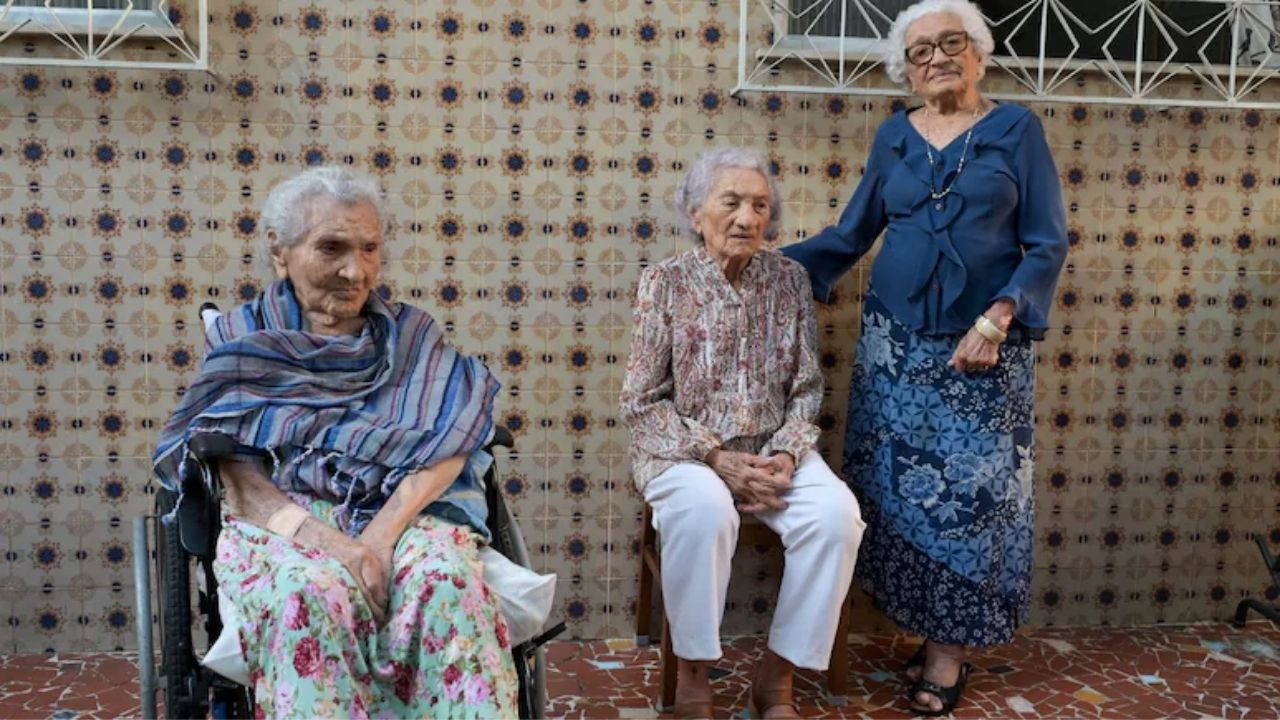
Zulina de Deus Nunes is 103 years old, Zoraide de Deus Mota is 104, and Levita de Deus Nunes has reached 109 years. The report states that they all live in Rio de Janeiro and have had common trajectories, without their lives being marked by any special treatment or extraordinary condition recorded by the source.
Levita worked as a craftswoman and later in a television network. Zoraide worked as a nurse and raised five children. Zulina, a housewife, raised six. This combination of family life, work, and common routine makes the case even more interesting for those studying healthy aging.
Diet, movement, and simple childhood appear in memories
The Brazilian sisters attribute part of their longevity to a healthy diet and an active lifestyle. Zulina recalled her childhood in contact with rivers, fishing, and fresh foods, at a time when the routine was simpler and less dependent on industrialized products.
Zoraide also highlighted the importance of breastfeeding, according to the report. Still, it is important to treat these memories as personal accounts, not as isolated scientific proof. The USP study aims to precisely separate what may be genetic influence, what may be life routine, and what may be the result of a combination of various factors.
The goal of the study is to expand the comparison with hundreds of centenarians
The Longevity DNA Project does not intend to draw conclusions solely from the three sisters. According to João Paulo Guilherme, a researcher working with Mayana Zatz, the goal is to reach 500 centenarians to allow more consistent analyses on longevity.
This expansion is essential because rare family cases help raise hypotheses but are not enough to prove a general rule. The larger the number of participants evaluated, the greater the chance of identifying genetic patterns truly linked to the protection of the heart, muscles, and cognitive function.
What this case can teach about aging better
The story of the Brazilian sisters sparks curiosity because it touches on a universal question: why do some people age with more resilience than others? Science does not yet have a single answer, and the report itself makes it clear that researchers are investigating combined factors.
The case also shows that longevity should not be treated as a simple promise. DNA, diet, physical activity, family support, access to care, and life trajectory can work together. Therefore, the importance of the sisters lies less in offering a ready-made recipe and more in opening a rare window for research.
A Brazilian record that became a scientific clue
Upon entering the Guinness, Zulina, Zoraide, and Levita became more than just an impressive family story. The three began to represent a case of scientific interest, capable of helping researchers better understand how some people live over a century with resilience.
The Brazilian sisters do not hold, alone, the definitive answer to the secret of longevity. But their combined 316 years offer a rare clue for science to investigate.
Do you believe that living more than 100 years depends more on genetics, habits, or family support? Leave your opinion in the comments.


