





 Portuguese
  English
  Spanish
  5 min of reading
  0 comments


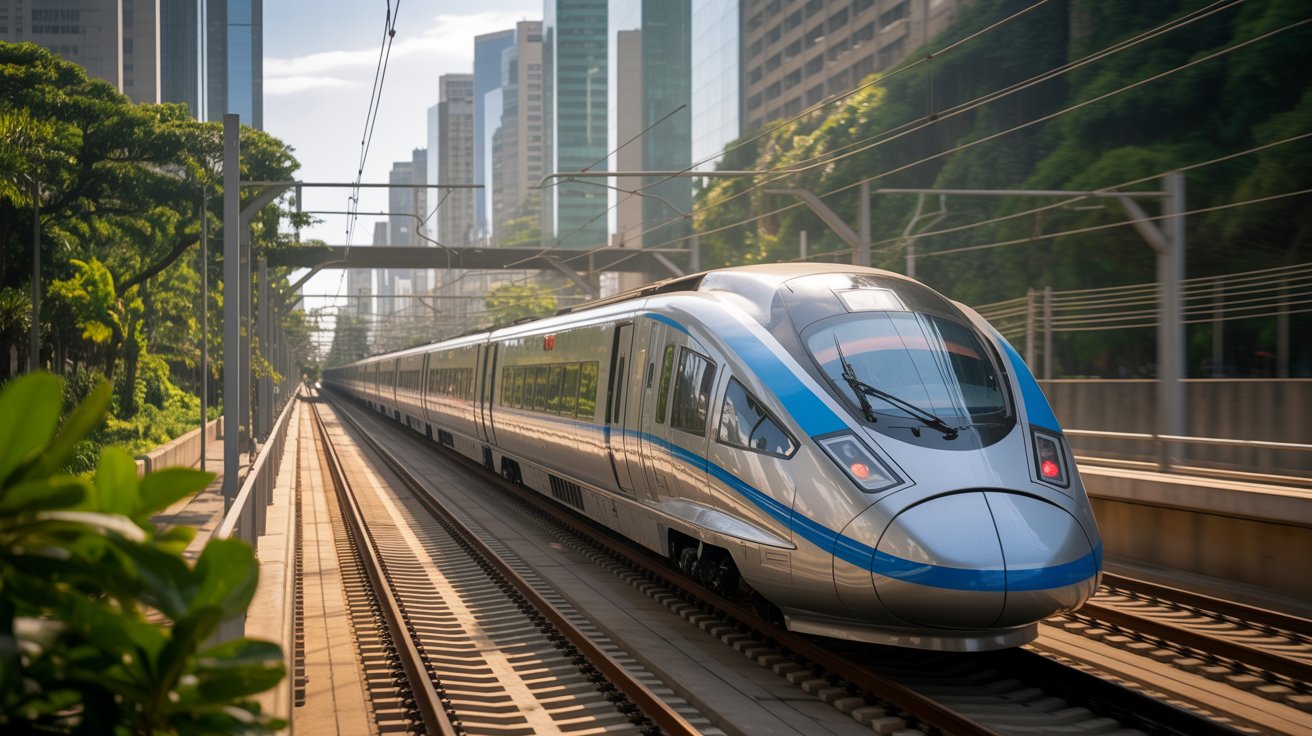


New High-Speed Route Promises to Significantly Reduce Travel Time, but Also Opens Doors to a More Sustainable Future, with Benefits for Tourism, the Economy, and the Environment Along the Route.
Traveling by train in Europe has become an increasingly attractive experience, especially with the growth of the high-speed rail network.
Among the most anticipated destinations is the connection between Madrid, Spain, and Lisbon, Portugal, which promises to transform the way Europeans travel.
The ultra-fast train project aims not only to speed up travel time between these two major capitals but also to offer a more sustainable and accessible transportation option.
-
Goodbye iron: new technology from Xiaomi promises to revolutionize the way we iron clothes with 500 kPa steam, continuous flow of 120 g/min, heating in 65 seconds, and six smart modes for different fabrics.

-
Rio Pardo, the most mysterious city in Rio Grande do Sul: untouched Pampas castle, the missing treasure of the Devil Boy, bride’s saint, invisible tunnels, and a 200-year curse today.

-
China retires the J-7 fighter after years of military protection and can now transform military items into drones, following more than 60 years of operation of the J-7, derived from the MiG-21, with thousands of units produced and strategic use in the PLAAF and PLANAF.

-
Volunteers are sought to live in the mountains for a month: a study pays people to stay at 2,500 meters, with 24-hour monitoring of sleep, metabolism, and blood pressure.

By 2030, the goal is for the journey between the two cities to take less than three hours, a true revolution in Iberian rail transport.
Currently, the journey between Madrid and Lisbon is lengthy, requiring multiple train changes.
The trip takes, on average, over 10 hours, with stops and the need to switch trains in places like Badajoz.
The goal of the new project is to drastically reduce this time, providing passengers with a more comfortable and faster journey.
Environmental and Economic Impacts of the New Route
The construction of the new high-speed system goes far beyond a simple improvement in travel time.
The project also aligns with a series of environmental and economic objectives.
The reduction of carbon emissions is one of the project’s pillars, which aims to encourage the use of rail transport over more polluting options, such as cars and airplanes.
With faster and more efficient trains, it is expected that the use of rail transportation will increase, resulting in lower CO₂ emissions into the atmosphere.
Moreover, the new system promises to significantly boost tourism between the two capitals, benefiting the local economy.
The ease of travel between Madrid and Lisbon may open new opportunities for regional tourism, allowing more people to discover the various cities along the route.
With greater connectivity between the regions, the flow of tourists is expected to increase, benefiting not only major urban centers but also smaller cities.
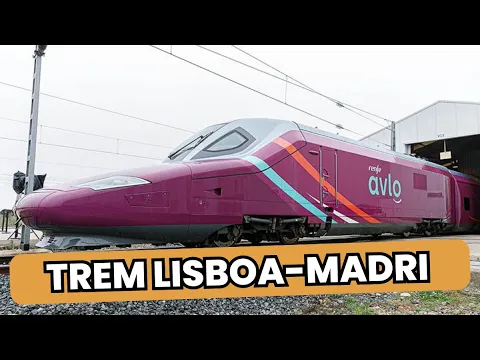

First Steps: The Inauguration of the Section Between Elvas and Évora
In 2025, a major step will be taken towards completing the project.
The section between Elvas, Spain, and Évora, Portugal, will be inaugurated, providing a reduction of over 90 minutes in travel time between Lisbon and Badajoz.
This will allow the journey between the two cities to be reduced to less than two hours, a significant change that will further facilitate movement between the two countries.
This initial section is part of a larger strategy for the gradual implementation of the high-speed train system.
It is anticipated that by 2027, the travel time between Madrid and Lisbon will be reduced to about six hours, with a strategic stop in Badajoz.
This will mark the official entry of the high-speed system on the line between the two capitals.
The major challenge will be to ensure integration between the rail systems of Spain and Portugal, with technical adjustments at various infrastructure points.
The Role of Renfe and the Investment Needed
Renfe, the public company responsible for rail services in Spain, will be primarily responsible for implementing the new system.
Renfe already has extensive experience with high-speed trains, including the famous AVE line, which connects Madrid to other important Spanish cities such as Seville and Barcelona.
The investment in the project is significant, estimated at around 15 million euros.
This amount will be allocated to essential improvements, such as the adaptation of signaling systems and the technical compatibility between the electrical systems of both countries.
The high-speed system will require adjustments to the existing infrastructure, including updates to the rail lines and the installation of new trains designed to withstand high speeds.
To ensure that the trains can operate efficiently, Renfe will partner with engineering and technology companies, seeking innovative solutions that enable safe and rapid operation.
Additionally, the project will also impact other areas, such as the creation of new jobs, both in construction and in the operation of the trains.
Expansion of the High-Speed Network in Europe
The ultra-fast train project between Madrid and Lisbon is not an isolated case.
Several other high-speed projects are underway or planned in Europe, aiming to further integrate the continent and facilitate travel between major cities.
The European Union has encouraged these projects as part of a sustainable mobility strategy that seeks to reduce car use and increase the utilization of rail transport.
In countries like France, Germany, and Italy, high-speed networks are already a consolidated reality.
France, for example, has an extensive network of TGV trains that connect its major cities at impressive speeds, and Germany follows the same path with its ICE (InterCity Express) system.
The implementation of high-speed systems in neighboring countries, such as Portugal and Spain, will help create a more integrated rail network, reducing distances and improving the competitiveness of rail transport in relation to other modes of transport, such as air travel.
The expectation is that, with the completion of projects like Madrid and Lisbon, the number of passengers opting for high-speed trains will increase significantly.
This will not only contribute to the economic development of the regions involved but will also help make rail transport a more attractive and sustainable alternative.
Challenges to be Overcome
Despite the progress on the project, there are still some challenges to be addressed.
The integration between the rail systems of Portugal and Spain will be one of the biggest obstacles, since the two countries have different electrical and signaling standards.
This adaptation process requires significant investment and time to ensure trains can operate efficiently and safely.
Additionally, the construction of new rail lines and the modernization of existing ones will require collaboration between various government entities and private companies.
The licensing and approval process for new sections may also face local resistance, especially in areas that are more sensitive from an environmental perspective or have a strong presence of rural communities.
The Future of Rail Transport in Europe
With the advancement of high-speed projects, the future of rail transport in Europe seems increasingly promising.
Not only will travel time be reduced, but sustainability will be one of the major beneficiaries, with a decrease in carbon emissions.
In the long term, the integration of European rail networks could create a more efficient, faster, and greener transportation system, allowing people to travel across the continent with much greater ease and comfort.
In a world increasingly concerned with environmental issues, rail transport stands out as a more sustainable alternative, aligning efficiency with environmental respect.
What do you think about this new high-speed initiative between Madrid and Lisbon?
Do you believe that projects like this could be the key to modernizing transport in Europe? Share your opinion in the comments!







O turismo ferroviário no Brasil, hoje, não é valorizado, porque esse sistema de transporte ficou fragmentado. Muitas ferrovias foram abandonadas, com muitas estações de embarques desativadas, para favorecer o transporte de cargas, com rotas mais lucrativas, depois da Privatização. Também, as concessões ferroviarias, foram insuficientes para continuar mantendo todo esse sistema integrado. E, muita gente, prefere o transporte rodoviário,por achar muito lento o trem de passageiros.