





 Portuguese
  English
  Spanish
  4 min of reading
  3 comments


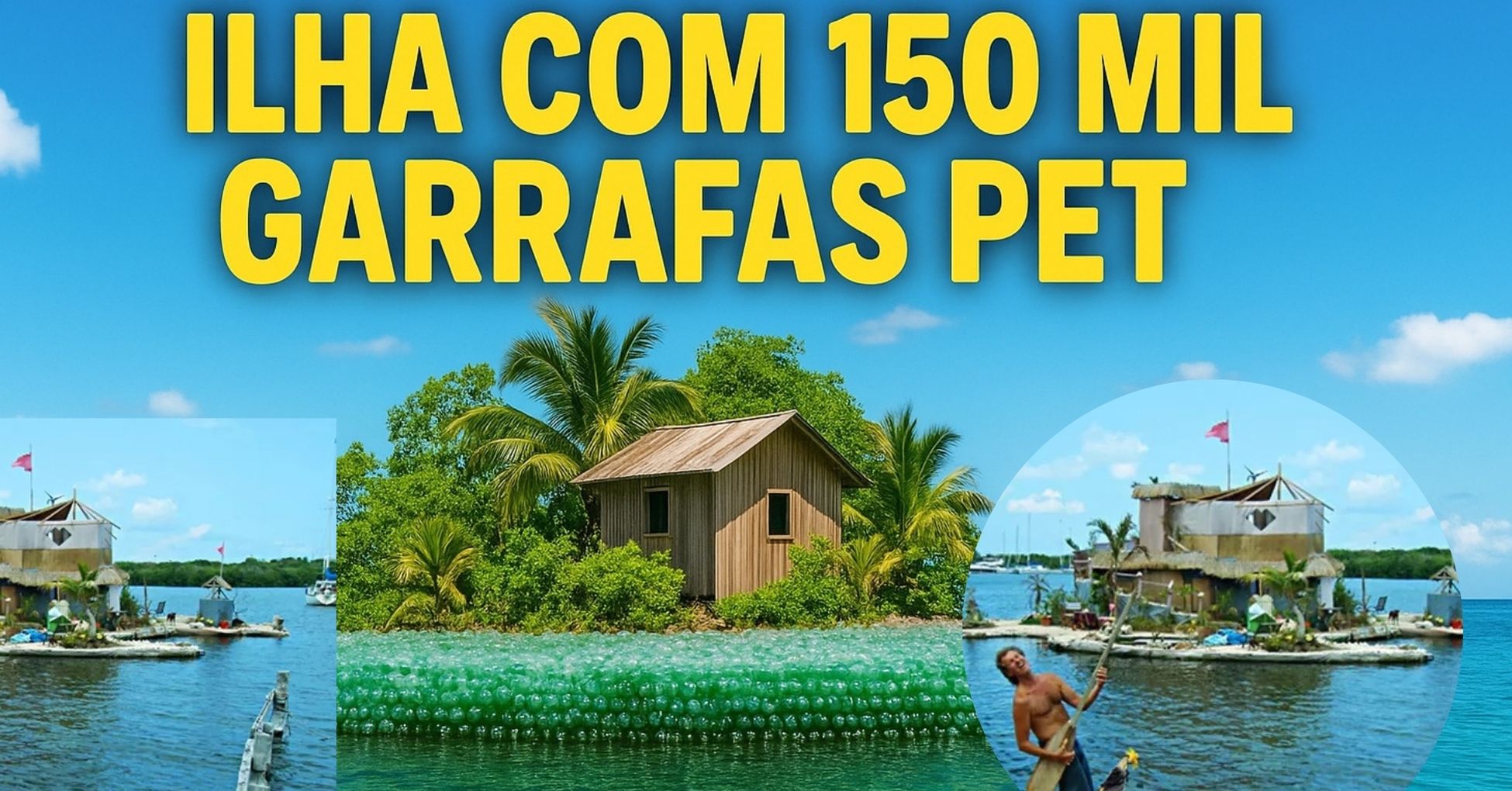


Man Built His Own Island With 150,000 PET Bottles in the Caribbean and Lived on It for Years, Creating a Unique Model of Sustainability in the World.
When we talk about sustainability, we usually think of large government projects or million-dollar corporate initiatives. But in the Mexican Caribbean, one man proved that it is possible to turn trash into life: Richart Sowa, a British artist based in Mexico, single-handedly built an artificial island using 150,000 PET bottles.
More than just a floating shelter, his creation became a global symbol of recycling and innovation, attracting tourists, journalists, and environmental experts. What seemed impossible — creating solid ground on the ocean from waste — turned into a pioneering model of eco-living.
How the Island of 150,000 PET Bottles Was Born
The idea emerged in the 1990s when Sowa pondered the problem of plastic waste invading oceans and beaches. He believed he could give a new purpose to discarded material by transforming bottles into flotation blocks.
-
These are the drivers who may stop paying tolls on highways in a project that promises to reduce costs for those who live from transportation in Brazil.

-
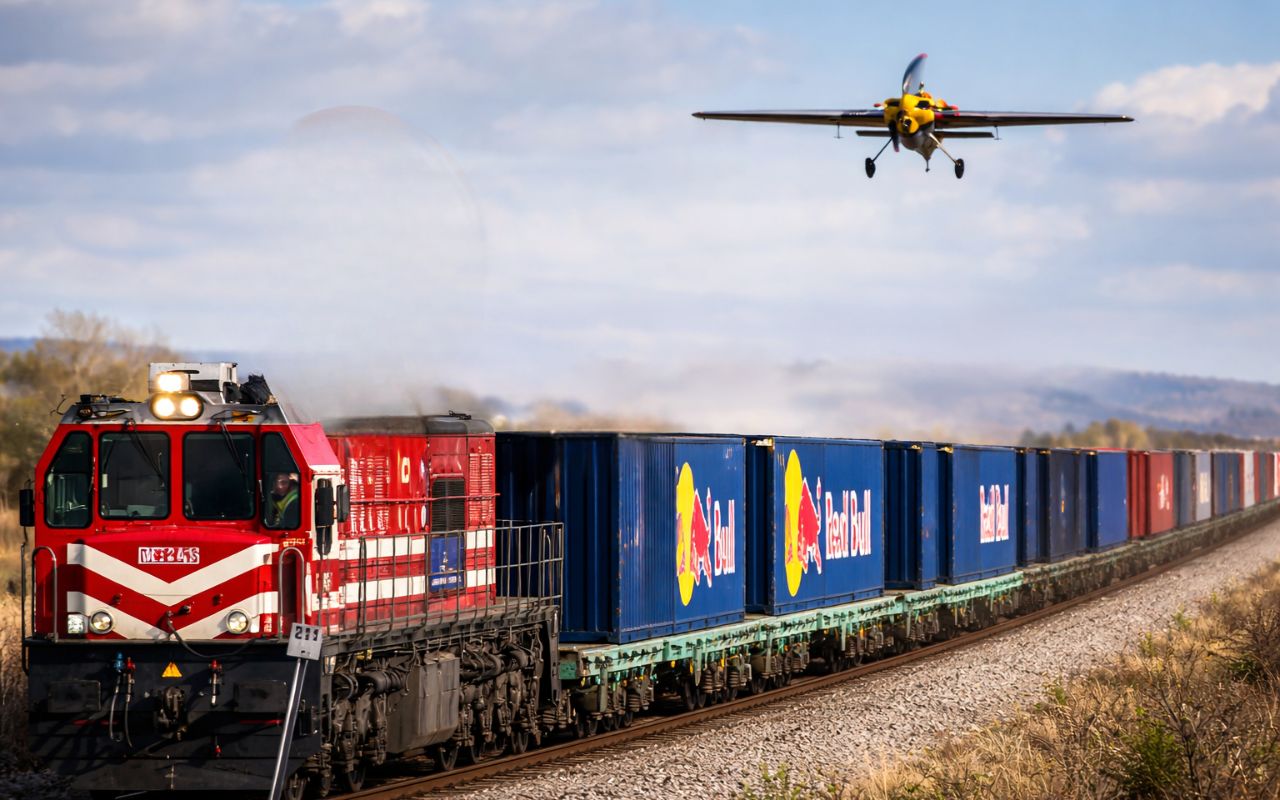
(Video): Italian pilot lands plane on moving train at 120 km/h and achieves unprecedented feat in aviation, even with a narrow runway and without direct visual contact.
-
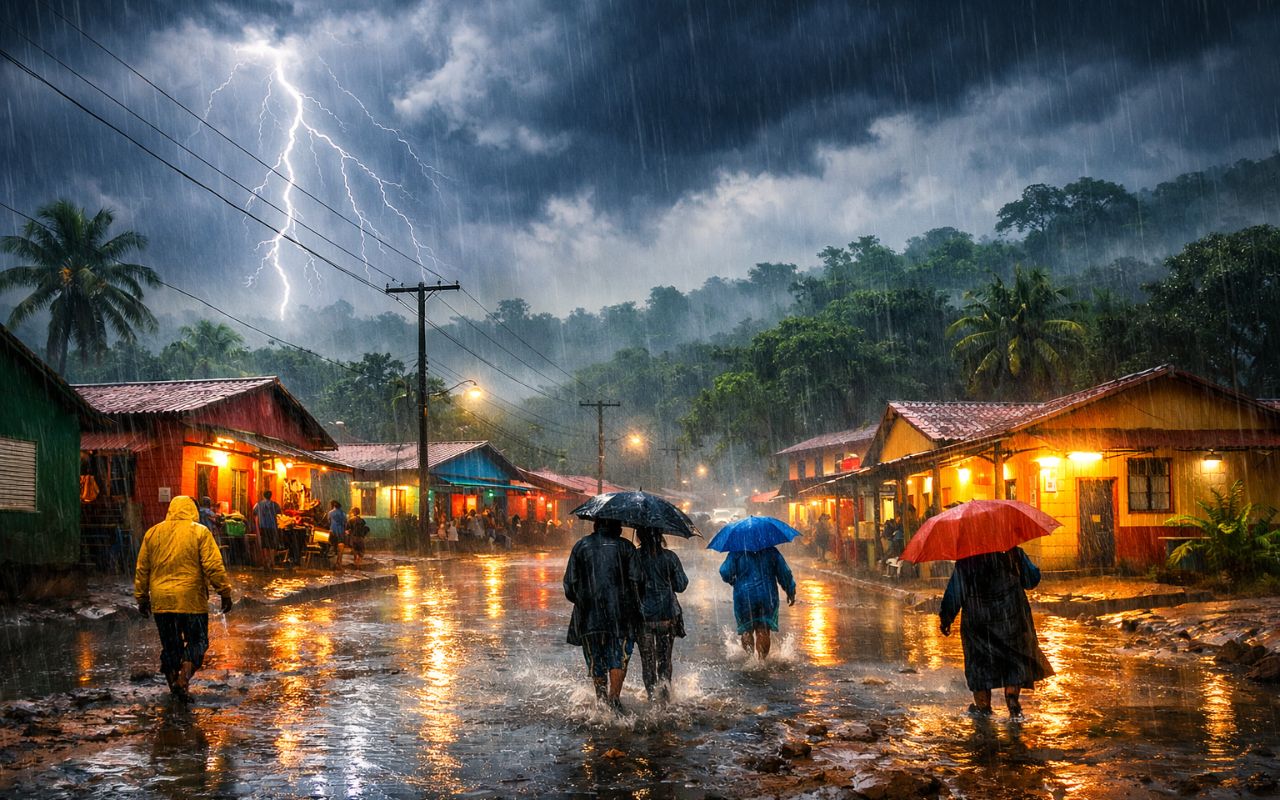
It seems to have come out of a science fiction movie: A Brazilian city where it rains almost every day, recording over 4,000 mm per year, driven by climatic factors — a direct result of its strategic location in the Amazon.
-
The water crisis that could change everything this year has already begun; it’s not just about the climate, it affects technology, raises product prices, and can halt entire companies without warning.

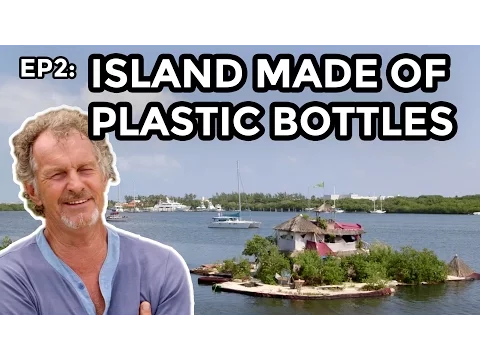

His first attempt, called Spiral Island, was built in 1998 but was destroyed by a hurricane in 2005. Undeterred, he began working on a second version, even larger and more resilient: Spiral Island II, anchored near Isla Mujeres, Mexico.
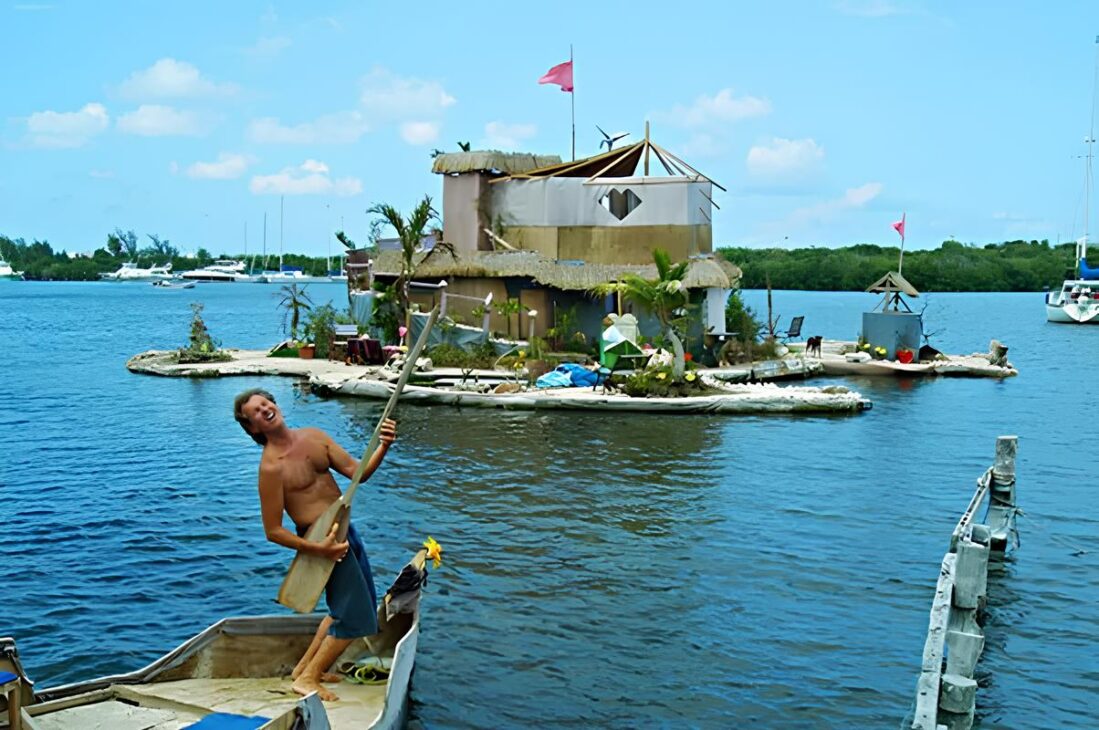
This new island featured about 1,000 m² of floating area, entirely supported by PET bottles arranged in nets and boxes. On this foundation, he constructed a two-story house, an artificial lake, a garden with fruit trees, and even solar power systems.
Structure and Operation of the Floating Island
The secret of the island was its floating base, made up of 150,000 compacted plastic bottles. The bottles, secured in nets, were surrounded by layers of wood, sand, and vegetation, creating stability.
Main features of the island:
- Total Area: approximately 1,000 m².
- Base: 150,000 repurposed PET bottles.
- Residence: a wooden house with two stories, including a bedroom, kitchen, and balcony.
- Energy: solar panels provided basic electricity.
- Sustainability: dry toilets, an artificial lake, and an organic garden with fruits and vegetables.
- Ecology: trees and plants attracted seabirds and insects, creating a living habitat in the open sea.
It was, in essence, a self-sufficient island, made from waste that could have been polluting the oceans.
A Unique Model of Sustainability in the World
Sowa’s project gained attention because it combined concepts of recycling, bioconstruction, and energy autonomy on an individual scale.
While governments debate solutions to the plastic problem, one man demonstrated in practice that it is possible to convert tons of waste into a livable, fertile, and functional space.
This model, though eccentric, has been studied by environmentalists as an example of scalable micro-solutions. In theory, similar projects could be implemented to house communities in coastal areas affected by rising sea levels or to create sustainable habitats in regions lacking urban space.
The Public Fascination and Culture Surrounding the Island
The island quickly became a tourist attraction in Isla Mujeres. Visitors from all over the world went there to see the work and talk to Sowa, who welcomed tourists proudly and explained the technical details of his creation.
The story was featured in newspapers, magazines, and television programs. Documentaries and international reports reinforced the myth of “the man who made his own island out of trash.”
Moreover, artists and musicians found inspiration in the project, which became a symbol of creative and environmental resistance.
Between Hurricanes and Rebuilds: The Challenge of Keeping the Island Alive
The Caribbean Sea is not calm. Hurricanes and storms have destroyed previous versions of the island. Each time this happened, Sowa started over.
This resilience impressed as much as the construction itself. For him, more important than having a fixed place was proving that the concept worked.
His philosophy was clear: if the world discards billions of PET bottles every year, why not transform them into something useful and sustainable?
The story of Sowa’s island directly speaks to important themes such as plastic recycling, eco-villages, creative sustainability, alternative housing, and environmental innovation.
Comparisons With Other Individual Achievements
Sowa’s achievement is often compared to other stories of individual perseverance:
- The Coral Castle (USA), built alone by Edward Leedskalnin with 1,100 tons of stone.
- The Ideal Palace (France), erected by a mailman over 33 years of solitary work.
- The Cathedral of Justo Gallego (Spain), constructed by a single man over six decades.
These cases share something in common: they show how individual determination can create monuments that seem impossible.
Richart Sowa’s island is not just an eccentric experiment but a cultural and environmental legacy. It shows that solutions to the plastic waste problem do not have to come only from large corporations or state policies — they can arise from the creativity and perseverance of a single person.
Today, his story circulates the world as a symbol of innovation. And while tons of plastic continue to be dumped into the oceans, the lesson left by Sowa remains clear: perhaps we are surrounded by solutions that just need a different perspective to flourish.




E afinal, o que aconteceu com Sowa ? O texto se refere a ele no passado, ele faleceu ou abandonou o projeto?
Falam e não continuam?
estava me fazendo esta mesma indagação… a matéria toda é referida a ele no passado…