Portuguese


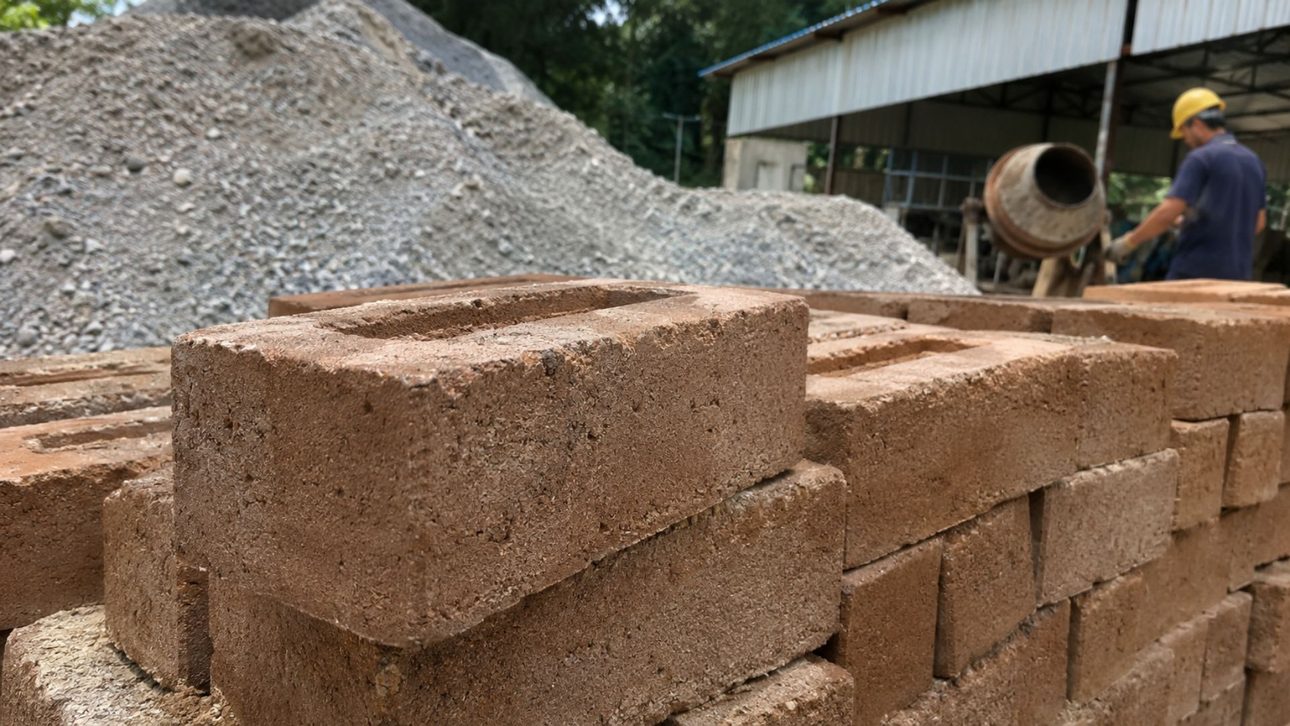

The study used three types of mineral waste, tested different proportions and compared the costs of one square meter of masonry. The economic analysis found an approximately 15% difference between construction systems, without attributing the reduction solely to the use of discarded material.
Experimental bricks made with tailings from quartzite mining in Alpinópolis, in southwestern Minas Gerais, showed compressive strength and water absorption results consistent with the technical requirements considered in a study by the University of São Paulo (USP).
The study identified a mix containing 30% quartzite tailings and a 1:10 soil-cement ratio as suitable. It allowed some of the soil used in the bricks to be replaced without compromising the properties tested in the laboratory.
-
A 338-meter tunnel is linked beneath a São José dos Campos neighborhood using a trenchless method, but the drainage project still requires lining and finishing work

-
Renovation and expansion advance across 40.82 kilometers of two Paraná highways, with 9.56 kilometers of additional passing lanes planned as investment already applied nears R$30 million
-
Cuiabá begins building 500-meter overpass, backed by R$53.8 million investment, to ease peak-hour congestion at intersection of two major avenues
-
Transnordestina Railroad could resume work in Pernambuco as Brazil’s Federal Court of Accounts clears construction between Salgueiro and Suape while feasibility studies continue


The findings were presented in Fernanda Medeiros Dutra Reis’s master’s thesis, defended in 2019 at the São Carlos School of Engineering (EESC), under the supervision of Professor Rogério Pinto Ribeiro.
The manufacturing process compacts a mixture of soil, cement, water and mineral tailings. Unlike traditional ceramic products, these bricks harden during curing and do not undergo kiln firing.
How quartzite tailings were incorporated into the bricks
Quartzite is a rock used mainly to make flooring, wall coverings and other building finishes. Its extraction and processing generate fragments and particles that do not always meet the requirements for commercial use as slabs.
In Alpinópolis, a municipality associated with quartzite production, the disposal of mining materials prompted an investigation into alternatives for using the fine fraction of the tailings to make construction components.
The researcher analyzed soil samples and three types of quartzite, identified as Q1, Q2 and Q3. They underwent geotechnical characterization procedures before brick production to assess properties relevant to preparing the mixtures.
The experiment tested tailings contents of 0%, 15% and 30%, combined with three soil-cement ratios: 1:6, 1:8 and 1:10.
In the terminology used in the study, a 1:10 ratio means one part cement to ten parts soil by volume. The quartzite percentage, meanwhile, refers to its share of the granular mixture, not to 30% of the finished brick’s total mass.
In the mix selected for the economic analysis, the granular fraction consisted of 70% soil and 30% fine quartzite tailings, in addition to the cement specified by the mix ratio.
The bricks were formed by mechanical compaction and cured to develop strength. The same principle is used in interlocking soil-cement bricks, which do not require the traditional firing used for ceramic products.
Tests measured compressive strength and water absorption at seven and 28 days
Bricks made with the selected mix underwent compressive strength and water absorption tests at seven and 28 days of age, allowing their performance to be assessed against the technical parameters used in the study.
A compression test measures how much force a brick can withstand before breaking. The absorption test measures how much water the material takes in during the experiment.
In tests conducted after seven days, bricks containing 30% quartzite had average compressive strengths of 2.93 MPa, 2.74 MPa and 2.52 MPa, depending on the type of tailings used.
At 28 days, the averages rose to 3.06 MPa, 2.91 MPa, and 2.70 MPa, respectively.
All these results met the minimum strength parameters considered in the study under NBR 8491, a Brazilian standard that sets a minimum average of 2.0 MPa at seven days and individual values of at least 1.7 MPa.
The dissertation recorded an average strength increase of 4% to 7% from seven to 28 days. Across the different mixes analyzed, a higher cement content was also associated with increased compressive strength.
In water absorption tests, averages ranged from 15.40% to 17.09% at seven days. At 28 days, results ranged from 15.25% to 16.72%.
The percentages remained below the limits used in the study: 20% for the sample average and 22% for each individual result.
The statistical analysis found no significant differences among the treatments examined during the manufacturing stage. Bricks made with quartzite also showed no significant mechanical improvement compared with those made solely from the soil under investigation.
Study also compared the costs of two masonry systems
In addition to physical and mechanical tests, the dissertation presented an economic estimate comparing the construction of one square meter of masonry using conventional clay bricks and soil-cement bricks.
The estimate used material and labor cost data from Sinapi, Brazil’s National System for Construction Costs and Indexes, with reference prices from December 2018.
The calculation found that the soil-cement masonry system cost about 15% less, taking into account the work and finishes specified for each option.
This difference does not represent savings caused solely by incorporating quartzite, because the comparison involved different construction methods. The estimate also did not set a commercial price for the experimentally produced bricks.
The use of this material is part of broader research into using mining tailings to make construction components, although the results depend on the characteristics of the waste, the soil, and manufacturing conditions.
The dissertation showed that the bricks met the minimum requirements tested in the laboratory, but did not report commercial sales of the experimental bricks or their use in construction. Any commercial production would require materials oversight and compliance with applicable technical standards.
The economic viability of using the material also depends on the location of production facilities. The study notes that the tailings may cost less near quartzite mines, while long-distance transport could make their use economically unviable.